Trump agreed to two-week ceasefire with Iran just hours before deadline
U.S. President Donald Trump announced on Tuesday that...
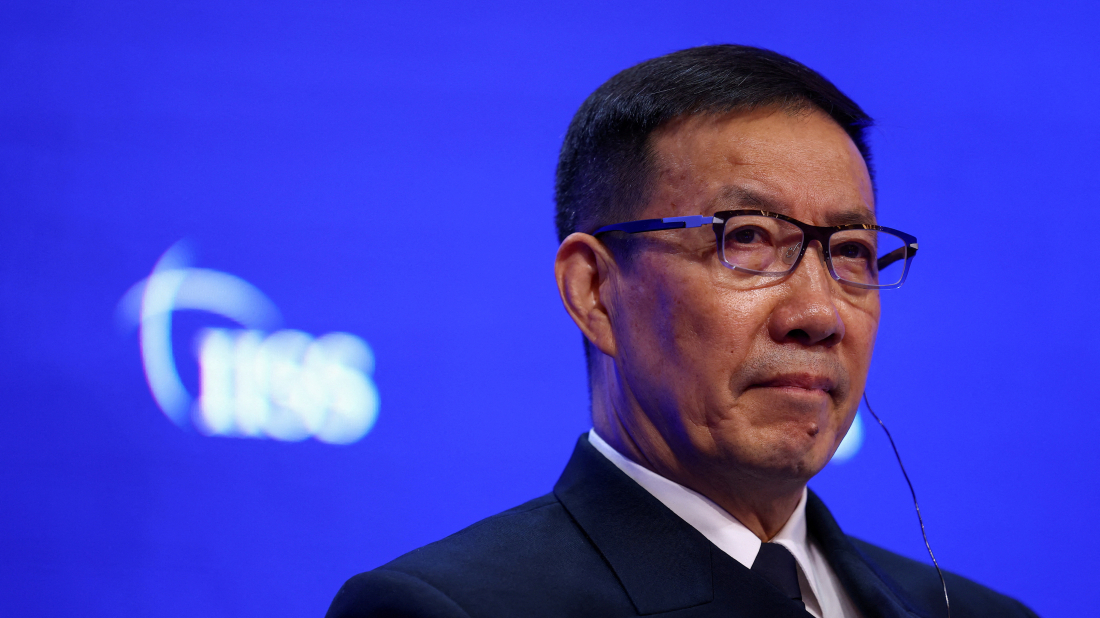
China's defense minister declined a meeting with U.S. Defense Secretary Lloyd Austin during a meeting of defense leaders in Laos, a move the Pentagon chief said on Wednesday was unfortunate.
Multilateral gatherings of national security officials in Asia have been used in the past for meetings between U.S. and Chinese defense leaders, but China declined a meeting request by Austin during this week's Southeast Asian Nations (ASEAN)-Plus defense ministers meeting.
"It's unfortunate. It affects the region because the region really wants to see us, you know, two significant players in the region, two significant powers, talk to each other," Austin told reporters.
"I don't think that it has any sort of implications for the future. I just think that it's something that they chose to do at this point in time and only they can explain why they chose to not take advantage of a good opportunity," Austin added.
Austin met China's defense minister, Dong Jun, on the sidelines of a Singapore conference earlier this year, reiterating their differences on Taiwan and other issues but emphasizing the need to keep military-to-military communications open.
Chinese President Xi Jinping vowed on Saturday to work with the incoming U.S. administration of Donald Trump as he held his final talks with outgoing President Joe Biden on conflicts from cyber crime to trade, Taiwan, the South China Sea and Russia.

The crew of Artemis II mission are entering a pivotal phase of their journey, as they prepare to swing around the Moon and head back towards Earth. Now on the fifth day of their 10-day mission, the four astronauts are already witnessing views no human has ever seen.
U.S. President Donald Trump on Monday told reporters that Iran could be taken out in one night, "and that night might be tomorrow night," warning Tehran it had to make a deal by Tuesday night or face wider bombing raids.
U.S. President Donald Trump threatened Iran's "whole civilisation" on Tuesday in a post on social media. Meanwhile, the UN failed to reach an agreemement on a resolution aimed at reopening the Strait of Hormuz, after China and Russia used their vetoes.
As Hungary approaches a crucial vote, younger citizens who grew up under Prime Minister Viktor Orbán are increasingly backing the opposition, with some saying they may leave if he secures another term.
Iran has rejected a U.S.-backed ceasefire proposal, insisting any agreement must deliver a permanent end to the war, according to state media on Monday.
North Korea fired multiple ballistic missiles towards its east coast on Wednesday (8 April), South Korea’s military said, in a fresh show of force that underscored rising tensions despite brief signs of a possible thaw between the two sides.
The leader of Taiwan's largest opposition party used her first full day in mainland China to publicly pledge reconciliation, invoking the spirit of her party's founder, Sun Yat-sen, to call for unity whilst surprisingly praising the communist mainland’s developmental achievements.
Start your day informed with the AnewZ Morning Brief. Here are the top stories for 8 April, covering the latest developments you need to know.
U.S. Vice President JD Vance lashed out on Tuesday at what he called "disgraceful" European Union interference in Hungary's election, even as he openly endorsed Prime Minister Viktor Orbán, a close ally of both President Donald Trump and Russian President Vladimir Putin, days before the vote.
Construction has begun on a major new solar power project in Xizang, as China continues to expand its renewable energy capacity and push towards a greener future.
You can download the AnewZ application from Play Store and the App Store.
What is your opinion on this topic?
Leave the first comment