President Zelenskyy urges continued international support and faster decision-making in Europe, as Russia's attacks on Ukraine's civilian infrastructure persist.
I’m grateful for your support, and I’m glad to see all of you here today standing with Ukraine.
First, I want to update you on some key developments in Ukraine and the ongoing diplomatic efforts with our partners.
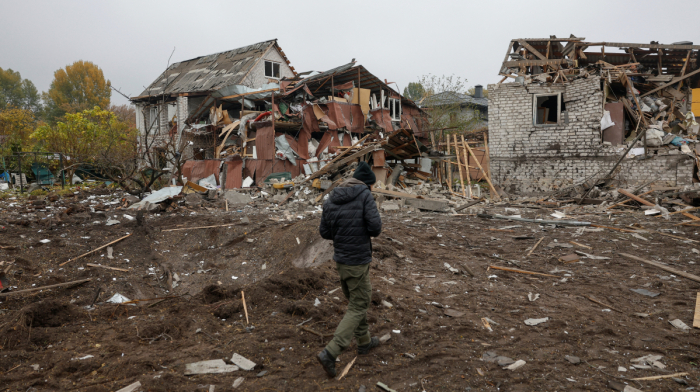
Last night, Russia launched another large-scale drone attack on Ukraine—171 Shahed drones in total, targeting critical infrastructure. In Kropyvnytskyi, a central Ukrainian city, residential buildings, an Orthodox church, and a school were damaged. Tragically, four children were wounded, but everyone is receiving medical care. Just yesterday evening, another Russian strike hit our energy infrastructure.
This is the reality we face every single day and night. Despite Putin's claims that he’s ready to stop the attacks, nothing has changed.
I want to express my deepest gratitude to our soldiers, rescuers, doctors, and nurses—everyone who risks their lives to defend us and save others. Their relentless work saves lives and continues to bring results, even in these difficult times.
Your unwavering support for Ukraine is more important than ever. It must not decrease, but rather increase. This is particularly true when it comes to air defense, military aid, and strengthening our overall resilience.
We urgently need funds to supply artillery shells and would greatly appreciate Europe’s support, ideally with at least five billion euros, as soon as possible. Additionally, investments in weapons production in both Ukraine and your countries are crucial. Europe needs to be technologically independent, especially in defense manufacturing. We must ensure that everything needed to defend the continent is produced here, in Europe. I commend those who are already taking concrete steps in this direction, and I strongly urge the ReArm Europe program to begin operating as soon as possible. It’s a forward-thinking initiative, and we need it to succeed.
Ukraine has modern, effective technology, especially in drones and electronic warfare, which can benefit all of Europe and our global partners. This technology is crucial for our defense, but its development and increased efficiency are vital to strengthening Europe’s security. Your investments in production and co-production will be key to this effort.
Furthermore, I urge you to maintain pressure on Russia. Sanctions must remain firmly in place until Russia begins withdrawing from our territory and fully compensates for the damage caused by its aggression. We must continue to fight against sanction evasion schemes and Russia’s attempts to finance its war effort. Diplomatic efforts should not mean easing the pressure on Russia. Moscow has a history of making promises only to break them hours later, so it’s essential that we maintain pressure until real peace is achieved.
Yesterday, I had a productive conversation with President Trump. From the outset, Ukraine has been advocating for what we’re discussing now: an end to attacks on energy and infrastructure, and a ceasefire at sea. Our teams are working toward an unconditional, full ceasefire on land. I ask for your continued support in this effort. Putin must stop making demands that only prolong the war and start fulfilling the promises he made to the world.
By now, we could have seen over a week without killings, without strikes, without fire. But Putin alone is keeping this war going. The proposals made in Jeddah on March 11 are still on the table, and we must keep pressuring Russia to make them a reality.
Unfortunately, there’s another issue that we must address within Europe. Pressure is needed to ensure that promises are fulfilled. I’m talking about Ukraine’s EU accession talks and resolving key issues for European unity. It’s simply anti-European when one individual blocks decisions critical for the continent or those that have already been agreed upon. Ukraine has met the necessary requirements, but significant hurdles remain in opening the first negotiation clusters for our EU accession. European efforts aimed at bringing more security and peace are continuously obstructed, and I believe this is wrong.
Europe needs to streamline its decision-making process. We must make European decision-making faster, more flexible, and more effective. Whether in politics, defense, economics, or industry, Europe must move with greater speed and agility to protect itself from unnecessary blockages. Ukraine is part of Europe, and Europe plays a vital role in global peace efforts. We have worked hard to ensure that Europe is treated as an equal partner in these efforts. And together, we will continue to be at the table in all conversations about the security of Europe.
Finally, I want to thank those of you who are working with us on future security guarantees for Ukraine—and for the entire eastern flank of Europe. For those who have not yet joined this effort, I invite you to do so. We must work quickly and efficiently on these security guarantees, for the future of Ukraine and the safety of Europe as a whole.











What is your opinion on this topic?
Leave the first comment