live Donald Trump to roll out 'Board of Peace' in Davos
U.S. President Donald Trump is about to unveil the charter of his proposed 'Board of Peace' in Davos, an initiative that has expanded well beyond its ...
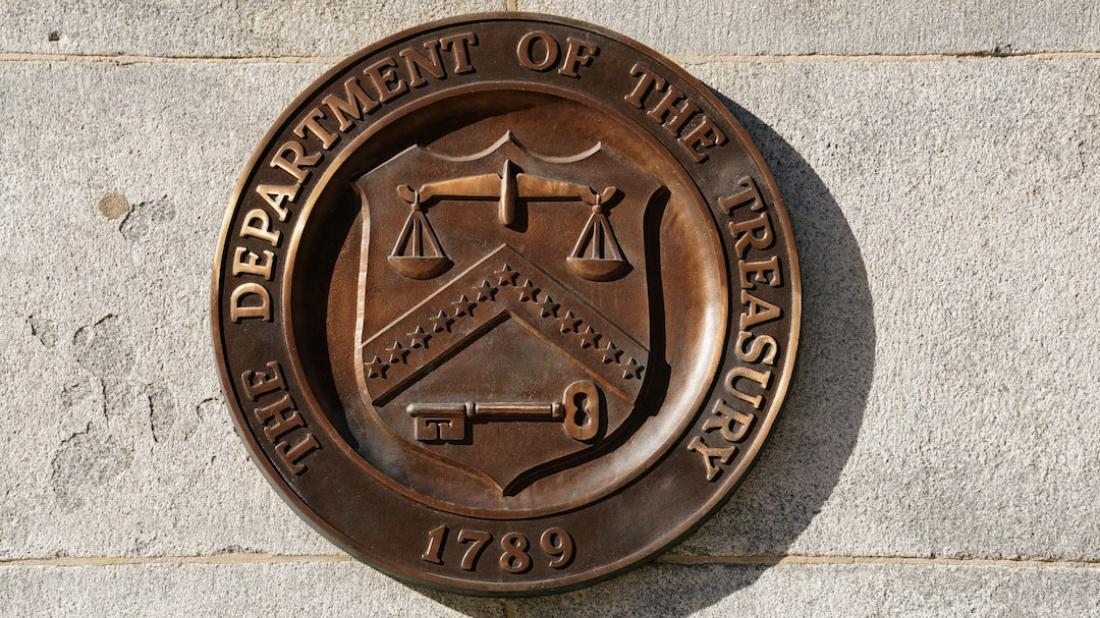
The U.S. budget deficit reached $307 billion during President Donald Trump’s first full month in office, marking a 4% increase—an additional $11 billion—over the same period last year, according to the Treasury Department.
Record receipts bolstered the figures in February, with federal income totaling $296 billion—a 9% rise or an extra $25 billion compared with the previous year. However, government spending surged even more, with outlays reaching a record $603 billion in February, up 6% or $36 billion year over year.
After calendar adjustments for both receipts and expenditures, the adjusted deficit would have stood at $311 billion, representing a 3% increase over February 2024.
For the first five months of fiscal 2025, the overall deficit ballooned to $1.147 trillion, up 38%—or $318 billion—from a year earlier. Fiscal year-to-date receipts increased by 2%, or $37 billion, to a record $1.893 trillion, while outlays climbed 13%, or $355 billion, to a record $3.039 trillion.
Driving the spending growth were higher costs associated with Treasury’s interest on the public debt, increased outlays for Child Tax Credit payments, and elevated Social Security payments—partly due to a 2.5% cost-of-living adjustment for 2025.
The steep rise in both spending and the overall deficit highlights the fiscal challenges facing the administration as it navigates a period marked by record revenues alongside rapidly escalating expenditures.

Several locally-developed instant messaging applications were reportedly restored in Iran on Tuesday (20 January), partially easing communications restrictions imposed after recent unrest.
There was a common theme in speeches at the World Economic Forum on Tuesday (20 January). China’s Vice-Premier, He Lifeng, warned that "tariffs and trade wars have no winners," while France's Emmanuel Macron, labelled "endless accumulation of new tariffs" from the U.S. "fundamentally unacceptable."
U.S. President Donald Trump said Washington would “work something out” with NATO allies on Tuesday, defending his approach to the alliance while renewing his push for U.S. control of Greenland amid rising tensions with Europe.
At the World Economic Forum’s “Defining Eurasia’s Economic Identity” panel on 20 January 2026, leaders from Azerbaijan, Armenia and Serbia discussed how the South Caucasus and wider Eurasian region can strengthen economic ties, peace and geopolitical stability amid shifting global influence.
The European Union has proposed new restrictions on exports of drone and missile-related technology to Iran, while preparing additional sanctions in response to what it described as Tehran’s "brutal suppression" of protesters.
U.S. President Donald Trump is about to unveil the charter of his proposed 'Board of Peace' in Davos, an initiative that has expanded well beyond its original goal of overseeing the Gaza ceasefire.
The stark, frozen beauty of the Arctic has become the unlikely stage for a high-stakes diplomatic standoff that threatens to dismantle the transatlantic security architecture.
Start your day informed with AnewZ Morning Brief: here are the top news stories for the 22nd of January, covering the latest developments you need to know.
NATO Secretary General Mark Rutte says the status of Greenland did not arise in his talks with U.S. President Donald Trump, as Trump stepped back from tariff threats and ruled out using force to take control of the territory.
Venezuelan oil exports under a flagship $2 billion supply deal with the U.S. reached about 7.8 million barrels on Wednesday, vessel-tracking data and documents from state-run PDVSA showed.
You can download the AnewZ application from Play Store and the App Store.
What is your opinion on this topic?
Leave the first comment