Sandstorm sweeps Gaza as dust storms hit parts of Asia and India
A sandstorm swept across the Gaza Strip on Saturday, worsening conditions for displaced civilians already livin...
Former U.S. President Donald Trump has called for a tougher approach on Gaza, reiterating his stance as a fragile ceasefire remains in place between Israel and Hamas. His recent proposal for a U.S. takeover of the enclave has drawn widespread international condemnation.
Trump on Friday reiterated his demand for Hamas to release all Israeli hostages, warning that failure to do so by Saturday midday would mean "letting hell break out." While speaking to reporters, he said, “If it was up to me, I would take a very hard stance, but I can’t tell you what Israel is going to do.”
The ceasefire, which came into effect shortly before Trump returned to the presidency on January 20, has led to the exchange of Israeli hostages and Palestinian prisoners. However, the humanitarian situation in Gaza remains dire, with over 48,000 Palestinians killed since October 2023, according to the Gaza health ministry.
The United Nations has described the conditions of released detainees—both Israeli and Palestinian—as distressing, citing severe malnutrition and poor treatment. While Trump has expressed concerns about Israeli hostages, he has not commented on Palestinian detainees.
Trump’s suggestion that the United States should take control of Gaza and relocate its population has sparked international condemnation. Human rights experts and the United Nations have described the plan as ethnic cleansing, a claim Trump’s allies have dismissed.
Meanwhile, Israel continues to face accusations of war crimes and genocide over its military actions, charges that Israeli officials strongly deny. The ongoing conflict, which erupted after Hamas’ October 7 attack that killed 1,200 Israelis and took 250 hostages, has displaced nearly all of Gaza’s population and created a deepening hunger crisis.
With tensions still high and uncertainty over what will happen if Hamas fails to meet Trump’s deadline, all eyes are now on Saturday’s developments.

Israel and Iran continued to exchange strikes on Friday (13 March), as the U.S. and French militaries reported deaths in Iraq, and the U.N. launched a $325 million appeal to help Lebanon, where a seventh of the population have left their homes since fighting began.
Israeli Prime Minister Benjamin Netanyahu issued veiled threats to Iran’s new Supreme Leader, Mojtaba Khamenei, and Hezbollah on Thursday (12 March), during his first press conference since the conflict with Iran began.
At least 64 people have been killed in southern Ethiopia following recent landslides and floods, the regional government’s communications office said on Thursday (12 March), citing local police
Ayman Ghazali, a 41-year-old U.S. citizen born in Lebanon, crashed his truck into the hallway of a Detroit-area synagogue on Thursday (12 March) while children attended preschool. Security personnel shot him dead during the confrontation, and authorities said no one else was seriously injured.
Iran’s President Masoud Pezeshkian has set recognition of Tehran’s inalienable rights, payment of war compensation, and international guarantees against any future invasion as conditions for ending the U.S.–Israel war with the Islamic Republic.
Kremlin spokesman Dmitry Peskov said on Saturday (14 March) that many countries are interested in purchasing Russian oil after the United States temporarily eased sanctions on certain exports.
An explosion lightly damaged a Jewish school in Amsterdam early on Saturday (14 March) in what the city’s mayor described as “a deliberate attack against the Jewish community.”
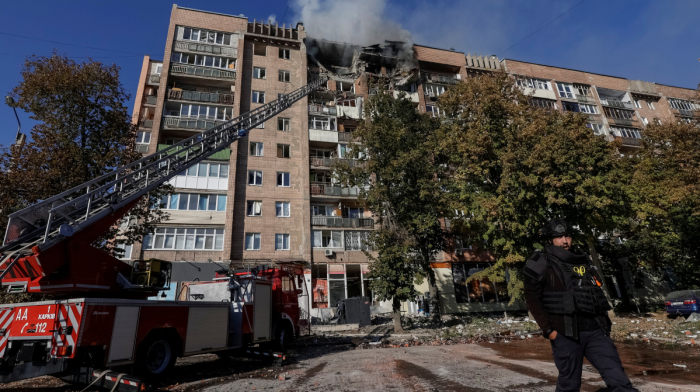
Ukrainian drones struck an oil refinery and a key port in Russia’s southern Krasnodar region overnight (13-14 March), local authorities said, causing injuries and damage. In separate action, Russian air attacks on Ukrainian territory killed and wounded civilians near Kyiv, officials reported.
Start your day informed with AnewZ Morning Brief. Here are the top news stories for the 13rd of March, covering the latest developments you need to know.
North Korea fired what appeared to be a ballistic missile on Saturday (14 March), Japanese and South Korean officials said. The development comes amid the joint annual U.S.-South Korea "Freedom Shield" military drills and South Korean Prime Minister Kim Min-seok's visit to Washington.
You can download the AnewZ application from Play Store and the App Store.
What is your opinion on this topic?
Leave the first comment