Scientists discover bizarre planetary system unlike anything seen before
Scientists have identified a planetary system in the Milky Way unlike anything seen before, leaving astronomers debating how to classify one of its un...
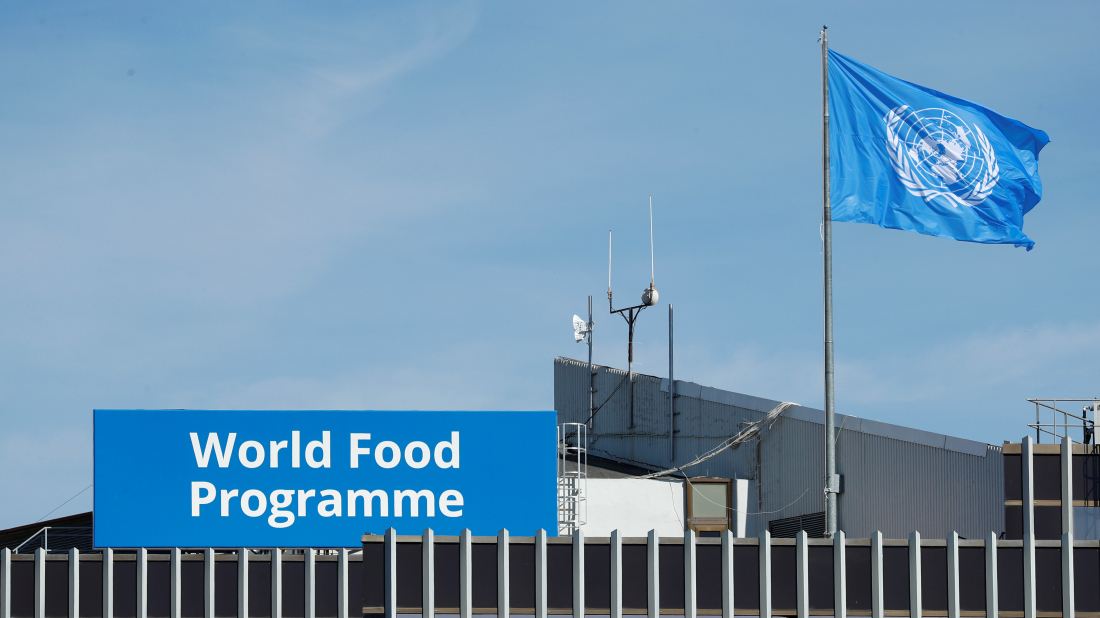
The United States has lifted a pause on food donations, allowing the UN World Food Programme (WFP) to resume shipments, following concerns that 500,000 metric tons of aid had been stranded at sea or awaiting delivery
The UN World Food Programme (WFP) confirmed on Sunday that the U.S. government had lifted a recent freeze on food assistance under the Title II program, enabling purchases and deliveries to resume.
"We can confirm that the recent pause concerning in-kind food assistance to WFP—purchased from U.S. farmers with Title II funds—has been rescinded," WFP said in a post on X.
The decision comes after U.S. President Donald Trump halted all foreign aid for 90 days, ordering a review to ensure funding aligns with his “America First” policy. Despite an emergency food assistance waiver, commodities produced by U.S. farmers for donation were not initially covered, leading to uncertainty and delays.
The U.S. also instructed WFP to halt work on dozens of U.S.-funded grants, including several under the Food for Peace Title II program, which allocates around $2 billion annually for international food assistance.
The U.S. Agency for International Development (USAID) oversees the Title II program alongside the U.S. Department of Agriculture. The program provides food assistance to impoverished regions such as Yemen, the Democratic Republic of Congo, Sudan, South Sudan, the Central African Republic, Haiti, and Mali.
A report by USAID’s Office of Inspector General (OIG) on Monday warned that the pause on food aid had left more than 500,000 metric tons of food either stuck at sea, in transit, or awaiting shipment, creating risks of spoilage, storage issues, and potential diversion.
"Uncertainty put more than $489 million of food assistance at ports, in transit, and in warehouses at risk," the report stated.
Humanitarian officials say the lack of clarity in the Trump administration’s policy shift created confusion, forcing aid groups to decide whether to continue operations without guaranteed funding.
The U.S. State Department has not commented on the decision.
Aid groups welcomed the lifting of the pause, though disruptions in food deliveries have already impacted vulnerable populations worldwide.

Start your day informed with AnewZ Morning Brief. Here are the top news stories for the 21st of July, covering the latest developments you need to know.
Start your day informed with AnewZ Morning Brief. Here are the top news stories for the 22nd of July, covering the latest developments you need to know.
The United States has bombed Iran for an 11th consecutive night as the Pentagon says the war’s cost reach $37.5 billion. President Donald Trump threatens a heavy strike on the suspected Pickaxe Mountain nuclear site. Tehran warns that any attack could trigger a wider regional escalation.
President Donald Trump said the United States will target Iran’s heavily fortified Pickaxe Mountain site “pretty soon” as he meets with Lebanese president Michel Aoun. Meanwhile, U.S. forces carried out a 10th consecutive night of strikes on Iran while Tehran continues to target Gulf countries.
Azerbaijani President Ilham Aliyev and German President Frank-Walter Steinmeier have discussed regional developments, transport connectivity, energy cooperation and the Azerbaijan-Armenia peace process during talks in Berlin.
The building where Adolf Hitler was born, near Austria's border with Germany, officially began a new life as a police station on Wednesday. Austria's government hopes the conversion will prevent it from becoming a place of pilgrimage for neo-Nazis.
Daniel Siad, a modelling scout whose name appeared in documents linked to convicted sex offender Jeffrey Epstein, has been found dead at his home near Paris, French prosecutors said. He was 69.
Ukraine's new commander-in-chief, Mykhailo Drapatyi, takes charge at a pivotal stage of the war with Russia, facing mounting challenges including troop shortages, battlefield reform and the rapid evolution of drone warfare.
ASEAN foreign ministers opened the 59th ASEAN Foreign Ministers’ Meeting in Manila on 21 July, launching four days of talks that run until 24 July. The agenda includes South China Sea tensions, Myanmar’s conflict and growing U.S.-China rivalry.
Canadian Foreign Minister Anita Anand has renewed calls for an immediate de-escalation and permanent ceasefire in the Middle East while she warned that the humanitarian situation had become "quite grave". Anand also raised concern over tensions in the South China Sea.
You can download the AnewZ application from Play Store and the App Store.
What is your opinion on this topic?
Leave the first comment