Elections are shaking up the political landscape worldwide, with Lula securing a fourth term in Brazil, Serbia's student-led movement claiming victory and Bulgaria heading for a runoff, as Israel and New Zealand prepare for crucial votes.
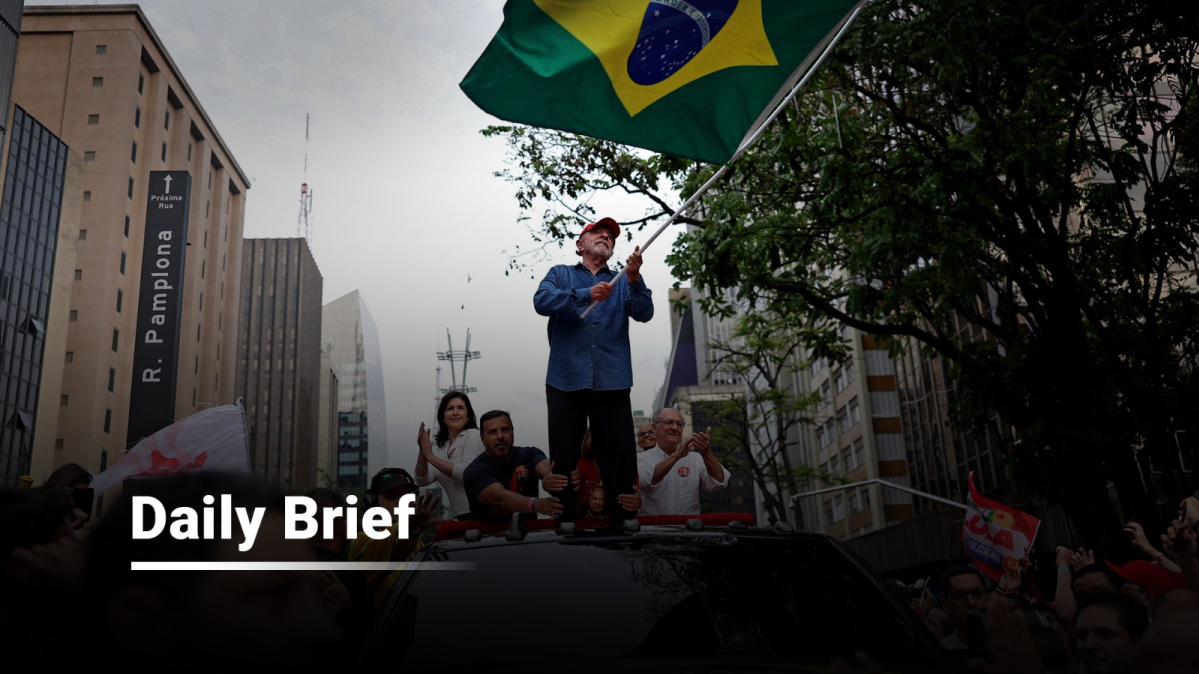
Lula wins historic fourth term as Bolsonaro challenges result
Brazilian President Luiz Inácio Lula da Silva has won a historic fourth term, defeating Senator Flávio Bolsonaro by more than four million votes. Bolsonaro has refused to concede and plans to seek an annulment of the result, although analysts believe it is unlikely to be overturned. Lula’s victory caught markets by surprise and interrupted a recent wave of right-wing gains across Latin America. But his next term will be challenging, with a conservative Congress, high public debt and mounting pressure to boost economic growth while managing public spending.
Serbia’s Vučić concedes defeat after student-led election victory
Aleksandar Vučić has conceded defeat after a student-backed list won Serbia’s parliamentary election, bringing more than a decade of political dominance to an end. The Student List party is projected to win between 135 and 140 seats, with turnout nearing a record 70 per cent. The historic result follows nearly two years of protests sparked by the 2024 Novi Sad railway station canopy collapse. The student movement has vowed to tackle corruption, strengthen the rule of law and improve education. The incoming government also faces difficult foreign policy decisions over Serbia’s relationships with the EU, Russia and China.
Bulgaria faces presidential runoff after tight first round
Bulgaria is heading for a presidential runoff on 1 November after no candidate won an outright majority. With 95 per cent of votes counted, acting President Iliana Iotova led with 34.6 per cent, narrowly ahead of former caretaker prime minister Andrey Gyurov with 32 per cent. Turnout stood at just 22 per cent, despite growing security concerns following deadly drone attacks on merchant ships in the Black Sea. Both candidates have condemned the strikes but remain divided over how Bulgaria should respond to the war in Ukraine.
Thousands rally in Tel Aviv ahead of Israeli election
Thousands of Israelis took to the streets of Tel Aviv to demand an independent inquiry into the security failures linked to the 7 October 2023 attacks, with the national election just days away. Opposition leaders joined protesters calling for accountability and political change. Opinion polls indicate Prime Minister Benjamin Netanyahu’s coalition risks losing its majority, while centrist rival Gadi Eisenkot is trying to win over traditional Likud voters. With around 13 per cent of voters still undecided, Tuesday’s election remains uncertain.
New Zealand election race wide open as early voting begins
Early voting is under way in New Zealand ahead of the 7 November general election, with neither major party establishing a clear lead in the polls. Prime Minister Christopher Luxon expects economic concerns, particularly inflation and the cost of living, to dominate the campaign. Labour leader Chris Hipkins, meanwhile, is focusing on measures to ease the financial strain on households. Recent surveys put National and Labour neck and neck, leaving smaller parties poised to play a decisive role in forming the next government. More than 200 polling stations opened on Monday, with the number set to rise to more than 2,300 on election day.










What is your opinion on this topic?
Leave the first comment