




12:59 CET
Middle East conflict
live Saudi Aramco building attacked, limited fire reported
A building at Saudi Aramco’s headquarters in ...
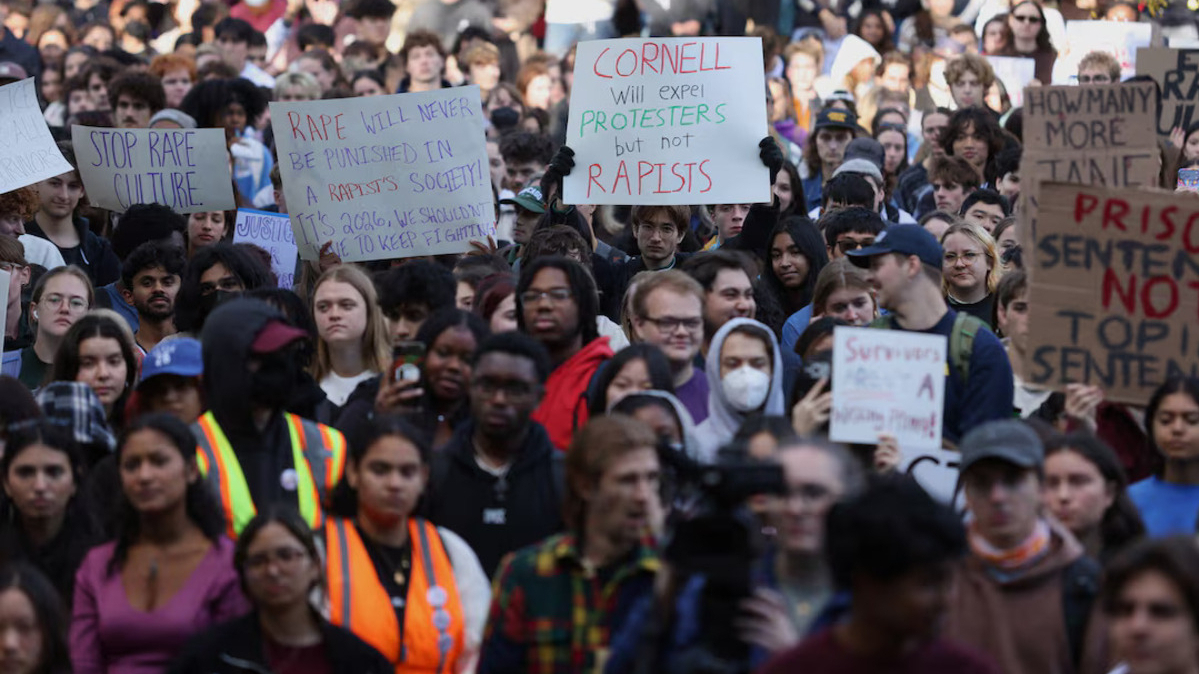


Cornell University has prohibited parties and social gatherings at fraternity houses for the remainder of the academic year following allegations of a gang rape in 2024, as criticism mounts over the institution’s handling of the case.
University president Michael Kotlikoff announced the decision on Tuesday, 13 October, following a lawsuit filed by a former student identified as Jane Doe, who alleges that seven men sexually assaulted her at a fraternity party.
The university, located in Ithaca, New York, has faced growing pressure from students, academic staff, alumni and donors over its response to the allegations.
The ban applies to fraternity houses affiliated with Cornell’s Interfraternity Council, which lists 34 fraternity houses.
“These measures will provide time for a thorough review of fraternity life at Cornell to determine whether and how it can safely continue,” Kotlikoff said in the statement.
The Interfraternity Council did not immediately respond to a request for comment.
Authorities reopened the investigation into the alleged 2024 assault after the lawsuit was filed in September.
New York Governor Kathy Hochul subsequently appointed state Attorney General Letitia James as an independent special prosecutor, citing failures in the earlier handling of the alleged victim's case.
U.S. President Donald Trump, who has frequently clashed with James, renewed his demand on Tuesday that she be removed from the investigation.
“The Governor should take James off this case, immediately,” Trump posted on Truth Social.
Trump had previously questioned James' appointment in early October, but officials took no action in response.
Neither Hochul's office nor the attorney general's office immediately responded to requests for comment.
None of the seven men named in the lawsuit has been criminally charged.
The lawsuit, which names seven fraternity members, Cornell University and other defendants, has prompted demonstrations and intensified scrutiny of the university's leadership.
Faculty members are considering a vote of no confidence, while alumni have also criticised the administration's response.
During a public gathering, students accused university officials of failing to address what they described as a culture of sexual violence on campus.
“I have spent the past weeks listening to students, faculty, staff, parents, alumni, and trustees, who have shared their feelings of deep connection and sympathy with Jane Doe, anger and frustration that this could happen at Cornell,” Kotlikoff said.
“Women on our campus continue to question whether they are safe,” he said, adding that additional staff would be hired to support survivors of sexual assault.
Alongside the fraternity restrictions, Cornell plans to cooperate with New York State Police in investigating incidents and accelerate recommendations previously developed by a university task force on sexual violence.
The measures follow findings from a university survey conducted in 2025, in which 35% of female undergraduate students reported experiencing non-consensual sexual contact involving force or incapacitation since enrolling at Cornell.
The findings have added to concerns about student safety and the university's approach to preventing sexual violence.
“We must meet this moment by acknowledging where we have fallen short and taking meaningful action,” Kotlikoff said.

A building at Saudi Aramco’s headquarters in ...

Russian strikes killed ...
Cornell University has prohibited parties and social gatherings at fraternity houses for the remainder of the academic year following allegations o...

One person was killed and nearly a dozen hurt in a fresh attack on Riyadh's international airport on Sunday, Saudi authorities reported, a day after a strike claimed by Yemen's Houthis killed 13 people and wounded more than 300.

The Saudi-led coalition in Yemen said late Monday that it intercepted and destroyed two ballistic missiles launched by the Houthi group toward Khamis Mushait in southwestern Saudi Arabia.

Ukrainian President Volodymyr Zelenskyy says Russia hit at least six energy targets in deadly strikes across Ukraine, showing Moscow is unwilling to accept the energy ceasefire announced by U.S. President Donald Trump.
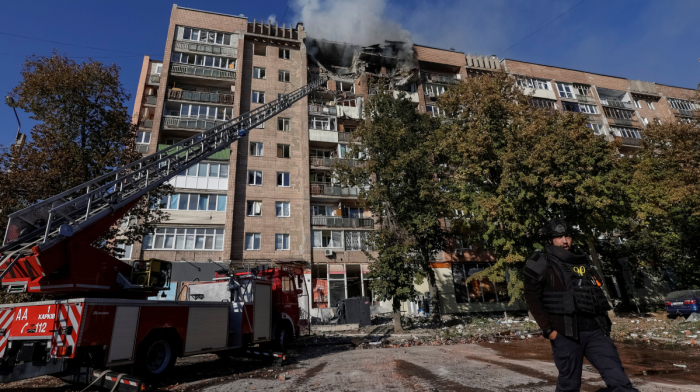
The Kremlin on Monday rejected a 60-day ceasefire idea proposed by Ukrainian President Volodymyr Zelenskyy to allow his country to hold presidential elections, saying it wanted an overall peace deal instead.
A building at Saudi Aramco’s headquarters in the eastern city of Dhahran was attacked late Tuesday, causing a limited fire, Saudi Arabia’s Energy Ministry said on Wednesday. The incident came as fighting between the kingdom and Yemen’s Iran-allied Houthi group intensify.
Russian strikes killed three people in Kyiv and plunged hundreds of thousands into darkness overnight, authorities said on Wednesday, in an attack President Volodymyr Zelenskyy called “ostentatious disrespect” to Donald Trump's peace effort.
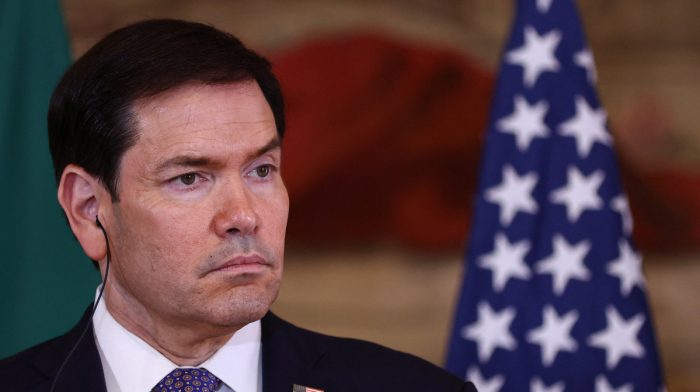
U.S. Secretary of State Marco Rubio will depart on Saturday (17 October) on a five-day trip to India and Uzbekistan, the State Department said, adding that he will discuss energy cooperation in India.
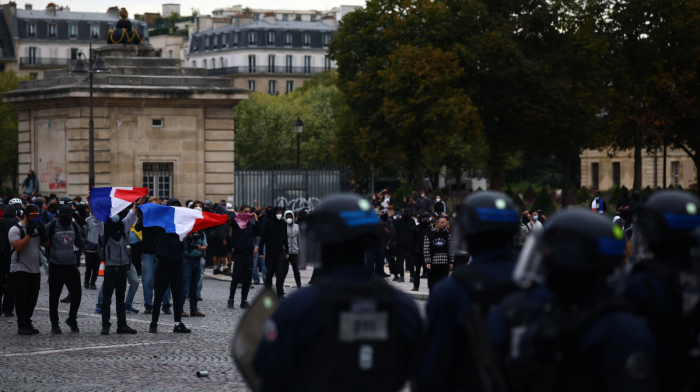
French riot police clashed with student protesters in Paris on Tuesday, using tear gas and water cannon and making arrests as demonstrations over school conditions continued across the country.

Pope Leo has been diagnosed with lung cancer after surgeons removed part of his right lung, the Vatican said on Tuesday, in the first major health setback of his pontificate.

Russia’s Federal Security Service (FSB) has detained a Japanese journalist on suspicion of espionage, as relations between Moscow and Tokyo remain strained over Russia’s war in Ukraine.
You can download the AnewZ application from Play Store and the App Store.




What is your opinion on this topic?
Leave the first comment