Pakistan and Afghan Taliban forces compared as conflict fears intensify
Tensions between Pakistan and the Afghan Taliban have surged after the Taliban government accused Islamabad of carrying out an attack that killed m...
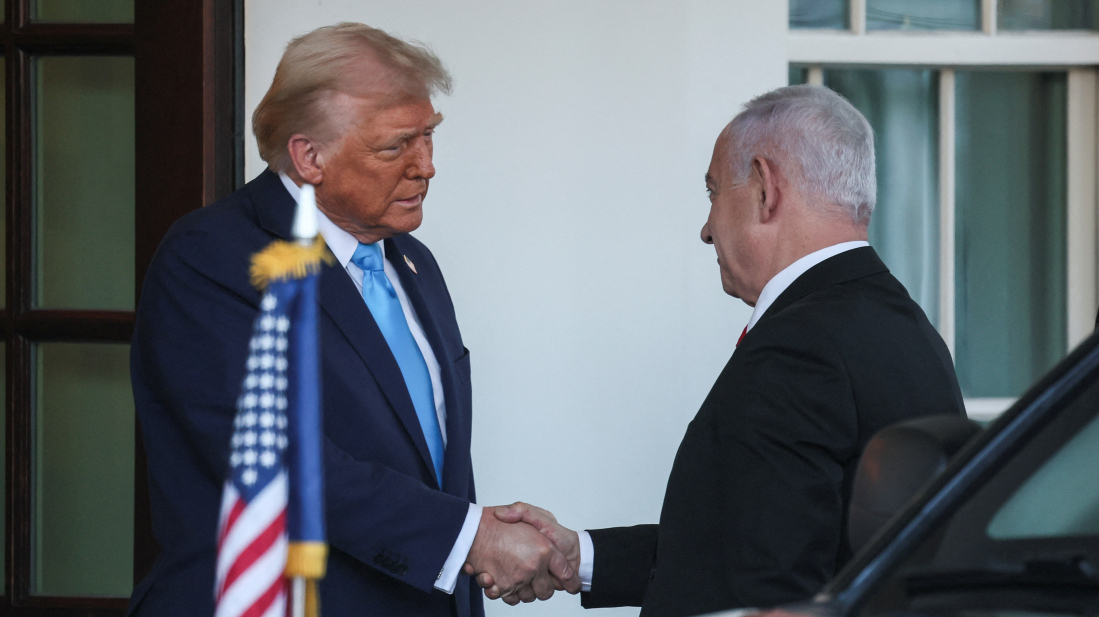
Israeli Prime Minister Benjamin Netanyahu met with U.S. President Donald Trump at the White House, the first foreign leader to visit since Trump’s re-election. Talks focused on a potential Israel-Saudi normalization deal, the Gaza war, and the ongoing hostage negotiations.
Israeli Prime Minister Benjamin Netanyahu arrived at the White House for talks with U.S. President Donald Trump, marking the first official visit by a foreign leader since Trump returned to office.
The two leaders discussed a range of geopolitical issues, including a potential normalization deal between Israel and Saudi Arabia. Trump stated that Saudi Arabia had not made a Palestinian state a condition for normalization, emphasizing that all parties “want peace.”
Netanyahu outlined Israel’s three primary goals in the ongoing Gaza conflict: securing the release of all hostages, dismantling Hamas’ military and government infrastructure, and ensuring that Gaza no longer poses a security threat to Israel. He insisted that Israel would not agree to a ceasefire unless all three objectives were met.
Beyond the Middle East, Trump commented on the state of global conflicts, including the war in Ukraine, attributing instability to weak leadership. He reaffirmed his administration’s stance on securing U.S. interests while pursuing diplomatic solutions.
As negotiations over a potential Gaza ceasefire and a Saudi-Israel agreement continue, Netanyahu is expected to hold further discussions with U.S. officials during his visit.
Trump also announced that the U.S. would take control of Gaza, overseeing the removal of unexploded ordnance and weapons while leading reconstruction efforts and economic development in the area.
In a separate development, Hamas signaled its readiness for dialogue with the Trump administration. Senior Hamas Politburo member Mousa Abu Marzouk told Russia’s RIA news agency that Hamas is open to negotiations, citing the U.S.’s dominant role in the Middle East. Marzouk stated that Hamas has “never objected” to contact with previous U.S. administrations and is prepared to engage in talks.

The other evening, I was fuelling my car at a petrol station in Kenya’s capital. It was one of those small moments most motorists barely notice. The attendant filled the tank, I glanced at the pump price, paid, and drove off.
President Trump called on countries to assist in reopening the Strait of Hormuz, while Starmer said the UK is working with allies to restore navigation and stabilise oil markets. It comes as a strike near Iraq’s western border killed several Hashed al-Shaabi fighters, raising regional tensions.
President Donald Trump said NATO is making a “very foolish mistake” by refusing to help the U.S. as Israel Katz confirmed Ali Larijani was killed in Israeli strikes.
Kazakhstan has adopted a new constitution that could allow President Kassym-Jomart Tokayev to stay in power beyond 2029. The Central Election Commission confirmed that 87.15% of voters backed the constitution in a referendum held on Sunday (17 March).
The World Health Organization (WHO) has released $2m in emergency funding to support health responses in Lebanon, Iraq and Syria as escalating regional conflict strains hospitals, raises displacement and increases pressure on already fragile health systems.
A series of severe storms, blizzards and tornadoes on Monday disrupted life across much of the U.S., leaving more than 12,500 flights delayed or cancelled and forcing schools, federal offices and communities to take emergency precautions.
China’s international trade representative has said Beijing and Washington have reached a “preliminary consensus” on some key issues following their latest round of talks in Paris, offering a cautious sign of progress in a relationship long marked by tension and uncertainty.
Chile’s newly inaugurated president, José Antonio Kast, has taken his first major step on immigration, launching plans for a fortified barrier along the country’s northern border just days after entering office.
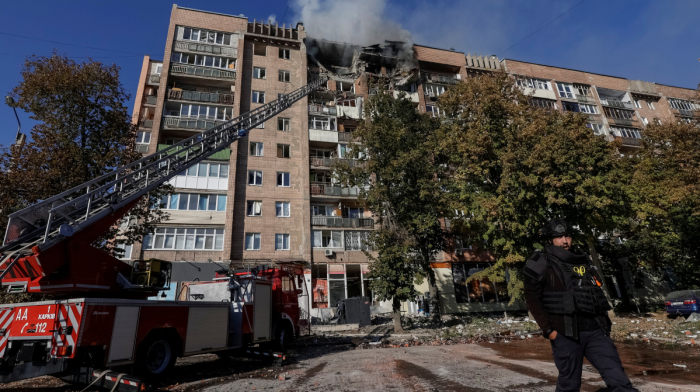
A Russian drone attack damaged industrial, port, and energy infrastructure in Ukraine's southern Odesa region overnight. The strikes disrupted power supplies in several settlements, prompting local authorities to switch critical facilities to backup power generators.
Start your day informed with AnewZ Morning Brief. Here are the top news stories for the 17 March, covering the latest developments you need to know.
You can download the AnewZ application from Play Store and the App Store.
What is your opinion on this topic?
Leave the first comment