Here's your AnewZ Daily Brief for 6 October 2026. These are the top five things you need to know about the 2026 Nobel Prize.
Neuroscientist wins 2026 Nobel Prize in Medicine for optogenetics
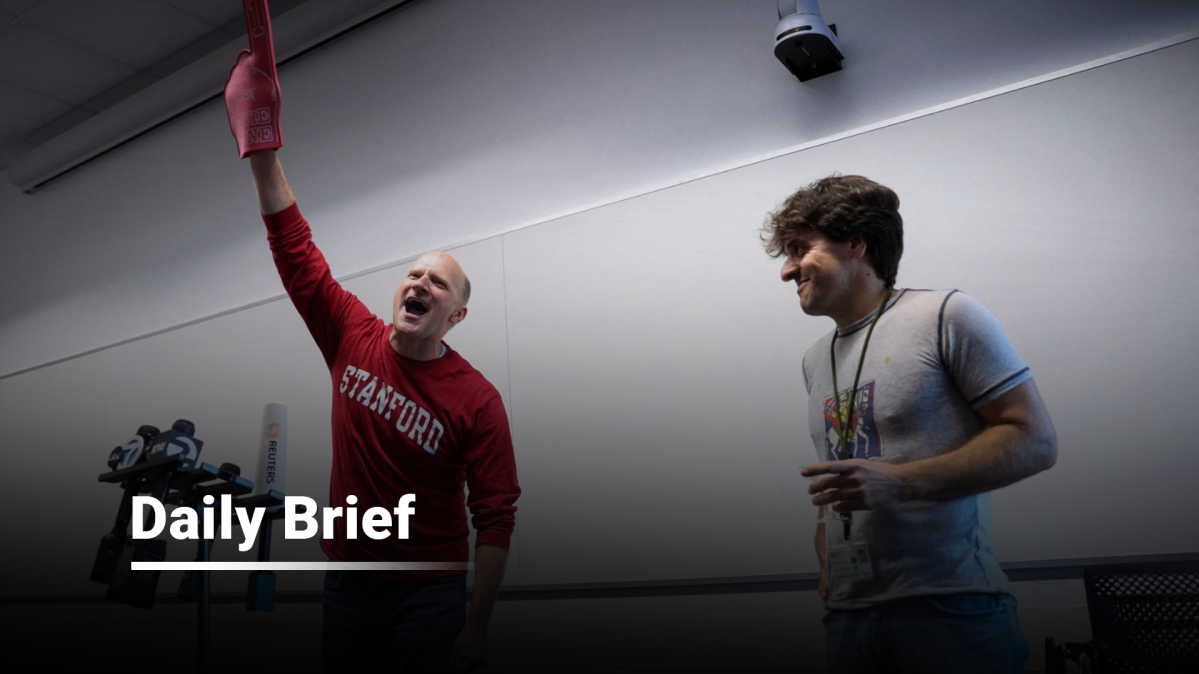
American neuroscientist Karl Deisseroth, a Stanford Professor of Bioengineering and Psychiatry, has won a third of the 2026 Nobel Prize in Physiology or Medicine for discoveries concerning light-gated ion channels and optogenetics. His lab published the seminal paper in 2005, and the technique has since helped identify circuits governing pain, thirst, reward and attention. Deisseroth told Scientific American he was drifting off to sleep when the late-night call came.
German scientist honoured for work on how algae sense light
Peter Hegemann shares the prize after investigating how a swimming alga senses light through its eyespot. With Georg Nagel, he discovered channelrhodopsin, a protein now used as a molecular switch for nerve cells. Researchers use it to reactivate memories, evoke feelings and drive behaviour in the lab, and to study neurons involved in psychiatric and neurological disorders.
Third winner shares prize with two friends
Georg Nagel, co-discoverer of channelrhodopsin, completes the medicine trio. Each laureate holds a one-third share of the monetary prize. A Nobel official said all three called it wonderful to share the award and described the others as friends. The work builds on an idea from 1962 laureate Francis Crick, who suggested light might control specific cells.
Nobel prize money rises to new heights
The Nobel Foundation has raised the cash award to 12 million Swedish kronor ($1.2 million) per full prize category, up from 11 million kronor ($1.1 million) in 2025. Where a prize is shared, the money is divided among the laureates, so each medicine winner takes roughly $400,000 of the $1.2 million total. Winners also receive a medal and a diploma at a Stockholm ceremony on 10 December.
Peace Prize nominations fall as announcement nears
The Norwegian Nobel Committee received 287 nominations for this year's Peace Prize, made up of 208 individuals and 79 organisations. That is down from 338 last year, when 244 individuals and 94 organisations were put forward. The winner will be announced on Friday 9 October, with the economics prize closing the season on 12 October.















What is your opinion on this topic?
Leave the first comment