The 81st UN General Assembly has wrapped up its third day in New York on Thursday, with world leaders delivering high-level speeches and holding diplomatic meetings.
⦿ 23:35 GMT | UPDATE
Bangladesh PM calls for action on Rohingya crisis at UN
Anadolu
Bangladesh Prime Minister Tarique Rahman urged the international community to take “firm and effective” action to resolve the Rohingya crisis during his maiden address to the UN General Assembly on Thursday.
He called for safe repatriation of more than 1.2 million Rohingya refugees to Myanmar, greater climate justice and continued international support for Bangladesh.
⦿ 23:13 GMT | UPDATE
Pashinyan: Armenia-Azerbaijan peace must be built on mutual respect
Armenian Prime Minister Nikol Pashinyan says Armenia and Azerbaijan have achieved significant progress in recent years that should outweigh conflict rhetoric over history and historical monuments.
He says the two countries should build interstate relations based on respect for each other’s territorial integrity, sovereignty and political independence.
⦿ 22:48 GMT | UPDATE
Pashinyan: Trump’s engagement made Armenia-Azerbaijan peace possible
Armenian Prime Minister Nikol Pashinyan says the peace established between Armenia and Azerbaijan on 8 August 2025 would not have been possible without U.S. President Donald Trump’s personal engagement and commitment.
Pashinyan also highlighted the proposed Trump Route for International Peace and Prosperity (TRIPP) connectivity project through Armenia.
⦿ 21:12 GMT | UPDATE
Finnish president urges Musk to expand Starlink coverage
Reuters
Finnish President Alexander Stubb said he had urged Elon Musk to expand Starlink coverage over Russia and occupied areas of Ukraine to help Ukrainian forces target Russian ballistic missile launchers.
⦿ 18:49 GMT | UPDATE
Netanyahu accuses critics of antisemitism, predicts change in Iran
Israeli Prime Minister Benjamin Netanyahu used part of his UN speech to warn about what he described as a rise in antisemitism around the world, arguing that misinformation about Israel has contributed to growing hostility towards Jewish communities.
Turning to Iran, Netanyahu argued that the country's leadership fears its own population and predicted that political change would eventually come from within.
⦿ 18:46 GMT | UPDATE
Netanyahu rejects genocide accusations, says Israel acted to protect civilians
Israeli Prime Minister Benjamin Netanyahu used his UN General Assembly address to firmly reject accusations that Israel committed genocide during the Gaza war, arguing instead that Israeli forces took extensive measures to reduce civilian casualties.
⦿ 18:38 GMT | UPDATE
Netanyahu accuses Qatar and Türkiye of anti-Israel campaigns
Israeli Prime Minister Benjamin Netanyahu used part of his UN address to accuse Qatar and Türkiye of helping spread what he called anti-Israel narratives internationally.
Netanyahu alleged that foreign governments have invested heavily in media, educational institutions and information campaigns that, in his view, promote hostility toward Israel.
He specifically criticised Qatar, accusing it of supporting Hamas and influencing public opinion against Israel.
The Israeli leader also launched a sharp attack on Turkish President Recep Tayyip Erdoğan, accusing him of anti-Israel rhetoric and broader regional ambitions. Netanyahu rejected comments by Erdoğan regarding Jerusalem, reiterating Israel's position that the city remains its eternal capital.
Netanyahu went on to defend Israel's conduct in Gaza, rejecting accusations of genocide and arguing that Israeli forces had taken measures to warn civilians and facilitate humanitarian assistance.
He accused Hamas of using civilian infrastructure for military purposes and said the group had deliberately placed civilians in danger during the conflict.
⦿ 18:14 GMT | UPDATE
Netanyahu criticises walkout, says Israel faces enduring security threats
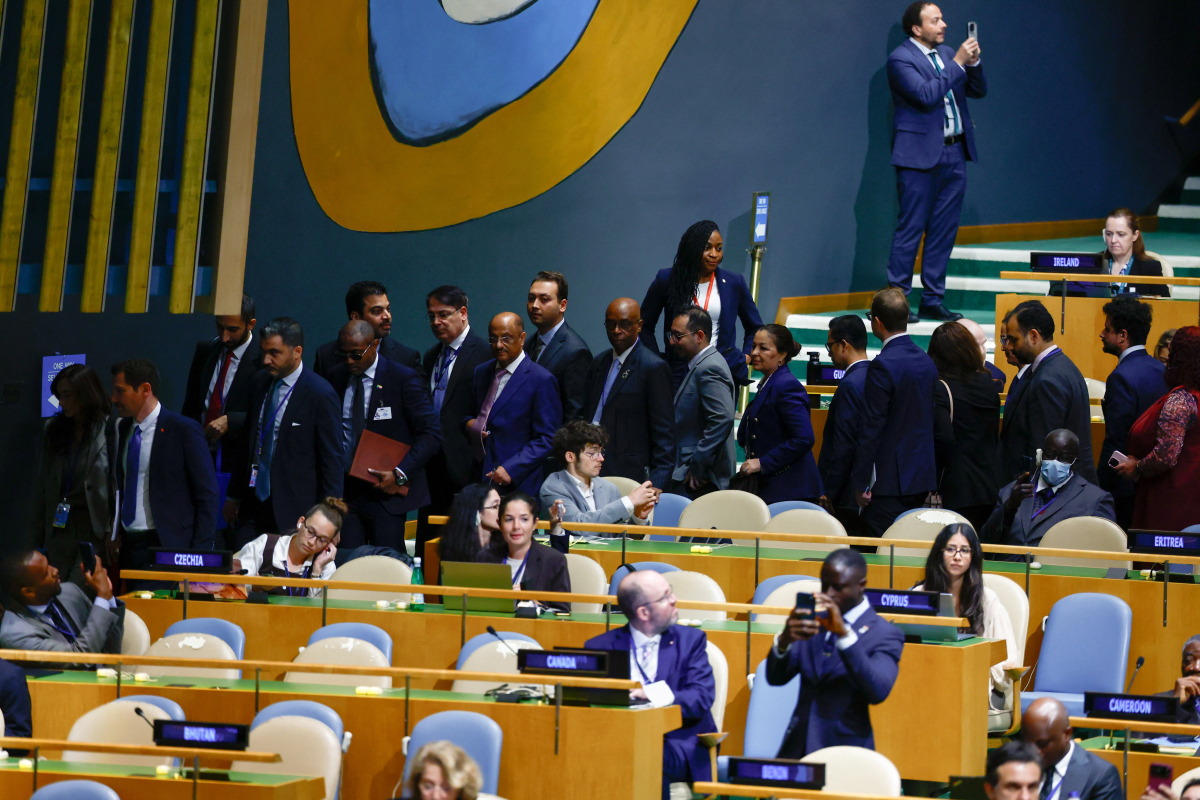
Israeli Prime Minister Benjamin Netanyahu opened his UN General Assembly speech amid interruptions and a walkout by some delegates, sarcastically inviting any remaining “moral cowards” to leave the chamber before beginning his remarks.
Netanyahu went on to compare current security threats facing Israel with those that preceded the 1967 Six-Day War, arguing that Israel has repeatedly confronted attempts to destroy the state.
He rejected claims that the country's security challenges are rooted in territorial disputes, noting that Israel faced regional threats even before it controlled territories captured during the 1967 conflict.
The Israeli leader said the country remains a small state facing persistent security challenges and vowed that Israel would continue to defend itself against what he described as existential threats.
⦿ 18:13 GMT | UPDATE
Netanyahu defends strikes on Iran, says Israel prevented nuclear threat
Israeli Prime Minister Benjamin Netanyahu used his address to the UN General Assembly to defend Israel's actions against Iran's nuclear programme, saying the decision to target Iranian nuclear facilities was essential for Israel's survival.
Referring to a warning he delivered at the UN more than a decade ago, Netanyahu said Israel had acted to prevent Iran from acquiring nuclear weapons. He described the operation as difficult but said it was one of the easiest decisions of his tenure because, in his view, failing to act would have posed an existential threat to Israel.
Netanyahu also argued that Israel's actions had benefited other countries in the region, claiming some foreign leaders had privately expressed support for efforts to eliminate Iran's nuclear capabilities.
⦿ 17:31 GMT | UPDATE
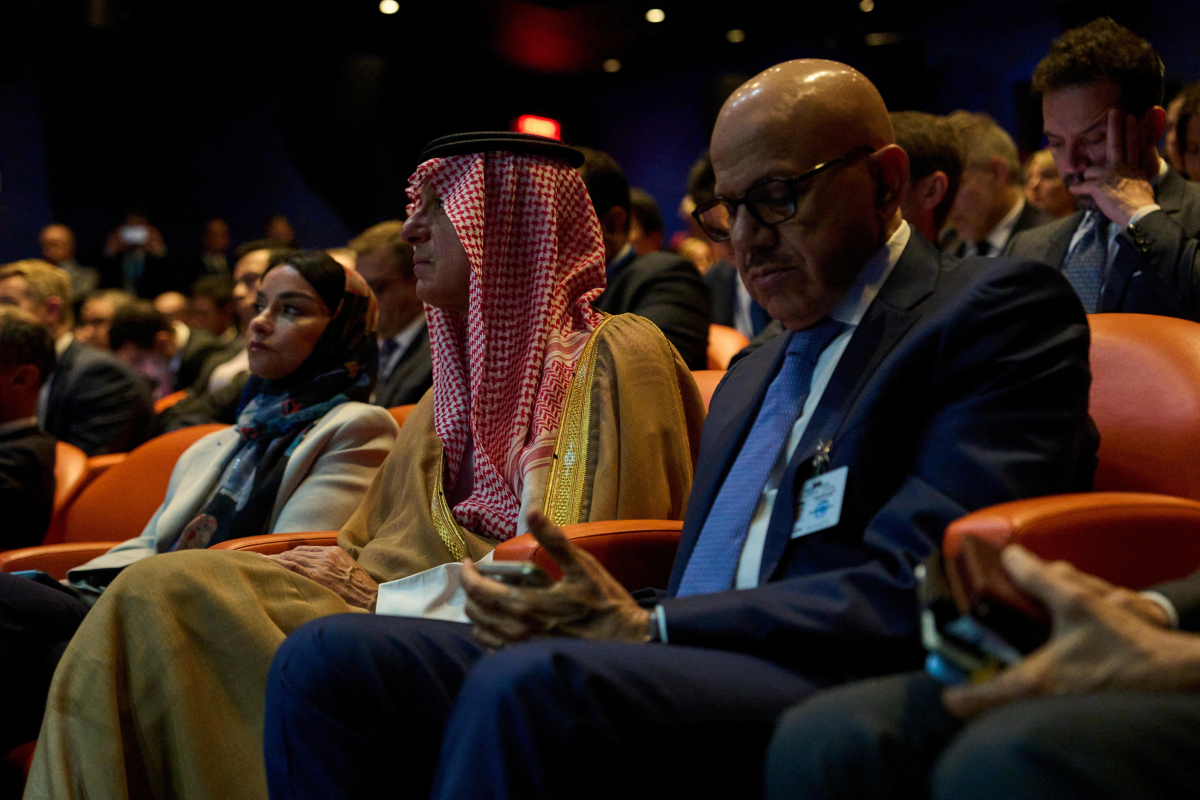
Qatar backs international call to protect Palestinian children
Qatar has reaffirmed its support for international efforts to protect Palestinian children in the West Bank and Gaza, calling for an immediate ceasefire and greater accountability for violations against children in conflict zones.
Speaking at a high-level event on the sidelines of the UN General Assembly, Minister of State for International Cooperation Mariam bint Ali bin Nasser Al Misnad said Palestinian children continue to face severe hardships, including displacement, insecurity and obstacles to accessing education.
Qatar also highlighted its ongoing humanitarian support for Gaza, including funding for essential services, and reiterated its backing for a two-state solution and the establishment of an independent Palestinian state with East Jerusalem as its capital.
⦿ 17:23 GMT | UPDATE
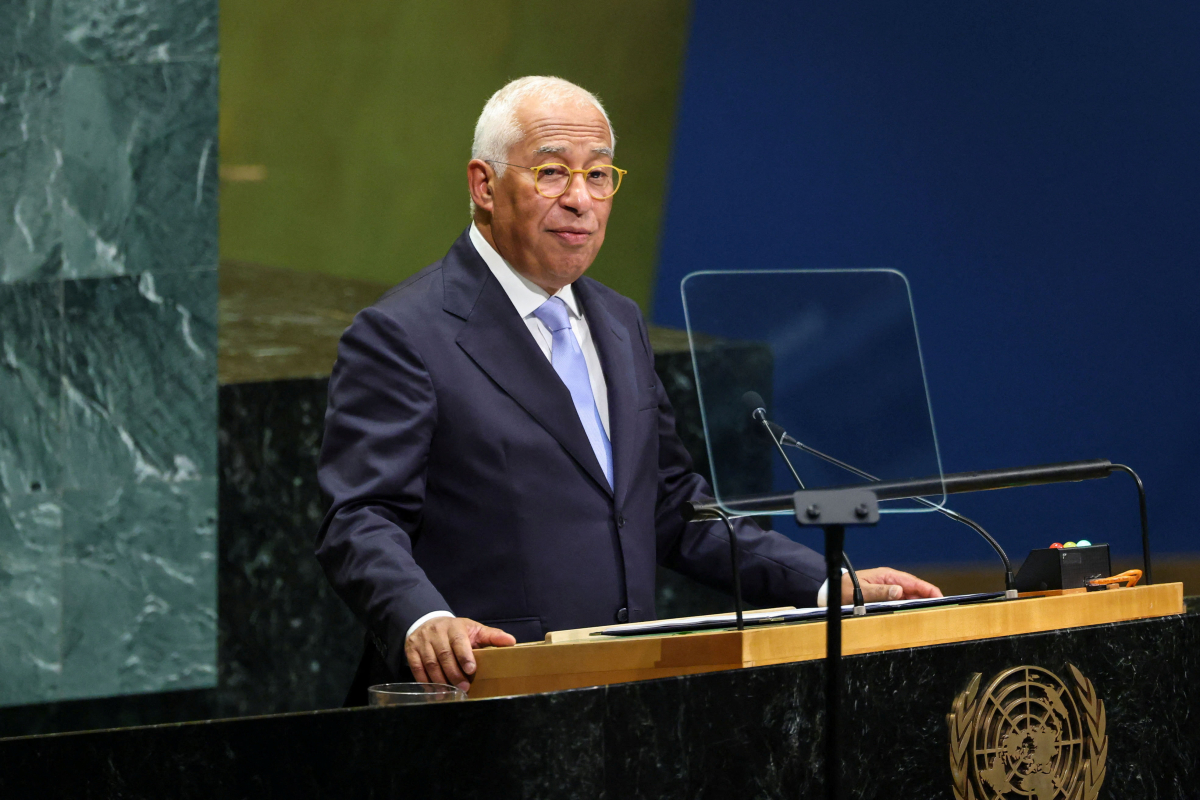
EU Council President: Iran must never obtain nuclear weapons
Speaking at the UN General Assembly, European Council President António Costa said the European Union supports efforts to resolve tensions involving Iran and stressed that any ceasefire in the region must be fully respected.
Costa also called for the preservation of freedom of navigation in the Strait of Hormuz, saying maritime traffic must remain open and unrestricted.
He argued that long-term regional stability depends on ensuring the security of all countries in the Middle East and reiterated the EU's position that Iran must never be allowed to acquire nuclear weapons.
The EU Council president also renewed support for a two-state solution between Israel and Palestine, describing it as the only path to a lasting peace in the Middle East.
⦿ 17:21 GMT | UPDATE
António Costa urges end to Ukraine war, warns over Russian escalation
Addressing the UN General Assembly, European Council President António Costa condemned Russia's invasion of Ukraine, describing it as a war of aggression that violates the UN Charter and international law.
Costa said Russia's actions have consequences far beyond Ukraine and warned that attacks linked to the conflict have increasingly threatened the security of European Union member states.
He called on Moscow to end what he described as a dangerous escalation and urged the international community to use all available diplomatic tools to help create the conditions for a comprehensive, just and lasting peace.
“The war must end,” Costa told delegates, stressing the need for negotiations that can deliver a durable settlement to the conflict.
⦿ 17:10 GMT | UPDATE
EU Council President: AI must serve humanity, not control it
Addressing the UN General Assembly, European Council President António Costa called for a transparent, accountable and regulated global framework for artificial intelligence, warning that AI governance cannot be left solely in the hands of a small number of powerful technology companies.
Costa said artificial intelligence should serve humanity rather than control it and stressed that people must remain “in the driving seat” as the technology develops.
He also argued that the United Nations should play a central role in shaping global AI standards through international initiatives on digital governance and scientific cooperation.
⦿ 17:07 GMT | UPDATE
80 nations call for immediate reopening of Strait of Hormuz
A coalition of 80 countries has called for the immediate reopening of the Strait of Hormuz, warning that disruptions in the strategic waterway threaten global trade, energy security, and freedom of navigation.
Speaking at the UN General Assembly, Bahrain's Foreign Minister Abdullatif bin Rashid Al Zayani delivered a joint statement condemning attacks in and around the strait and stressing that navigational rights and freedoms must be fully restored without delay.
⦿ 16:34 GMT | UPDATE
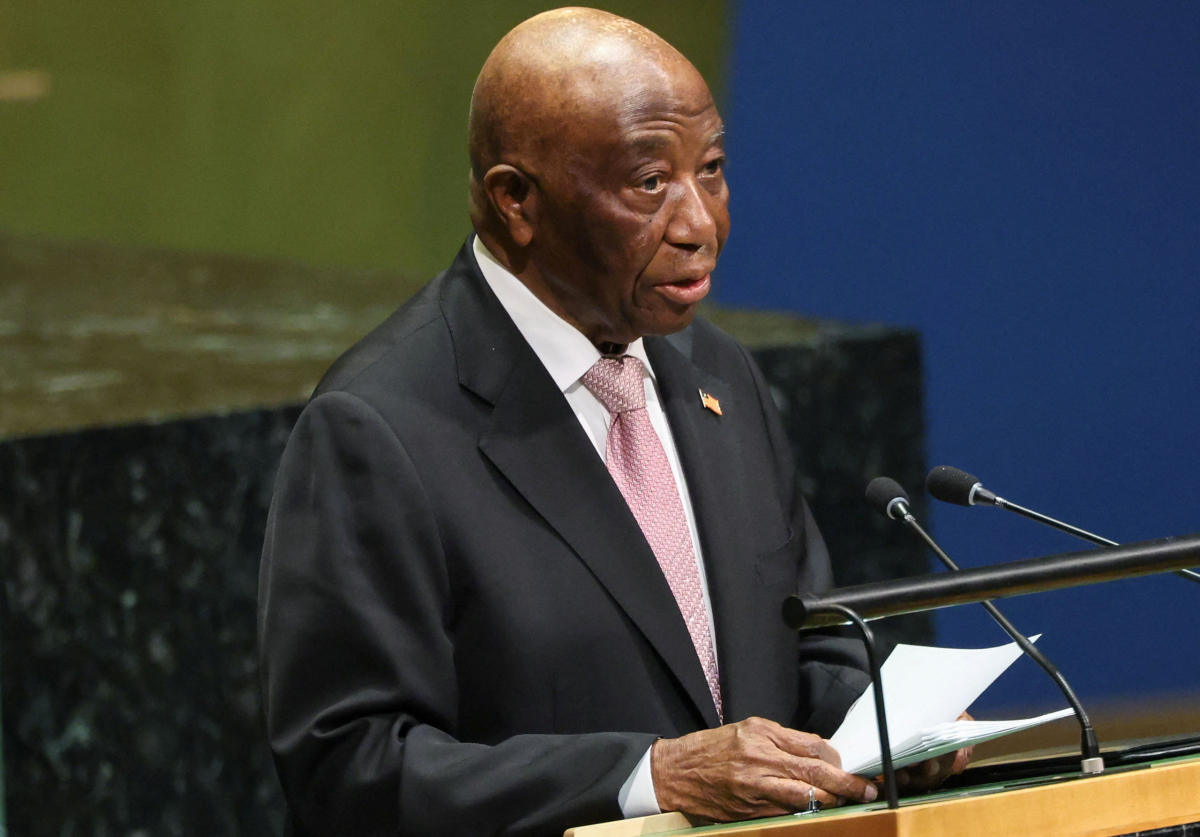
Liberian President calls for debt relief
Liberian President Joseph Boakai used his address to the UN General Assembly to call for reforms to the global financial system, warning that many developing countries are being weighed down by unsustainable debt and rising borrowing costs.
Boakai said developing nations need greater access to concessional financing, predictable development funding and long-term debt sustainability measures. He argued that higher interest rates are placing increasing pressure on vulnerable economies.
⦿ 15:00 GMT | UPDATE
Abbas says Gaza conflict has created ‘unprecedented humanitarian catastrophe’
In a pre-recorded address to the UN General Assembly, Palestinian President Mahmoud Abbas said the Israeli military campaign in Gaza had “created an unprecedented humanitarian catastrophe”.
He said Palestinians in Gaza were facing “killing, destruction, starvation, and attempts at displacement”, describing the Israeli assault as “a genocidal war”.
Abbas also said the violence had “targeted all the basic necessities of life and the future of entire generations”.
⦿ 14:51 GMT | UPDATE
Abbas urges continued support for UNRWA
Palestinian President Mahmoud Abbas has warned that ongoing Israeli attacks on UN headquarters and institutions in Jerusalem and the West Bank are hindering the work of the UN agency for Palestinian refugees, UNRWA.
Abbas called on states and international and regional organisations to maintain their support for the agency, saying there was “no substitute” for UNRWA while the refugee issue remains unresolved.
⦿ 14:48 GMT | UPDATE
Abbas calls for security and peace for Palestinians and Israelis
Palestinian President Mahmoud Abbas has called for a political process that would end the occupation, secure Palestinian self-determination and provide peace and security for Israelis and countries across the region.
“We do not want a new process for managing the conflict, while the face of the land changes every day,” Abbas told the UN General Assembly.
He said his vision was for the “Palestinian people remaining on their land and determining a future for themselves”, alongside a Palestinian state and Israel, creating the basis for “regional integration, cooperation, prosperity and security for everyone”.
⦿ 14:35 GMT | UPDATE
Palestinian President Abbas warns of ‘ethnic cleansing’ threatening Palestinians’ existence
Palestinian President Mahmoud Abbas has warned that settlement expansion and rising settler “terrorism” in the West Bank, including East Jerusalem, are threatening Palestinians’ future.
He accused Israel of “land theft” and demolitions under what he described as a system based on “racial discrimination, ethnic cleansing and state terrorism”.
Abbas warned that these policies go beyond undermining the two-state solution, saying they threaten “the very existence of the Palestinian people”.
⦿ 14:15 GMT | UPDATE
Mahmoud Abbas addresses the UNGA 2026 via recorded message
Palestinian President Mahmoud Abbas is addressing the 81st of UN General Assembly in a recorded message as he was not granted an entry visa from the United States.
Here are some of his main remarks:
- ''For the second year, our delegation was denied visas to attend UN event.''
- ''Our leadership shouldn't be punished for calling for an end to the occupation.''
- ''How much longer will some states remain silent on Israel's actions?''
- ''Our choice to invoke international law is a peaceful and civilised choice.''
- ''In the Gaza Strip, our people are being subjected - at the hands of the Israeli occupation forces - to killing, destruction, starvation, and attempts at displacement.''
- ''We combat antisemitism, racism and hatred and we believe in a culture of peace, dialogue and coexistence.''
- ''What is the international community waiting for to protect the Palestinian people, ensure their continued presence on their land, end the Israeli occupation, and implement the two-state solution based on international legitimacy?''
⦿ 13:21 GMT | UPDATE
Netanyahu to make brief U.S. visit for UN address
Reuters
Israeli Prime Minister Benjamin Netanyahu is making an unusually short visit to the U.S. for his UN address, arriving early on Thursday and expected to return to Israel later the same day after delivering his speech.
During his visit, Netanyahu is due to meet the presidents of Argentina, Bolivia, Paraguay, Panama and Ethiopia, as well as Colombia’s vice-president, and the prime ministers of Greece, Slovenia and Papua New Guinea. His office has not said whether it plans meetings with U.S. officials.
⦿ 12:57 GMT | UPDATE
UN General Debate enters third day in New York
World leaders return to the UN General Assembly on Thursday for the third day of the high-level General Debate, with speeches and diplomatic meetings continuing at UN headquarters in New York.
The Middle East and the Russia-Ukraine war remain among the major issues shaping discussions, alongside global security, humanitarian crises and the future of international cooperation.
Palestinian President Mahmoud Abbas is set to address the UN General Assembly virtually on Thursday after the U.S. denied Abbas an entry visa, while Israeli Prime Minister Benjamin Netanyahu is due to speak in person during the morning session.
⦿ 12:50 GMT | UPDATE
Welcome
Hello and welcome.
Follow us for the latest updates on the 81st UN General Assembly.














What is your opinion on this topic?
Leave the first comment