Ukrainian President Volodymyr Zelenskyy has launched a new eight-nation grouping aimed at boosting trade, energy and security cooperation across central and eastern Europe. Here's what you need to know.
1. A new regional bloc has been born
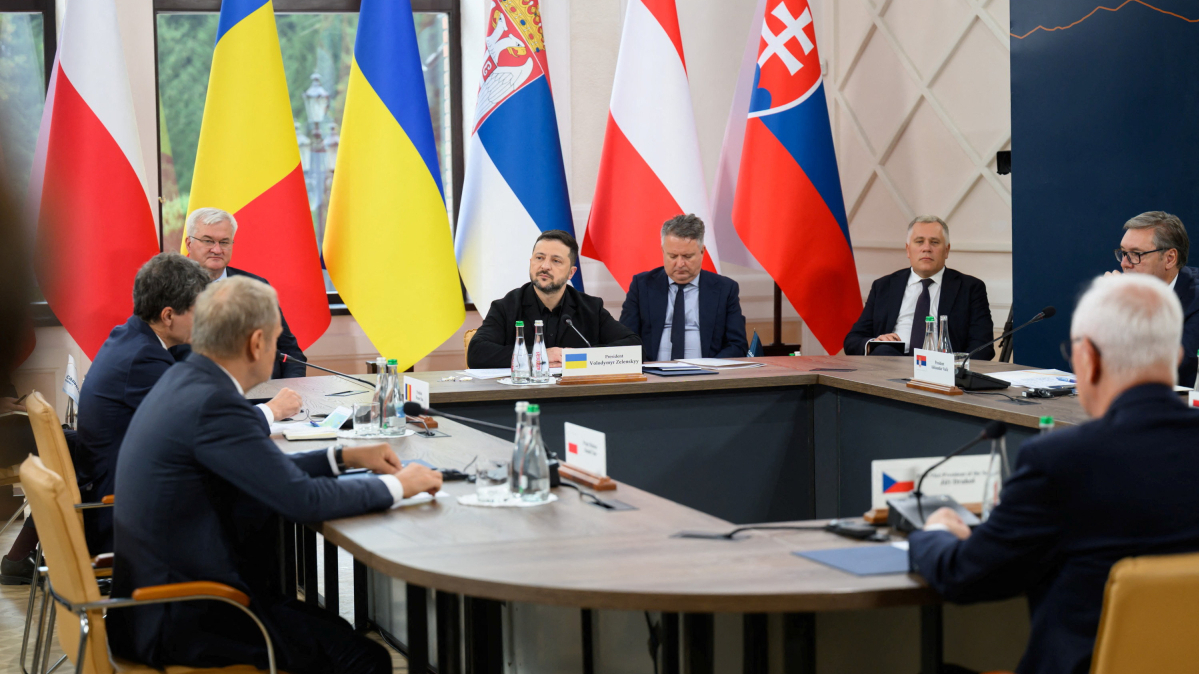
Dubbed the "Carpathian Eight," the grouping was formally launched at a summit in western Ukraine, uniting countries that share the Carpathian mountain range. The participating countries hope to attract $10.7 billion in investments with the new bloc.
2. Eight nations make up the alliance
The bloc brings together Ukraine, Romania, Serbia, Poland, Slovakia, the Czech Republic, Austria, Hungary, as well as the European Union. Poland's Prime Minister Donald Tusk, Serbia's President Aleksandar Vučić and Romania's President Nicușor Dan travelled to Ukraine for the launch.
3. It grew out of wartime cooperation
Zelenskyy thanked regional partners for keeping trade and transport routes open since Russia's full-scale invasion in 2022. The initiative formalises that cooperation, with a focus on economic ties, energy, logistics, cross-border trade and security.
4. Fifty deals were signed on day one
Officials struck 50 agreements worth more than $1.15 billion, Zelenskyy said. He gave few specifics, but noted more than half concerned energy projects, particularly solar and wind power.
5. Energy independence is a central goal
Zelenskyy argued the region could become more than a transit corridor.
“The Carpathians could become an energy supplier for the European Union, not just a transit region,” he wrote on Telegram, tying the plan to Europe's push to cut reliance on Russian energy.
6. Business turned out in force
Close to 550 business representatives attended, underlining Kyiv's efforts to pair political backing with investment. Zelenskyy called security “a priority right now and for the years ahead," alongside infrastructure and cross-sector agreements.
7. Summit isn't over yet
Talks continue through the weekend, with further business and diplomatic meetings expected before the event concludes on Sunday (20 September).
Read more from Ukraine:











What is your opinion on this topic?
Leave the first comment