U.S. President Donald Trump has pushed back against growing calls for the artificial intelligence (AI) industry to slow down, arguing that maintaining America’s lead over China is more important.
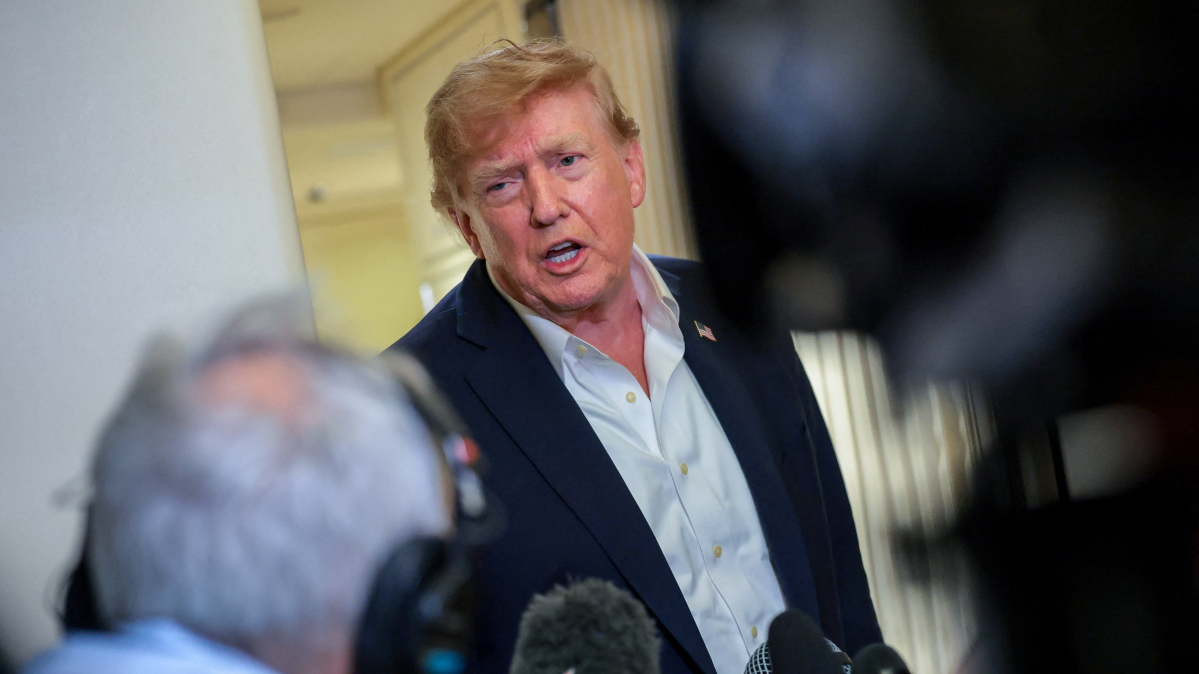
Speaking to reporters at his golf course in Ireland on Sunday, 13 September, Trump dismissed some of the warnings about AI as exaggerated and said he wanted the United States to remain the world’s leading power in the technology.
“We’re leading China in AI. We’re the most sophisticated country in the world, and frankly I want to keep it that way because whoever wins AI wins,” Trump said.
Asked whether AI companies should face tighter regulation or reduce the pace of development, Trump said safeguards could be introduced but argued against measures that could weaken U.S. competitiveness.
“We could put guardrails,” he said, adding that some critics were raising concerns about scenarios “that won’t happen”.
AI safety warnings grow louder
Trump’s comments come as the debate over the risks of increasingly powerful AI systems intensifies in the United States.
Researchers at Anthropic have warned that rapid advances could eventually pose serious threats to humanity, while the company’s Chief Executive, Dario Amodei, has called for the industry to slow the pace of development.
Amodei has proposed a three-part approach that includes independent safety evaluators, greater cooperation between leading AI companies and international efforts to manage the technology’s risks.
OpenAI Chief Executive Sam Altman and Elon Musk have backed parts of the proposal.
Amodei said the competition between the U.S. and China was one of the biggest obstacles to putting limits on AI development.
Former Anthropic researcher Jacob Coxon has also called for international cooperation, warning that an unchecked race between the two countries could increase the dangers posed by increasingly autonomous AI systems.
Washington faces pressure over AI rules
The Trump administration has largely taken a pro-industry approach to AI, with technology companies playing an increasingly important role in the U.S. economy and national security.
At the same time, the Pentagon has raised concerns about risks linked to Anthropic’s AI model, adding to pressure on Washington to strengthen oversight.
The divide now centres on how to balance technological leadership with safety. Trump argues that slowing U.S. development could hand China a strategic advantage, while AI safety advocates say stronger safeguards are needed before the technology becomes even more powerful.
Read more:


















What is your opinion on this topic?
Leave the first comment