




23:25 CET
Nigeria confirms Ebola case in Abuja
Nigerian health authorities have confirmed a case of Ebola disease in the Federal Capital Territory (FCT)...
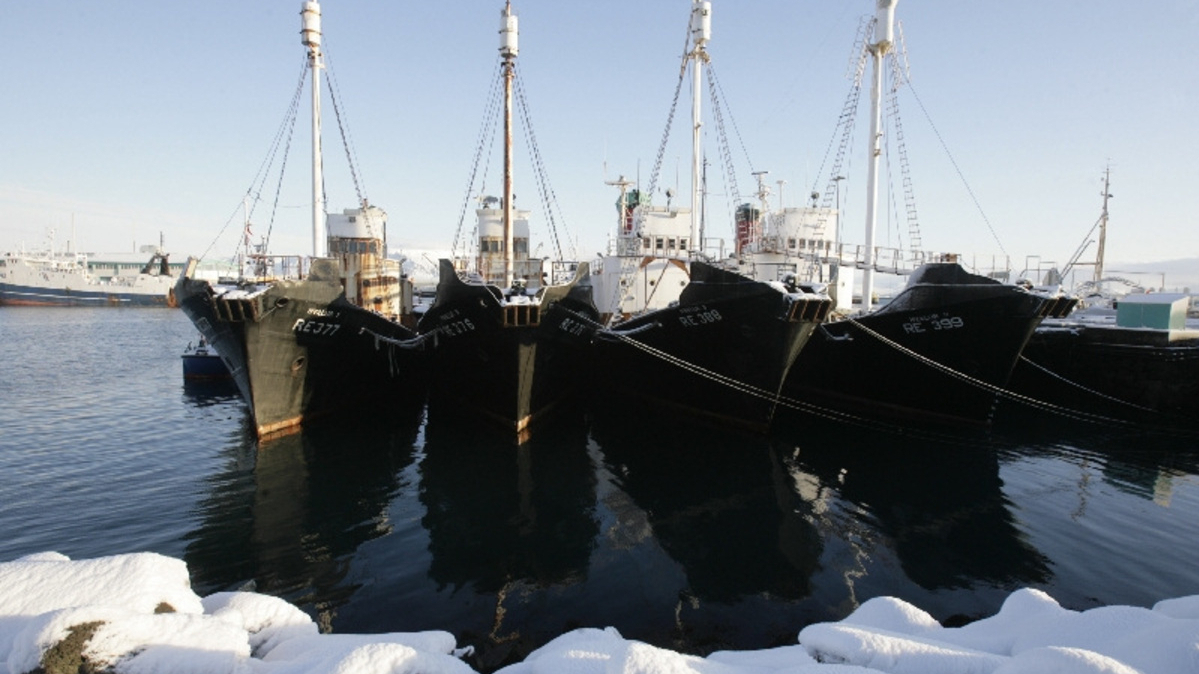


Iceland’s government plans to introduce legislation in February to permanently ban commercial whaling, potentially leaving Norway and Japan as the world’s only countries still allowing the practice.
The proposed legislation could bring an end to years of controversy over Iceland’s whaling industry, which has faced opposition from animal rights groups and international campaigners.
The bill will include “a permanent ban on whaling”, the government said on its website.
Iceland’s ruling coalition holds a majority in parliament, boosting the prospects of the bill being approved.
“There is considerable political and public support for this bill to ban commercial whaling and compelling ethical, veterinary, legal and conservation reasons to hope it succeeds,” said Wendy Higgins, a spokesperson for Humane World for Animals.
The proposed ban comes as whale watching has become a significant part of Iceland’s tourism industry. Around 350,000 people take whale-watching trips in the country each year, while tourism accounts for about 8.8 per cent of Iceland’s GDP.
Commercial whaling, meanwhile, has become increasingly marginal. Surveys cited by Humane World for Animals suggest fewer than two per cent of Icelanders eat whale meat, with foreign tourists accounting for much of the domestic demand.
Opposition to Iceland’s whaling industry has attracted support from internationally known figures, including Leonardo DiCaprio, Jason Momoa, filmmaker James Cameron and Icelandic musician Björk. DiCaprio has previously called for an outright ban, while other campaigners have backed efforts to bring commercial whaling in the country to an end.
Iceland’s whaling industry has focused mainly on fin whales, which are classified as vulnerable by the International Union for Conservation of Nature (IUCN).
During this year’s hunting season, which runs from June to around the end of September, 80 fin whales had been caught by 9 September, according to Humane World for Animals.
The current quota allows as many as 150 fin whales to be killed this year.
In 2024, Iceland’s interim government granted a five-year licence to the country’s only remaining whaling company, despite continued criticism from environmental and animal welfare organisations.
If Iceland approves the ban, Norway and Japan could become the only countries still conducting commercial whaling.
According to catch records from the International Whaling Commission, Iceland, Norway and Japan have been the only countries conducting commercial whaling in recent years.
Norway resumed commercial whaling in 1993, while Iceland restarted the practice in 2006, despite an international moratorium introduced in 1986 to help protect whale populations.
Japan withdrew from the International Whaling Commission in 2019 and resumed commercial whaling in its territorial waters and exclusive economic zone.
The global ban on commercial whaling includes exceptions for certain indigenous communities, including those in Greenland and Alaska.
These communities are permitted to hunt whales because whale products remain an important part of their traditional diets and cultural practices.
Iceland’s planned ban would represent a significant shift for the country after decades as one of the few nations to maintain a commercial whaling industry despite international pressure.

Nigerian health authorities have confirmed a case of Ebola disease in the Federal Capital Territory (FCT)...
China has lodged a formal diplomatic protest with the UK after British border officials allegedly subjected Chinese travellers to lengthy questioni...
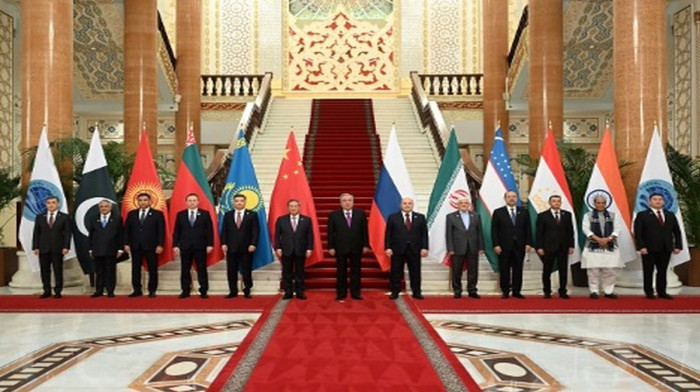
Member states of the Shanghai Cooperation Organisation (SCO) prevented 273 terrorist attacks and more than 3,000 crimes linked to terrorism, separa...

U.S. President Donald Trump has criticised Ukrainian President Volodymyr Zelenskyy for continuing to target Russia's energy infrastructure, while Russian strikes on Kyiv overnight killed at least one person and damaged a metro station.

Ukrainian President Volodymyr Zelenskyy has arrived in Norway for talks about the Russia-Ukraine war. He is expected to meet with U.S. President Donald Trump's Special Envoy Steve Witkoff, who arrived in Oslo earlier. Witkoff will also meet European officials.

French President Emmanuel Macron has condemned the violence, looting and vandalism that erupted during cost-of-living protests across France. Prime Minister Sébastien Lecornu held crisis talks on Monday, calling for partial curfews and raising the possibility of a state of emergency.
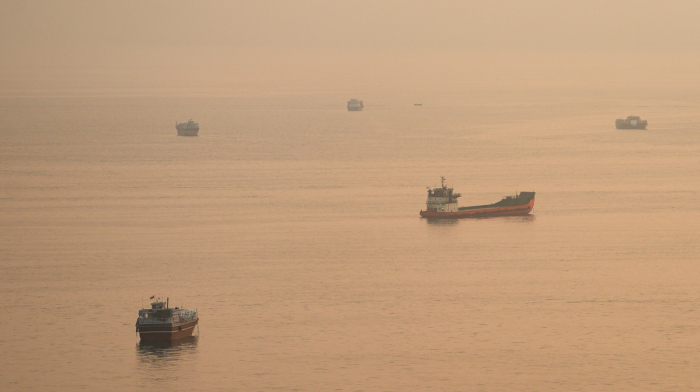
An oil tanker caught fire after striking a naval mine in the southern part of the Strait of Hormuz, Iran’s Islamic Revolutionary Guard Corps (IRGC) Navy said late Sunday.

Iranian Foreign Minister Abbas Araghchi said regional issues should be resolved through diplomacy and blamed the United States for insecurity and tensions in the Strait of Hormuz, speaking at a joint news conference with Russian Foreign Minister Sergey Lavrov on Monday.
Nigerian health authorities have confirmed a case of Ebola disease in the Federal Capital Territory (FCT), prompting the activation of emergency public health measures aimed at preventing further transmission of the deadly virus.
China has lodged a formal diplomatic protest with the UK after British border officials allegedly subjected Chinese travellers to lengthy questioning and seized personal electronic devices, including phones, laptops and smartwatches.

More than 150 people have been killed in a drone strike on a crowded market in the disputed Abyei region, South Sudanese officials said, marking one of the deadliest attacks linked to Sudan's civil war since it began in April 2023.
Ukrainian President Volodymyr Zelenskyy has arrived in Norway for talks about the Russia-Ukraine war. He is expected to meet with U.S. President Donald Trump's Special Envoy Steve Witkoff, who arrived in Oslo earlier. Witkoff will also meet European officials.
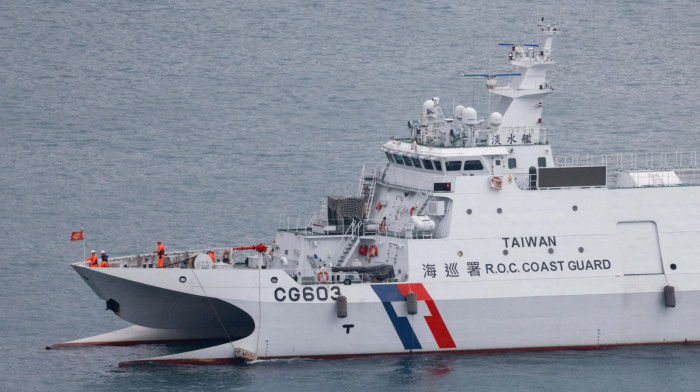
Beijing says it deployed naval forces to monitor a U.S. warship near Sabina Shoal, while Taiwan reports a separate confrontation with a Chinese coast guard vessel near the Pratas Islands.
You can download the AnewZ application from Play Store and the App Store.




What is your opinion on this topic?
Leave the first comment