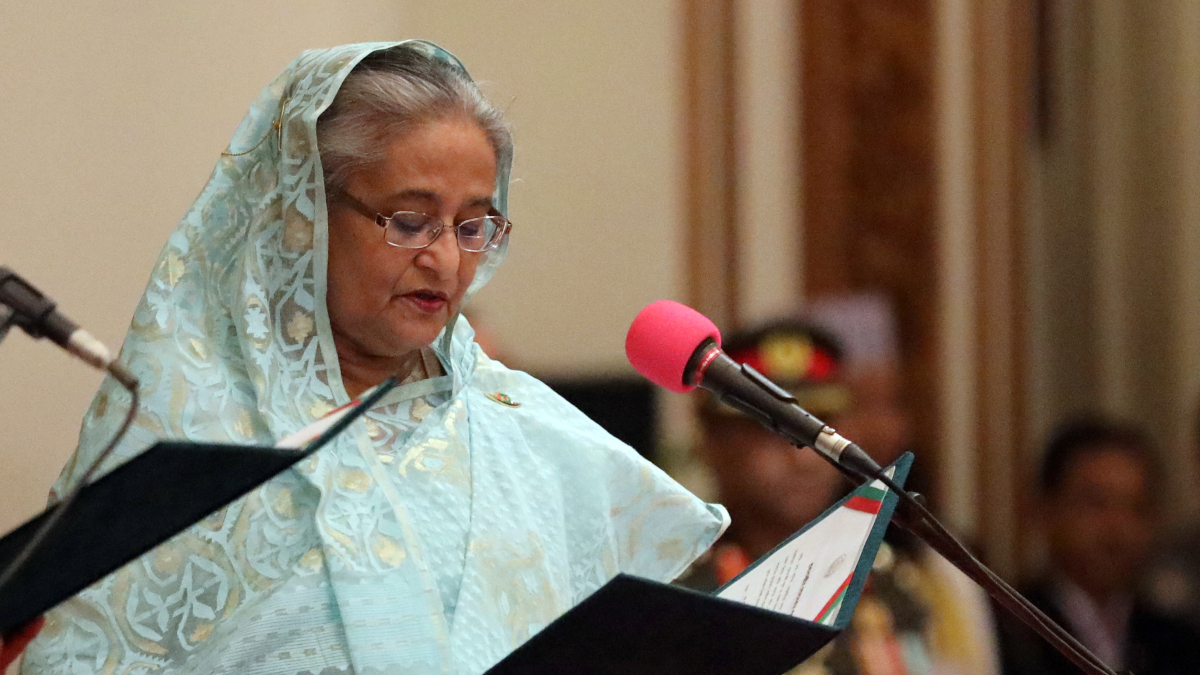
Bangladesh has rejected ousted Prime Minister Sheikh Hasina's application for a new passport, casting doubt on her planned return from exile in India this December, more than two years after a student-led uprising toppled her government.
The 78-year-old former leader faces a death sentence for her role in the deadly crackdown on protesters in 2024. Her Awami League party insists she will return despite the government's refusal to issue new travel documents.
The decision adds to tensions between Bangladesh and India, where Hasina has lived since August 2024, amid fears her return could trigger fresh political unrest.
Bangladesh refuses travel documents
Hasina's lawyers applied for a new passport and national identity card at Bangladesh's diplomatic mission in New Delhi on Monday, 9 November.
Both documents were revoked by the interim government that took office after her removal.
Her lawyers argued that, as a Bangladeshi national, Hasina was entitled to have her application considered under domestic law and international human rights obligations.
Bangladesh rejected the application, with State Minister for Foreign Affairs Humaiun Kobir saying the government “doesn't provide passport to a terrorist”.
Dhaka also renewed its demand for India to extradite Hasina under an existing bilateral treaty.
India has yet to announce a decision on the extradition request. In April, its foreign ministry said it was examining the matter while seeking constructive relations with Bangladesh's new government.
Death sentence awaits former leader
Hasina fled Bangladesh on 5 August 2024 after student protests over government job quotas spiralled into nationwide demonstrations against her administration.
Security forces launched a deadly crackdown, with the United Nations estimating that up to 1,400 people were killed during the unrest.
In November 2025, a Bangladeshi court sentenced Hasina to death in absentia for ordering the crackdown on protesters.
She denies the charges.
Despite the sentence, Hasina told Reuters in July that she planned to return to Bangladesh voluntarily and surrender to the authorities.
“If death comes, I want it to come on my own soil, where my parents are buried and their blood was shed,” she said.
Her return would present the government with a politically sensitive challenge: how to deal with a former prime minister facing execution.
Awami League insists on December return
Hasina's Awami League maintains that she will return in December, even without a new passport.
However, the party has not explained how she plans to travel without valid documents. Her aides say more details will follow.
The party remains banned from taking part in elections following Hasina's removal.
Bangladesh's February 2026 general election brought the Bangladesh Nationalist Party to power under Prime Minister Tarique Rahman, who himself spent years in exile during Hasina's rule.
Despite greater political stability following the election, divisions remain deep between Hasina's supporters and those seeking accountability for the 2024 violence.
Her return could rally Awami League supporters but also spark fresh protests from opponents.
India faces renewed diplomatic pressure
Hasina's continued presence in India has strained relations between the two neighbours.
Bangladesh is pressing for her extradition following her conviction, but New Delhi has yet to publicly commit to handing her over.
The dispute comes as Bangladesh struggles to recover from prolonged political and economic turmoil.
The world's second-largest garment exporter faces rising living costs alongside fuel and electricity shortages, putting further strain on the government.
Fresh political unrest could threaten the country's fragile recovery.












What is your opinion on this topic?
Leave the first comment