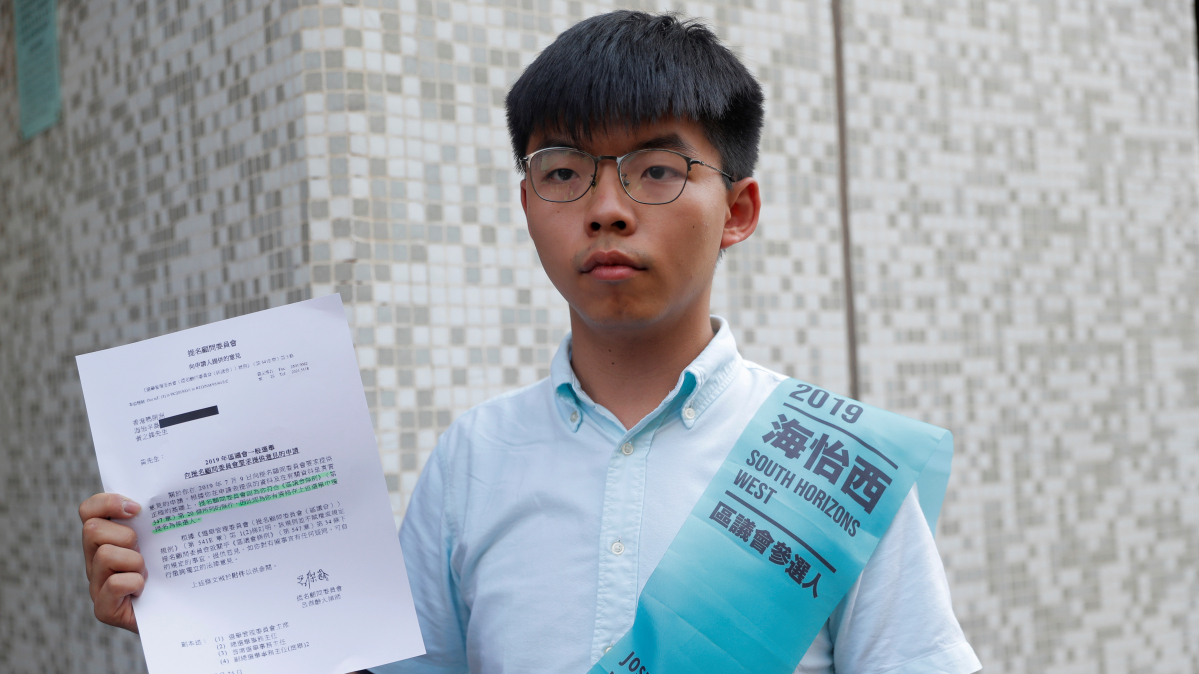
Hong Kong activist Joshua Wong has pleaded guilty to collusion with foreign entities, a charge that carries a maximum sentence of life in prison under Beijing’s National Security Law.
Wong, 29, rose to international prominence as a youthful democracy activist in Hong Kong, one of a group of youngsters whose protest efforts have now effectively been outlawed by Beijing’s National Security Law.
He is already serving a four year and eight month sentence in jail for subversion, another offence under the National Security Law, after being convicted in 2024.
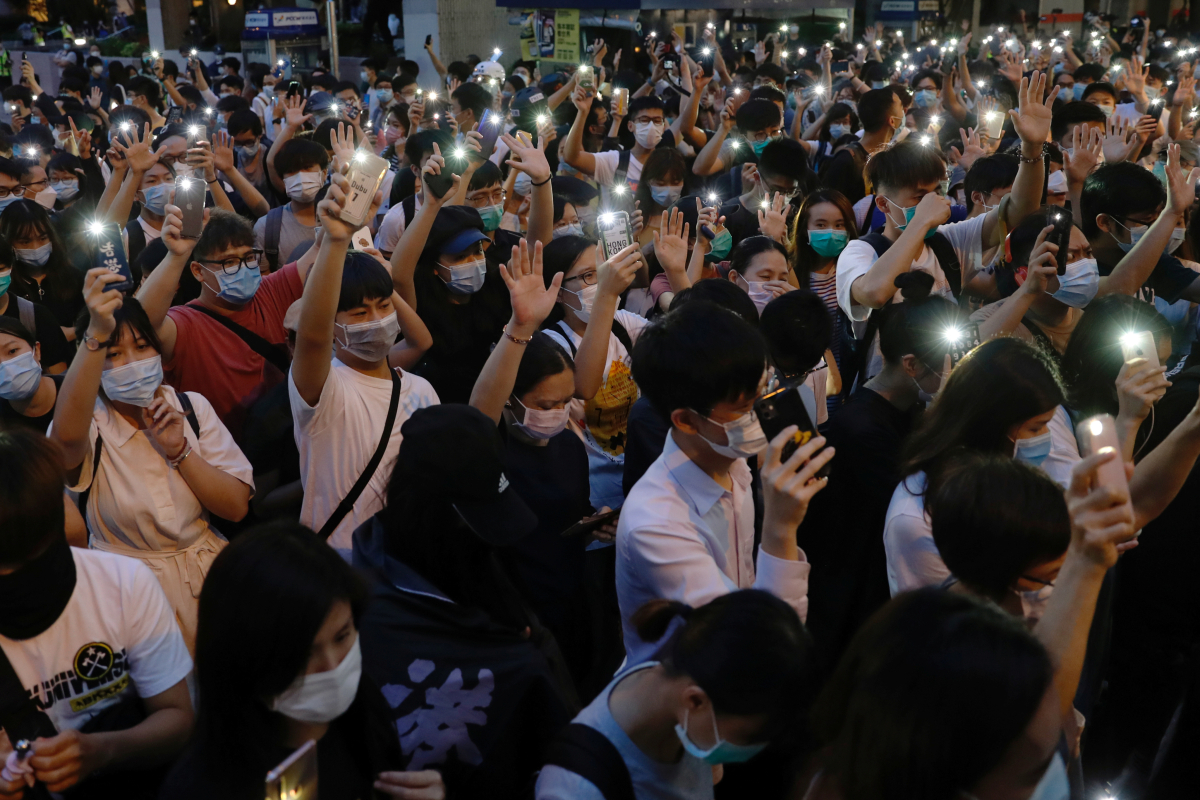
Wong was a key figure in Hong Kong’s student-led 2014 Umbrella Movement demonstrations in 2014 and pro-democracy protests in 2019.
The new charges accuse Wong of conspiring with other activists to ask foreign countries to impose sanctions or blockades against Beijing in 2020, according to court papers.
The prosecution highlighted what it said was an international media and political campaign by the now-disbanded political party Demosisto, which backed a referendum on Hong Kong's sovereignty.
The party counted Wong as one of its leaders and sought to bring sanctions on Hong Kong and China in 2019 and 2020, according to the prosecution.
What is Hong Kong's National Security law?
Beijing established the National Security Law in Hong Kong in June 2020, following months of large pro-democracy protests the previous year.
The law targets a range of activity, including attempts to separate Hong Kong from China, efforts to undermine China’s system of government, threats or violence against the state, and collusion with foreign forces in a way deemed to endanger China’s national security.
Critics of the law have raised concerns about how broadly it can be interpreted, including Martin Lee the founding chairman of Hong Kong’s Democratic Party.
“This is clearly a pretext for Beijing to assert comprehensive control over Hong Kong,” Lee said in June 2020.
International attention
Wong's case and others are being closely watched by international human rights groups and some Western countries tracking the implementation of the National Security Law.
His case comes after two other activists were found guilty of inciting subversion last month after they used the phrase "end one-party dictatorship" in their political activities.
Lee Cheuk-yan, 69, and Chow Hang-tung, 41, were part of a group known for organising annual vigils marking Beijing's 1989 Tiananmen Square crackdown on pro-democracy protesters.
Read more:


















What is your opinion on this topic?
Leave the first comment