Bougainville's long-running push for independence entered a new phase on Thursday as Papua New Guinea's parliament prepared to consider the outcome of the region's 2019 referendum.
The development represents the first formal parliamentary consideration of the referendum result since the vote was held in 2019.
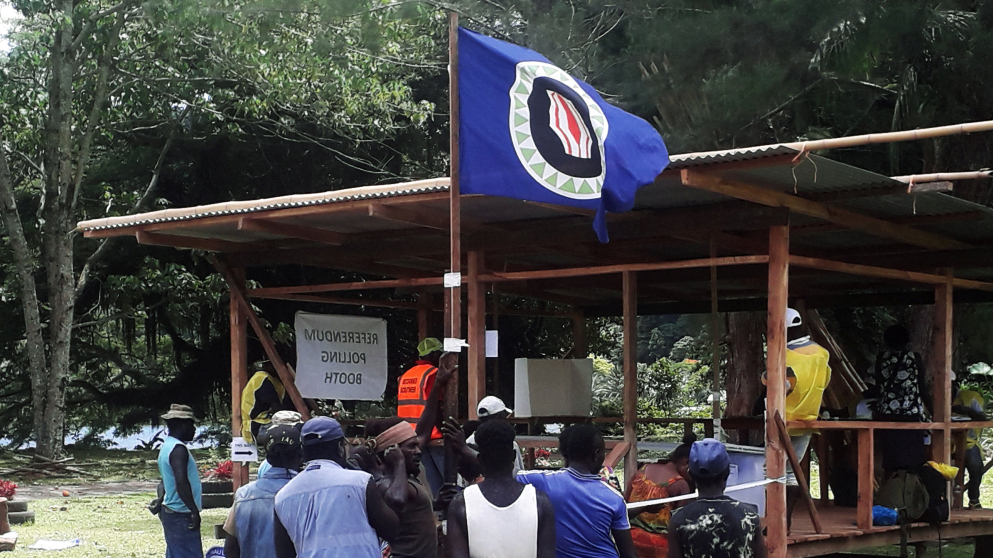
Bougainville, an autonomous region northeast of mainland Papua New Guinea, is home to around 370,000 people. In a referendum held in 2019, voters overwhelmingly backed independence, with 97.7% supporting separation from Papua New Guinea.
However, the vote was non-binding, meaning the result must be considered and ratified by Papua New Guinea's national parliament before any change to the region's status can take effect.
A long road since the referendum
Although the referendum was held nearly seven years ago, progress toward implementing its outcome has moved slowly.
Negotiations between the government in Port Moresby and Bougainville's autonomous administration have focused on how the referendum result should be addressed and what any future political arrangement might look like.
Earlier this month, both sides agreed that Papua New Guinea's parliament would begin considering the referendum outcome from Thursday, marking a significant step in the process. No date has yet been set for a final parliamentary vote.
Bougainville's leaders have welcomed the parliamentary process after years of negotiations with the national government.
Roots of the independence movement
Bougainville's campaign for independence is rooted in decades of political and economic grievances.
A major source of tension has been the Panguna copper and gold mine, once among the largest mining projects in the world. Independence supporters have long argued that Bougainville received an unfair share of revenues generated by the mine while carrying much of the environmental and social burden associated with its operations.
Those concerns contributed to growing tensions between the region and the central government, eventually culminating in a civil conflict that lasted for about a decade and claimed thousands of lives.
The conflict remains one of the most significant episodes of violence in the modern history of the Pacific region.
A peace agreement signed in 2001 brought an end to the fighting and established a framework for Bougainville's future.
The deal granted the region substantial autonomy and included a commitment to hold a referendum on its political status at a later date.
For many residents, the 2019 vote represented the fulfilment of that promise and provided a clear indication of public sentiment regarding Bougainville's future.
The referendum result strengthened the position of independence supporters and intensified discussions over the region's future political status.
What comes next?
While the referendum delivered a strong mandate for independence, significant political and practical questions remain.
Papua New Guinea's government has acknowledged the referendum outcome while maintaining that any transition must be negotiated within the country's constitutional framework.
Bougainville's leadership has outlined a roadmap that envisages greater self-government by 2027 and full independence by 2030. Whether those timelines can be achieved will depend heavily on negotiations with the national government and decisions taken by parliament.
Questions also remain about governance, economic sustainability and how an independent Bougainville would develop state institutions capable of managing the region's affairs.
The future of the Panguna mine is also likely to remain central to discussions about the territory's economic prospects.
A decisive stage
The parliamentary debate is the most significant formal step in the process since the referendum was held.
As Papua New Guinea's parliament begins deliberating the referendum outcome, attention is turning to how the two sides will navigate the next stage of negotiations over Bougainville's future status.
Read More:














What is your opinion on this topic?
Leave the first comment