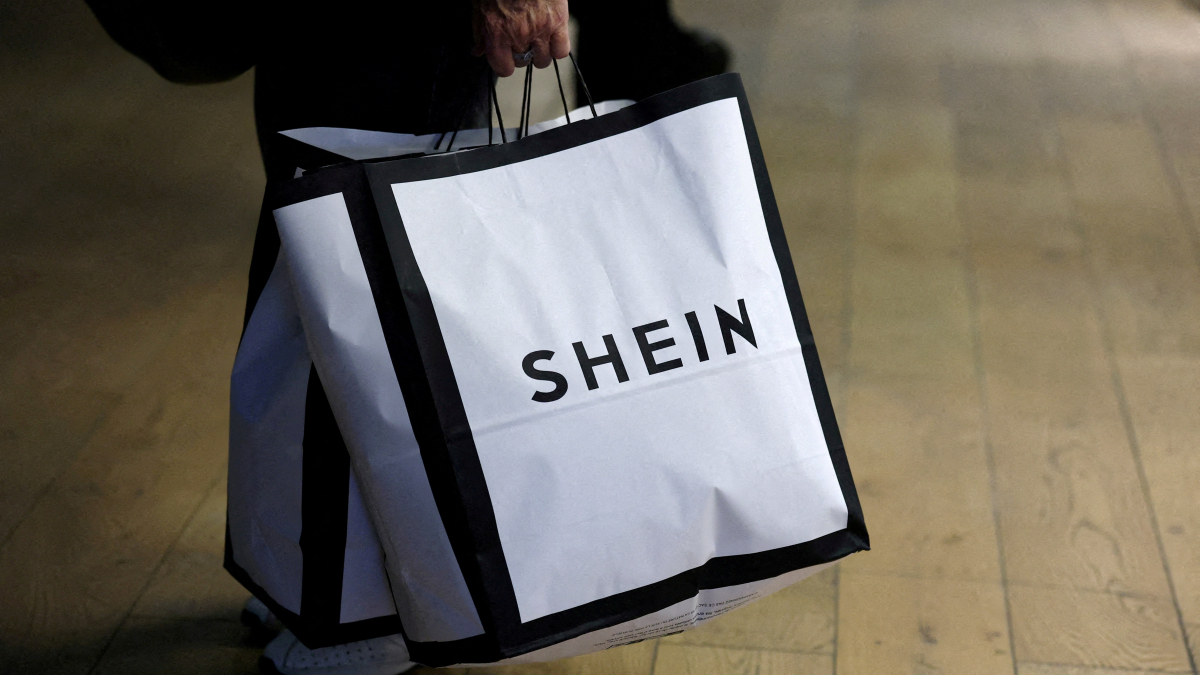
Online fast-fashion retailer Shein is seeking to raise up to $1.77 billion in a Hong Kong IPO after its valuation fell around 70 per cent from its private-market peak four years ago.
The long-awaited listing launched on Monday after Shein, known for selling low-cost fashion to customers in around 160 countries, abandoned earlier plans to float in New York and London.
The IPO marks a major test for the fast-fashion giant as it faces investor concerns over growth and profitability alongside continued scrutiny over the environmental and social impact of its business model.
Shein targets valuation of around $27 billion
Shein is offering 280 million shares at between $6.10 and $6.34 each (HK$47.60-HK$49.50), according to regulatory filings.
At the top of the price range, the company would be valued at close to $27 billion.
Reuters reported last week that the IPO was expected to value Shein at roughly a quarter of the $100 billion valuation it reached in 2022.
The company was valued at $64 billion in both 2023 and April 2024.
The China-founded, Singapore-headquartered retailer is expected to announce the final IPO price on 31 August, with trading scheduled to begin on 1 September.
Shein had initially sought a valuation of between $30 billion and $40 billion when investor meetings ahead of the IPO began.
Investors reassess Shein’s growth prospects
The sharp drop in valuation follows growing concerns over slowing growth, rising costs and changing market conditions.
Investors have questioned whether Shein can return to the rapid growth rates that helped push its valuation close to $100 billion four years ago.
Winston Ma, an adjunct professor at New York University School of Law and former head of North America for China’s sovereign wealth fund CIC, said the lower valuation reflected a new market reality.
“Public investors are no longer paying for hyper-growth. They are underwriting a mature cross-border platform that must now defend its profit margins against trade tariffs, higher compliance costs, and regulatory scrutiny in both the U.S. and China,” Ma said.
Fast-fashion model faces ethical scrutiny
Beyond financial concerns, Shein’s business model has faced growing criticism from environmental groups, labour rights advocates and regulators.
Fast fashion is built around producing inexpensive clothing quickly in response to rapidly changing trends, encouraging retailers to shorten the time between design, production and sale. Shein has pushed that approach further with an ultra-fast model that uses data to identify emerging trends and bring new products to market rapidly.
The wider industry has transformed the global clothing market by making trend-led fashion more affordable and accessible, but its rapid production cycles have also intensified concerns about overconsumption, waste and the resources required to manufacture and transport clothing.
Shein’s model relies on rapidly identifying trends and producing low-cost clothing, raising concerns over textile waste, carbon emissions and the environmental impact of disposable fashion.
Critics argue that the fast-fashion industry encourages excessive consumption by making clothing cheaper and more frequently replaceable, contributing to a growing global waste problem.
Shein has also faced scrutiny over supply-chain transparency and allegations related to labour conditions among suppliers. The company has said it has strengthened compliance measures, increased supplier monitoring and introduced sustainability initiatives to address these concerns.
The retailer has promoted efforts to reduce emissions, improve supply-chain oversight and expand the use of more sustainable materials, but campaigners say greater transparency and independent verification are needed.
Shein compared with global fashion rivals
At a market capitalisation of around $27 billion, Shein would be valued at approximately 0.7 times its forecast sales, according to LSEG data.
That would make it more expensive on this measure than European online fashion retailer Zalando, which trades at around 0.4 times sales.
However, Shein would remain cheaper than H&M and Zara owner Inditex, which trade at multiples of approximately 1.1 and 4.0 respectively.
Major investors back the IPO
Cornerstone investors led by existing shareholders Boyu, Tiger Global and General Atlantic have subscribed for around $383 million worth of Shein shares, according to the company’s prospectus.
Tencent, Greenwoods, Taikang Life and UBS Asset Management are also expected to participate in the offering.
Shein said about 80 per cent of the proceeds raised through the IPO would be used to improve its technology and strengthen its brand and global presence.
Shein to make billions in payments to earlier investors
According to the prospectus, Shein has also agreed to pay up to $3.5 billion in cash to certain investors who purchased special shares during previous private funding rounds.
The shares offered in the Hong Kong IPO will carry one-tenth of the voting rights attached to shares held by the company’s founders.
Co-founders Sky Yangtian Xu, Maggie Gu, Molly Miao and Tony Ren will together retain control of around 90 per cent of Shein’s voting rights after the listing.
A defining moment for fast fashion
Shein’s Hong Kong listing comes at a critical point for the fast-fashion sector, as retailers face growing pressure to reconcile low prices and rapid production cycles with demands for greater environmental sustainability and stronger labour standards.
For Shein, the IPO is also a test of how investors now value the ultra-fast-fashion model that helped drive its extraordinary expansion but has attracted mounting regulatory and environmental scrutiny.
The listing will show whether public-market investors are prepared to back a company built on speed, scale and affordability at a time when questions over the long-term environmental and social costs of fast fashion are becoming harder to ignore.






















What is your opinion on this topic?
Leave the first comment