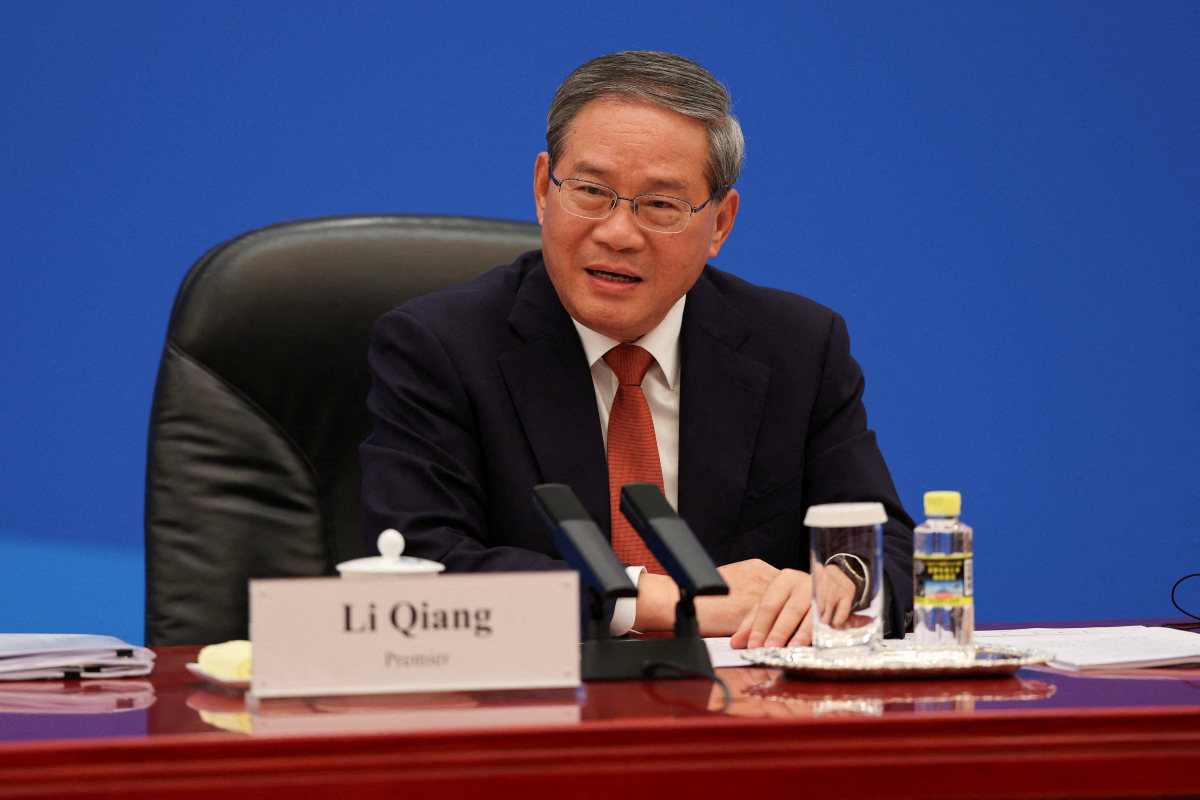
Chinese Premier Li Qiang has called on American companies to expand their presence in China and pledged that Beijing would address their "reasonable concerns," as China looks to stabilise trade ties with Washington ahead of President Xi Jinping's planned visit to the U.S. later this month
Li made the comments during a meeting with a delegation from the U.S.-China Business Council, led by its chair, Visa Chief Executive Ryan McInerney, at the Great Hall of the People in Beijing. The council represents more than 270 American companies with operations in China, including Visa, Medtronic, 3M and Pfizer.
"China may be the only market in the world that combines the two qualities of being large and new," Li told the delegation, pointing to the country's fast-growing smart and green consumption sectors as evidence of continued opportunity for foreign firms.
The premier said Beijing would ensure a fair and competitive market for U.S. businesses and work to resolve difficulties they raise while calling on Washington to reciprocate by taking "concrete steps" to address concerns China has raised and to implement the outcomes of recent bilateral trade talks.
He characterized ongoing frictions as a normal byproduct of the scale of U.S.-China commercial ties, one that could be managed through consultation and mutual respect.
The appeal comes at a delicate moment for the relationship.
It follows a warning last week from U.S. Treasury Secretary Scott Bessent, who told G20 counterparts he would press member states to re-examine trade terms with Beijing, calling China's $1.2 trillion global trade surplus unsustainable, arguing that Beijing is leaning on exports to offset a weakening domestic economy.
Chinese officials have not directly rebutted the figure but have consistently pushed back on characterisations of the country's growth model as export-dependent, instead pointing to what they describe as resilient and expanding domestic demand.
The overture to U.S. businesses also comes ahead of a consequential diplomatic window as Xi is expected to travel to Washington later this month for a potential meeting with President Trump, while the current U.S.-China trade and export control truce is due to expire in November.
Both sides have used the run-up to reiterate familiar positions with Beijing emphasising market access and openness and Washington pressing on the trade deficit and unresolved issues such as export controls and rare-earth commitments.
Li's meeting with the Business Council shows a pattern seen throughout the year.
When Trump's own business delegation visited Beijing in May, both Xi and Li made similar appeals to American executives to deepen their footprint in China, with Li stressing that a "stable and predictable" economic relationship serves both countries. That visit followed talks between Xi and Trump aimed at setting what officials called a strategic direction for the relationship.
This week's remarks could potentially translate into eased tensions, but it does depend less on rhetoric and more on the specifics still under negotiation, like tariff levels, export-control rules on advanced technology, and the rare-earth and critical-minerals commitments that have become a persistent sticking point in bilateral talks.





















What is your opinion on this topic?
Leave the first comment