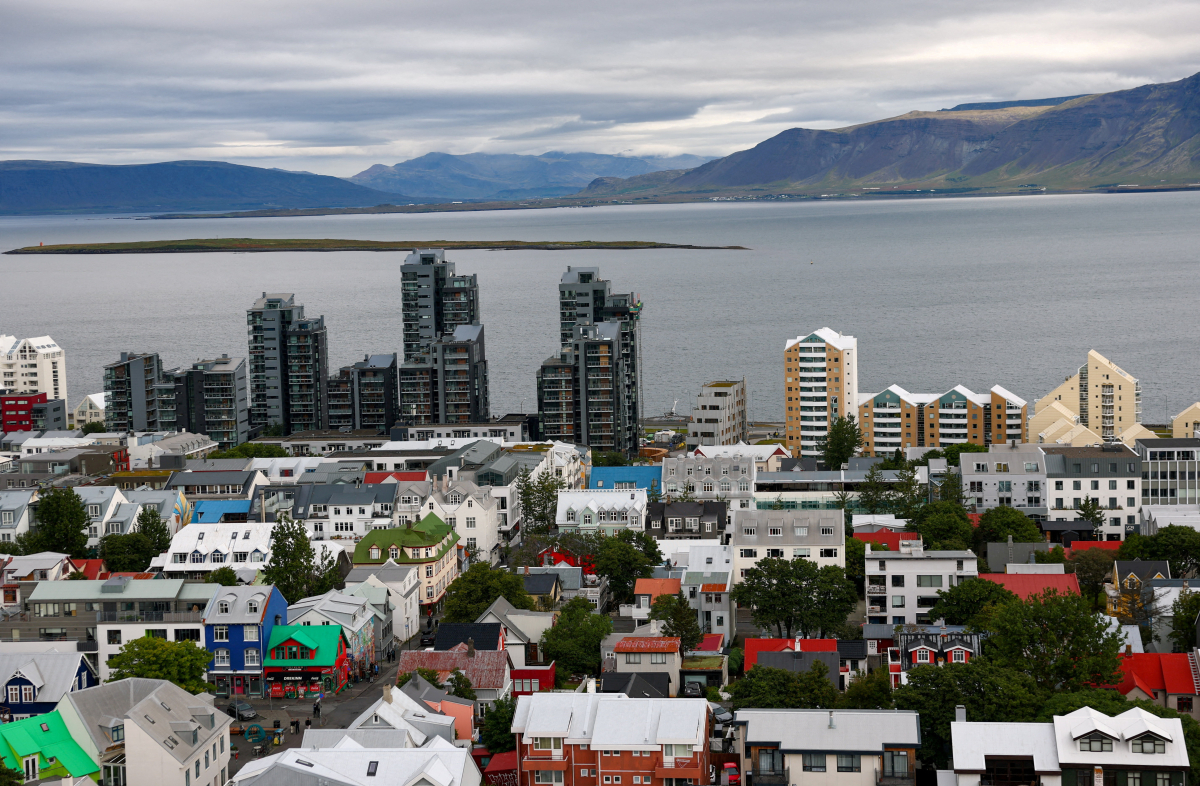
Icelanders will vote on Saturday, 29 August, on whether to resume negotiations with the European Union, in a referendum that could reopen the country’s long-debated membership question.
The vote will not decide whether Iceland joins the bloc. Instead, it will determine whether the government can resume accession talks with Brussels.
If voters approve negotiations, Iceland would enter a process expected to last at least two years, followed by a second referendum on whether to formally join the EU.
Why is Iceland considering EU membership now?
Iceland applied to join the European Union in 2009 but suspended the process in 2013 after a Eurosceptic government came to power.
The debate has returned amid rising living costs, economic concerns and increased geopolitical uncertainty following Russia’s war in Ukraine.
Supporters of EU membership argue that joining the bloc could strengthen Iceland’s economy, improve trade ties and provide greater influence when dealing with larger economies.
What would EU membership mean for Iceland?
Joining the EU would bring Iceland into the bloc’s customs union, allowing participation in a single market without internal tariffs.
Supporters say membership could help stabilise the economy, reduce currency volatility and potentially lower interest rates if Iceland eventually adopts the euro.
Iceland would also gain representation in EU institutions, including the European Parliament and decision-making bodies.
Why do opponents reject membership?
Opponents argue that joining the EU would reduce Iceland’s control over national decisions and give more power to Brussels.
The country’s fishing industry is one of the biggest concerns. Critics fear EU fisheries rules could affect Iceland’s control over its waters and allow greater access for foreign fishing fleets.
Others argue that keeping the Icelandic krona gives the country more flexibility during economic downturns.
For many, the vote boils down to a trade-off: whether lower interest rates and a seat at Europe's table are worth ceding some control over the fisheries and self-determination that defined Iceland's independence since it broke away from Denmark eight decades ago.
Why is fishing so important to Iceland?
Fisheries remain central to Iceland's economy and identity alike, alongside aluminium and tourism.
In the 1970s Iceland won a series of confrontations with the United Kingdom known as the Cod Wars and half a century later, the fear of losing control of its waters and its fishing industry, which is the foundation of the volcanic island's economy, is at the heart of the referendum.
Heidrun Marteinsdottir, Head of industry association Fisheries Iceland, said the sector processed its catch entirely in Iceland rather than exporting it raw - a system she warned joining the EU's Common Fisheries Policy could unravel.
"We have 100% of the profit in Iceland and we want to keep it that way," she said.
Why does Iceland matter to the EU?
For the European Union, Iceland’s possible membership carries strategic importance.
The island is located in the North Atlantic’s Greenland-Iceland-United Kingdom (GIUK) gap, a strategically important area for maritime security and monitoring Russian naval activity.
Iceland is also a NATO member with no standing army, making its location significant amid growing competition in the Arctic.
What happens next?
A “yes” vote would open negotiations between Iceland and the EU, but final membership would require another referendum.
A “no” vote would likely end the current government’s push to reopen accession talks.
The referendum is therefore not a decision on EU membership itself, but the first step in determining whether Iceland begins that path.
Read more:











What is your opinion on this topic?
Leave the first comment