A new lawsuit is challenging a paid Truth Social service that gives subscribers early access to posts from U.S. President Donald Trump and other senior officials, reigniting debate over whether government information can be distributed through a platform that financially benefits the president.
The lawsuit argues that official presidential communications should not be available first to those willing to pay for them and raises questions about the intersection of government information, financial markets and private business interests.
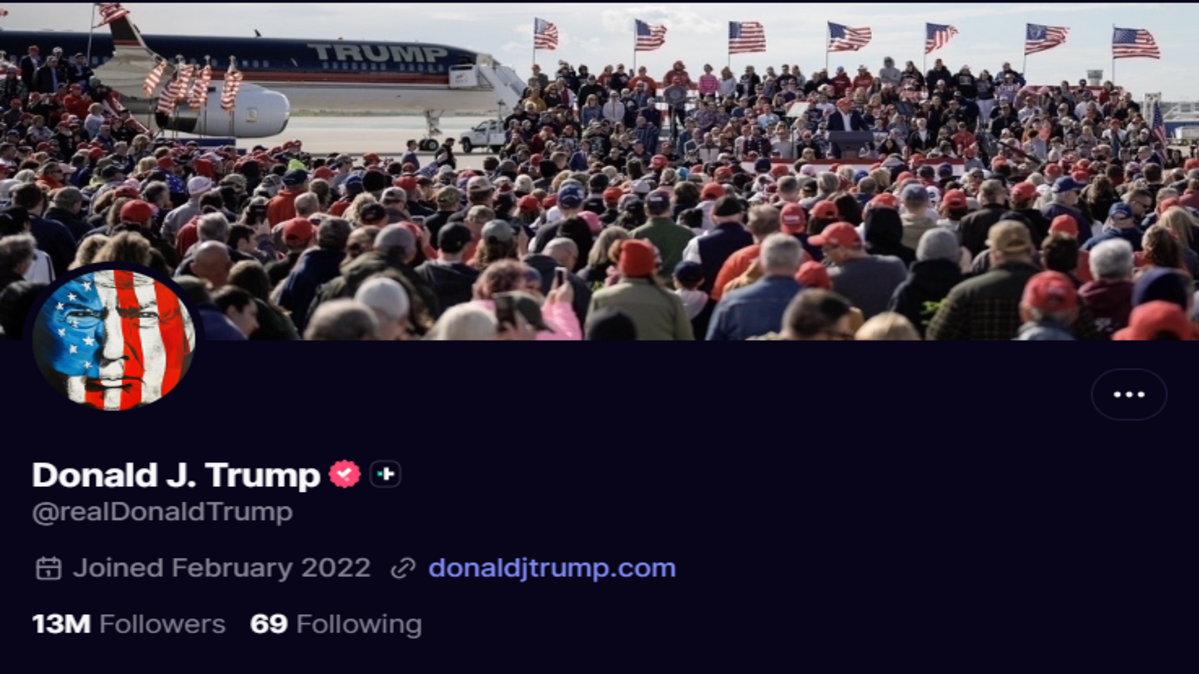
Filed in federal court in Manhattan on Wednesday by The Intercept and the Freedom of the Press Foundation, the case targets a recently launched service known as Truth API, which offers subscribers early access to posts from a group of high-profile Truth Social accounts, including Trump's.
Concerns over market-moving information
The dispute centres on the role Truth Social has come to play in Trump's presidency.
The president frequently uses the platform to announce policy decisions, comment on international conflicts and discuss trade measures and tariffs. Such statements can influence financial markets, affecting everything from stock prices to oil markets.
The plaintiffs argue that allowing paying subscribers to receive these posts before the wider public creates an unfair advantage, particularly when some of the information can have immediate market implications.
The service was launched on August 1 and offers access to posts from 10 prominent accounts, including Trump, Vice President JD Vance, Health and Human Services Secretary Robert F. Kennedy Jr., FBI Director Kash Patel and the White House.
Lawsuit targets use of official announcements
The legal challenge does not seek to shut down Truth Social itself. Instead, it focuses on the use of the platform for official government communications while a paid early-access service is operating.
The plaintiffs are asking the court to prevent the White House from publishing official government announcements exclusively on Truth Social as long as subscribers can gain faster access through the Truth API.
According to the lawsuit, a large number of Trump's Truth Social posts during his second term have not been accompanied by formal White House statements, increasing the importance of the platform as a source of official information.
The organisations argue that when a sitting president uses a private platform as a primary communication tool, access to those communications should be equal for all citizens.
Constitutional and ethical questions
The case also raises broader constitutional and ethical concerns.
The plaintiffs contend that the arrangement conflicts with First Amendment principles because it effectively creates tiers of access to presidential communications based on the ability to pay.
They further argue that the situation is problematic because Trump remains the largest shareholder in Trump Media & Technology Group, the parent company of Truth Social. Through a trust, the president controls a stake valued at hundreds of millions of dollars.
Critics say that means the president could benefit financially when users subscribe to a service distributing his own posts.
The lawsuit describes the arrangement as inappropriate because official communications from the presidency are being tied to a commercial product connected to the president's personal business interests.
Trump Media pushes back
Trump Media has strongly rejected the criticism.
A company spokesperson argued that information posted by Trump is already rapidly distributed through news organisations, social media platforms and data services around the world.
The company also accused critics of attempting to use the courts to limit the president's ability to communicate with the public.
Executives have maintained that the service merely provides content slightly faster than publicly available channels and does not restrict public access to the information itself.
Speaking earlier this week, company officials described the timing advantage provided by Truth API as being measured in fractions of a second.
A test for the digital presidency
The case could have implications far beyond Truth Social.
At its core is a question that has become increasingly important in the social media era: when a president communicates through a privately owned platform, should those communications be treated as public information or as content distributed by a private company?
The answer could help define how future administrations use social media and whether access to official statements can be packaged as a commercial service.
For now, the lawsuit places Truth Social's newest business venture under legal scrutiny and opens another front in the debate over transparency, presidential communications and the role of private platforms in public life.
Read more:



















What is your opinion on this topic?
Leave the first comment