China's technology sector is producing billion-dollar startups at its fastest pace in nearly five years, with artificial intelligence and robotics driving a new wave of investment that is reshaping the country's innovation economy.
China's startup ecosystem is booming once again. After several quieter years, the country's technology sector is producing billion-dollar companies at a pace not seen since 2021, with almost all of the new entrants focused on artificial intelligence or robotics.
China created 67 new unicorn startups in the first half of 2026, the biggest increase in almost five years. That equates to roughly one new billion-dollar company every three days. A unicorn is the technology industry's term for a privately held company valued at US$1 billion or more. Once considered rare, such companies are now emerging in China at a remarkable pace.
AI and robotics dominate
The surge was heavily concentrated in two industries - artificial intelligence and robotics - which together accounted for more than 53% of the new unicorns. The concentration highlights where Chinese investors and entrepreneurs believe the greatest opportunities lie. Rather than e-commerce, consumer apps or property, the focus has shifted to AI models, humanoid robots and the infrastructure needed to support them.
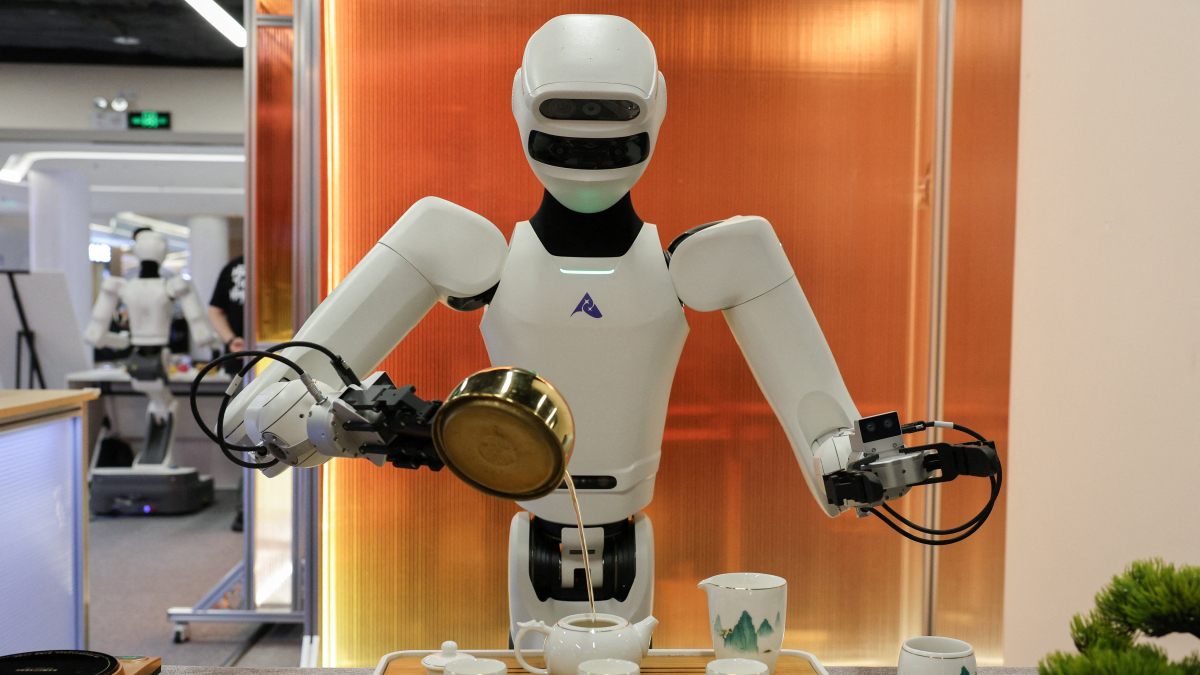
The robotics sector has been particularly notable. Two Chinese robotics companies reached unicorn status in the same week, with a combined valuation of more than US$2.9 billion. AI² Robotics raised almost US$736 million, while X Square Robot, backed by Alibaba, ByteDance and Meituan, completed back-to-back funding rounds.
Founded in 2023, X Square Robot develops robots capable of perceiving their surroundings, making decisions and performing complex physical tasks independently - technology that only a few years ago existed largely in science fiction. It is now a billion-dollar company backed by some of China's biggest technology firms.
DeepSeek's record funding round
The AI sector has been equally active. DeepSeek, the Hangzhou-based AI laboratory whose low-cost, high-performance AI model rattled Silicon Valley in January 2025, completed a US$7.4 billion funding round - the largest first-round fundraising by a Chinese startup on record - giving it a valuation of more than US$50 billion.
The company had operated for three years using only its founder's own funding before seeking outside investment. According to reports, the founder decided additional capital was necessary after recognising how rapidly frontier AI models developed by U.S. companies were advancing and concluding that competing with them would require substantially greater financial backing.
Competition fuels investment
That dynamic - with American competition accelerating Chinese investment rather than suppressing it - is one of the more unexpected features of the current AI race. U.S. export controls were intended to slow China's progress by restricting access to the world's most advanced semiconductor chips. Instead, they appear to have sharpened investors' focus and encouraged greater funding. China is now creating a new unicorn every five days on average, twice last year's pace.
China is now home to 381 unicorns, maintaining second place globally behind the United States, which has 806. Together, the U.S. and China account for 74% of all unicorns worldwide. In other words, almost three-quarters of the world's billion-dollar private companies are based in either the U.S. or China.
Growth with caveats
There are, however, reasons for caution. Most of China's newest unicorns are valued at between US$1 billion and US$2 billion, suggesting they remain in the early stages of development. None are valued between US$5 billion and US$10 billion.
Achieving unicorn status reflects a company's valuation rather than its profitability or the long-term sustainability of its business. Many of these firms are young, still refining their business models and yet to prove they can scale successfully. Almost half of the new unicorns were founded within the past three years, most of them in 2023.
What the figures do demonstrate is that China's technological ambition remains undiminished. Following a difficult period marked by regulatory crackdowns, a property market downturn and geopolitical tensions with the United States, the country's innovation ecosystem has regained momentum and is firmly focused on the technologies expected to shape the coming decade.
Whether China's AI and robotics startups can ultimately compete with their U.S. counterparts at the highest level remains an open question. What is clear, however, is that they are attracting the capital needed to try.





















What is your opinion on this topic?
Leave the first comment