Governments are tightening restrictions on teenagers’ use of social media amid growing concerns over mental health, online safety and platform design, but questions remain over enforcement and whether bans can meaningfully change behaviour.
Social media regulation for children has moved from parenting debates to government policy in recent years.
Australia has become the first country to ban social media accounts for children under 16, while countries including France, Britain, Denmark, Greece, Türkiye and Azerbaijan are considering or introducing similar measures.
This reflects a broader global trend highlighted by the Organisation for Economic Co-operation and Development (OECD). It reports that 25 member and accession countries had either adopted or were considering social media age restrictions by early 2026, compared with just one at the end of 2023.
The push for tighter regulation is largely driven by growing concerns about children’s wellbeing. The World Health Organization (WHO) estimates that one in seven adolescents aged 10 to 19 lives with a mental health condition, while anxiety disorders remain the most common emotional disorder among young people.
Big Tech under pressure
The debate has increasingly shifted from user behaviour to platform design and architecture.
Governments argue that features such as infinite scrolling, autoplay videos and constant notifications are deliberately designed to maximise engagement, particularly among younger users.
Australia has moved to strengthen enforcement by proposing to double penalties for companies that fail to prevent under-16s from accessing social media, with fines of up to $99 million (£51.7 million).
Legal scrutiny is also growing. In the United States, a Los Angeles jury ordered Meta and YouTube to pay damages to a young woman who claimed the platforms were designed to be addictive during her childhood, a ruling both companies are appealing.
The European Union has also stepped up pressure over so-called “addictive design” features, arguing that online harms are often the result of commercial choices rather than inevitable risks.
Scientists say adolescence is a period of ongoing brain development, which increases sensitivity to rewards and peer approval.
“Teenagers are more responsive to the rewarding features of social media because the brain’s reward system develops earlier than the prefrontal cortex, responsible for planning and impulse control,” MSc Clinical Psychology Zohra Safarova told AnewZ.
She cautions, however, against viewing social media as the sole driver of mental health problems, noting that factors such as sleep, family environment and pre-existing conditions also play a role.
The United Nations says young people aged 15 to 24 are more likely to use the internet than other age groups, although the gap has narrowed in recent years, with 82% using the internet in 2025.
Shared responsibility
The debate has also been shaped by cultural discussions, including Netflix’s Adolescence, which sparked wider conversations about online radicalisation and harmful behaviour. In the UK, the government backed using the series in schools to discuss issues such as misogyny and violence.
Experts say parents often struggle to monitor their children's online activity while managing their own screen use, alongside work pressures and reduced face-to-face interaction at home.
Research scholar Sheraz Mehmood Khan says responsibility begins at home. “The responsibility for monitoring a child starts with the parents… then comes the school, and then, obviously, the government.”
Experts say education is therefore as important as regulation. Zohra Safarova argues that education should accompany any restrictions.
"We should teach young people how to use social media, recognise harmful content and build healthy digital habits. Parents, teachers and caregivers also need education because they play an important role in guiding young people."
Can bans actually work?
A key question remains whether restrictions can be effectively enforced.
Evidence from Australia suggests many teenagers still access social media despite the ban, using VPNs, alternative accounts or other workarounds. The British Medical Journal reports that more than 85 per cent of adolescents under the age of 16 continue to use social media despite restrictions.
United Nations High Commissioner for Human Rights Volker Türk has warned that such bans can be easily bypassed and may push children towards less regulated online spaces. “Simply limiting access to platforms that remain unsafe cannot stand as the endpoint.”
Experts say reducing screen time works best when children are offered alternatives such as sport, arts, outdoor activities and stronger family and community engagement.
The New Zealand Council for Civil Liberties, United Nations International Children's Emergency Fund (UNICEF), and the Council of Europe Commissioner for Human Rights have also warned that such measures may risk infringing freedom of expression and privacy, while failing to address the underlying design of platforms.
For many experts, the question is no longer whether governments should act, but whether governments, parents, schools and technology companies are prepared to share responsibility.
U.S. President Donald Trump has called it “a disgrace” that Ukraine has resumed attacks on Russian oil refineries. Attacks are continuing from Russia and Ukraine as media reports say Ukraine has almost run out of Patriot interceptor missiles.
An unknown projectile struck a tanker 68 nautical miles northeast of Saudi Arabia on Friday according to a report released by the United Kingdom Maritime Trade Operations (UKMTO) on Saturday.
The day after waiving sanctions and tariffs related to Russian exports, U.S. President Donald Trump said on Saturday he has yet to announce a final decision on the matter as Secretary of State Marco Rubio said officials want more time to evaluate the situation.
A Saudi AH-6i helicopter crashed in the Najran region of Saudi Arabia due to a technical malfunction, killing its two crew members, the Saudi-led coalition's spokesman Brigadier General Turki al-Maliki said in a statement on Sunday.
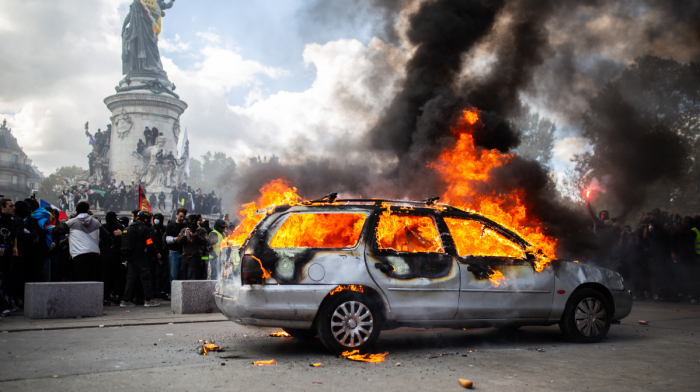
What started out as planned protests against the cost of living, declining public services and education funding in France, quickly devolved into violent riots across the country on Saturday.
The day after waiving sanctions and tariffs related to Russian exports, U.S. President Donald Trump said on Saturday he has yet to announce a final decision on the matter as Secretary of State Marco Rubio said officials want more time to evaluate the situation.
Pope Leo returned to public life on Sunday, five days after undergoing surgery for lung cancer, telling thousands of pilgrims in St Peter’s Square that he would gradually resume his usual activities.
Several people have been killed and injured following a serious incident that sparked a major fire at a Canadian military base in Alberta, Defence Minister David McGuinty confirmed on Saturday (17 October). The cause of the incident and the number of casualties have not been officially released.
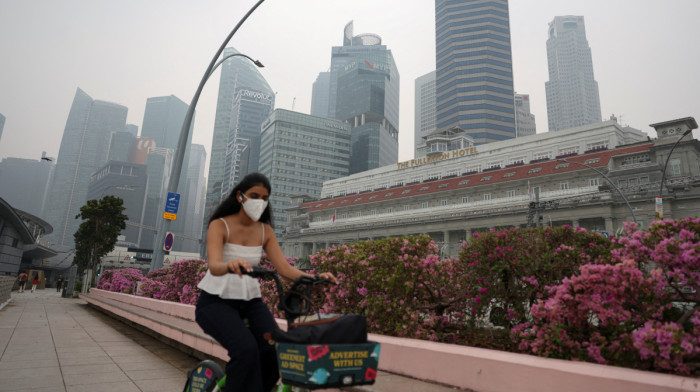
Singapore is experiencing severe haze as smoke from wildfires in Indonesia’s Kalimantan region drifts across the region, disrupting daily life, affecting businesses and prompting Singapore’s National Environment Agency issuing preventive notices to seven companies on 16 October.
What started out as planned protests against the cost of living, declining public services and education funding in France, quickly devolved into violent riots across the country on Saturday.
Download the AnewZ app
You can download the AnewZ application from Play Store and the App Store.













What is your opinion on this topic?
Leave the first comment