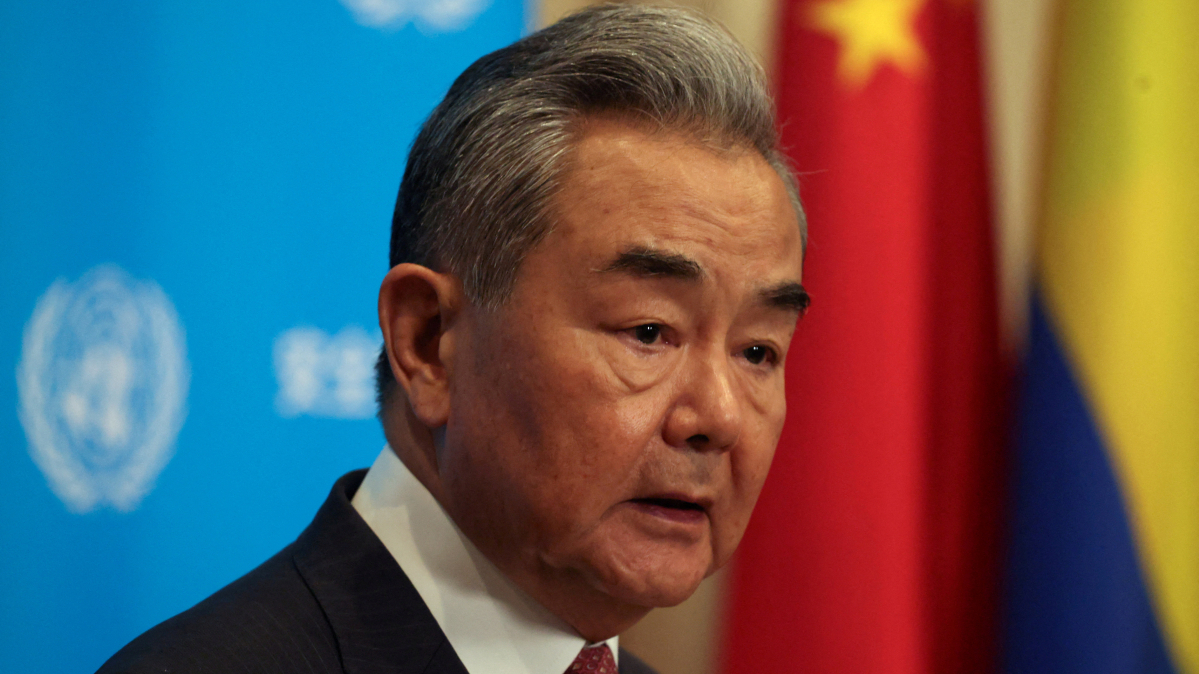
China's Foreign Minister Wang Yi is visiting Denmark, Sweden, Finland and Norway this week in a landmark tour of the Nordic region that reflects Beijing's efforts to strengthen ties with Europe at a time of growing geopolitical uncertainty.
Meetings across four Nordic capitals
The visit, which runs from 2 to 8 July, comes as China and Europe seek to place their relationship on a more stable footing after years of mounting tensions. The Nordic countries provide an important platform for those discussions.
Wang was invited by the foreign ministers of all four countries - Denmark's Lars Løkke Rasmussen, Sweden's Maria Malmer Stenergard, Finland's Elina Valtonen and Norway's Espen Barth Eide. He will hold bilateral talks with each counterpart, with discussions expected to focus on trade, investment, the green transition, Russia's war in Ukraine, European security and the broader state of China-Europe relations. In Finland, Wang will also meet President Alexander Stubb.
A return after years of diplomatic absence
The tour is particularly significant because of the length of time since a Chinese foreign minister last visited several of the countries.
The visit to Sweden will be the first by a Chinese foreign minister in 22 years, following more than two decades during which relations between the two countries have experienced significant strains. The visit to Denmark will be the first in 15 years and the first high-level face-to-face meeting since Denmark's current government took office.
Why the Nordic countries matter to Beijing
For Beijing, the tour serves several strategic purposes. The Nordic countries were among the first in Europe to recognise the People's Republic of China after it was founded in 1949, and China continues to place importance on that history. Denmark is China's comprehensive strategic partner in Northern Europe.
Sweden is China's largest trading partner in the Nordic region. Finland has maintained what both sides describe as stable and long-standing ties. Norway, the first country in Europe to formally recognise China's market economy status, welcomed its prime minister to Beijing in 2024 to mark 70 years of diplomatic relations.
While the relationships have faced challenges, they are not fundamentally adversarial. Instead, both China and the Nordic countries appear keen to rebuild momentum through renewed dialogue.
Green cooperation at the centre
China's foreign ministry has identified cooperation on the green transition, trade and investment, and scientific innovation as the main practical priorities for the visit.
Those areas align closely with the Nordic countries' strengths. Denmark, Sweden, Finland and Norway are all recognised as global leaders in renewable energy, sustainable technology and clean industrial processes. As China accelerates its own green transition, the region offers expertise and technology that Beijing is eager to access.
Despite political differences, there remains substantial mutual economic interest.
The wider China-Europe picture
The visit also forms part of China's broader effort to stabilise and deepen relations with Europe at a time of increasing pressure. Disputes over trade imbalances, China's support for Russia, human rights concerns and Europe's growing security partnership with the U.S. have all contributed to rising tensions.
At the same time, China and Europe remain deeply economically interconnected. China is one of the European Union's largest trading partners, and neither side can afford for the relationship to deteriorate significantly.
Dialogue over distance
Wang Yi's week-long tour is unlikely to resolve the underlying differences between China and Europe. However, a visit spanning four Nordic countries that have not hosted a Chinese foreign minister for many years sends a clear signal that both sides see continued dialogue as preferable to growing distance.
















What is your opinion on this topic?
Leave the first comment