Russia and Ukraine have reported fresh military successes as both sides intensify efforts to weaken each other's logistics, energy infrastructure and supply networks, extending the conflict far beyond the front line.
Russia's Defence Ministry said its forces had captured two more settlements, Kopani in the Zaporizhzhia region and Ukrainske in the Kharkiv region. State news agency RIA reported the claims, which could not be independently verified.
The announcement came as Ukraine continued its campaign of long-range strikes deep inside Russian territory, targeting oil facilities, military-industrial sites and transport infrastructure far from the battlefield.
Ukraine strikes refinery more than 1,300km from front
President Volodymyr Zelenskyy said Ukrainian forces had struck an oil refinery in Ufa for the second time, targeting a facility more than 1,300km from the battlefield.
"Every day, our plan for imposing Ukrainian long-range sanctions is being implemented," Zelenskyy wrote on X.
"This is an entirely just response to everything Russia is doing against us."
He also reported a strike on what he described as a strategic military-industrial facility in Russia's Penza region, around 600km from the front line.
According to Ukraine's General Staff, the plant manufactures sensors used in cruise and ballistic missiles, components for aircraft avionics and equipment for reconnaissance satellites. The facility was identified as part of Russia's state space corporation, Roscosmos.
Ukraine also said it targeted two bridges in Russian-occupied parts of the Donetsk and Luhansk regions, as well as a logistics crossing in the Donetsk region, in an apparent attempt to disrupt Russian troop movements and resupply efforts.
Kyiv targets logistics and fuel supplies
The latest attacks form part of a broader Ukrainian strategy aimed at striking Russia's military infrastructure beyond the battlefield.
Ukraine's Defence Ministry said its forces targeted 11 oil refineries, fuel logistics facilities and military-industrial sites during June alone.
Separately, Ukraine's Security Service (SBU) reported striking hangars housing Russian fighter aircraft at an airfield in occupied Crimea.
Analysts have increasingly pointed to Ukraine's medium- and long-range drone campaign as a key factor in slowing Russian operations by placing pressure on fuel supplies, logistics networks and industrial production.
Last week, Zelenskyy said he had authorised a 40-day campaign intended to increase pressure on Moscow and encourage Russia to end the war.
Russia increases attacks on fuel infrastructure
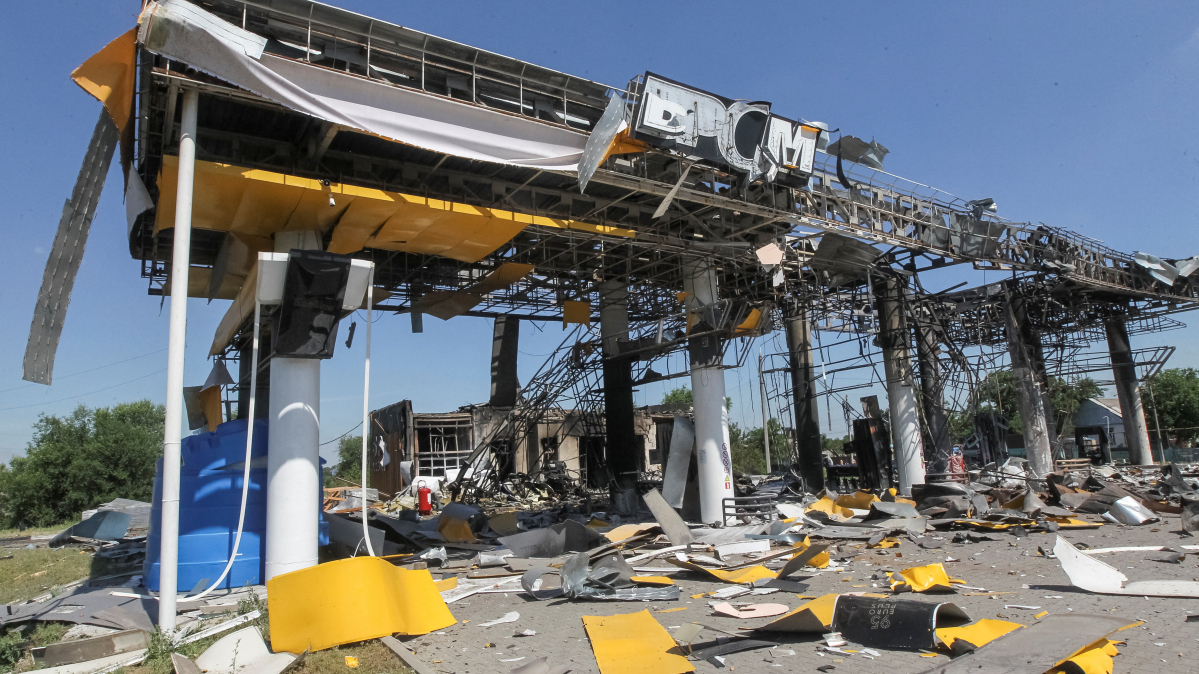
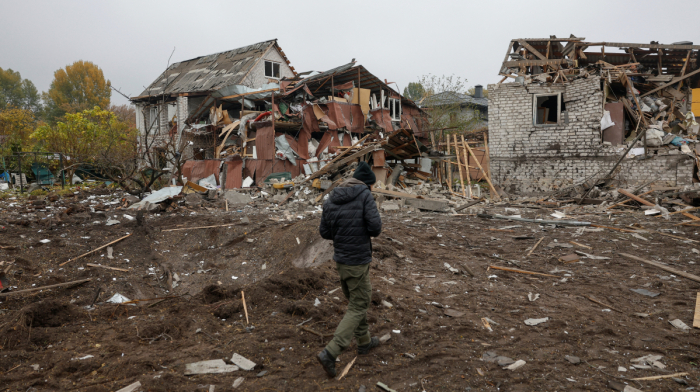
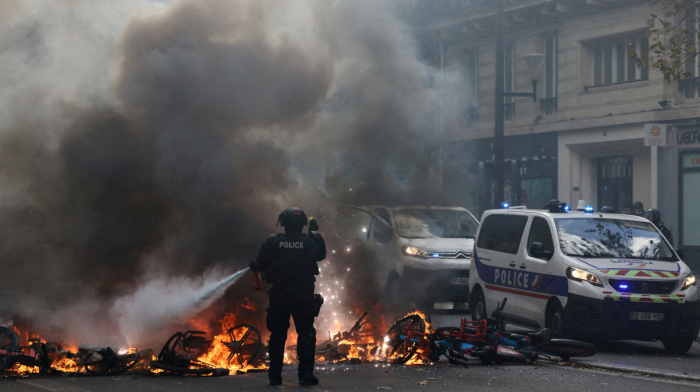
At the same time, Russian forces have intensified strikes on Ukrainian fuel infrastructure.
Regional authorities said overnight attacks hit five fuel stations in the south-eastern Dnipropetrovsk region, killing one woman and injuring three others, including a pregnant woman.
Governor Oleksandr Hanzha said all five stations were damaged and fires broke out following the strikes.
In the northern Chernihiv region, authorities reported that four additional fuel stations had been attacked during the previous 24 hours.
Ukrainian officials say such attacks have become increasingly frequent in frontline regions, including Zaporizhzhia, Sumy, Kharkiv and Dnipropetrovsk.
Serhii Beskrestnov, an adviser to Ukraine's defence minister, accused Russia of deliberately targeting civilian infrastructure.
"Civilian filling stations have absolutely no impact on military fuel supplies; therefore, the aim of the attacks is to terrorise the civilian population," he said.
Civilian casualties continue
Elsewhere, authorities in the southern city of Kherson said a Russian drone attack on a passenger bus killed two people and wounded nine others.
Regional Governor Oleksandr Prokudin said the vehicle was clearly identifiable as civilian transport.
"The operator of the enemy drone could clearly see that there was a civilian transport in front of him, with people going about their business," he said.
Both Moscow and Kyiv deny deliberately targeting civilians, although civilian casualties continue to be reported on both sides of the conflict.
Funding concerns amid critical phase of war
As military operations intensify, Ukraine is also seeking additional support from its European partners.
According to a letter seen by Reuters, Kyiv has asked European Union member states to direct €6.6bn available through the European Peace Facility towards military assistance, arguing that the next six to nine months could present a crucial window of opportunity on the battlefield.
Deputy Prime Minister and Minister of Digital Transformation Mykhailo Fedorov said Ukraine's defence needs this year are estimated at around €136bn. The government expects to cover roughly €53bn from its own budget and receive approximately €28.3bn in defence-related support through an EU-backed loan programme.
Despite that assistance, Fedorov warned that significant funding gaps remain.
War enters new phase
The latest developments underscore how the conflict is increasingly being fought far beyond the front line. While Russia continues to pursue gradual territorial gains in eastern and southern Ukraine, Kyiv is intensifying efforts to damage the infrastructure and industrial capacity supporting Moscow's war effort.
With both sides targeting fuel supplies, transport networks and logistics hubs, the war is becoming as much a contest of endurance and resources as one of territorial control.
As Ukraine presses for additional military funding and Russia seeks to maintain momentum on the battlefield, neither side shows signs of easing its campaign.













What is your opinion on this topic?
Leave the first comment