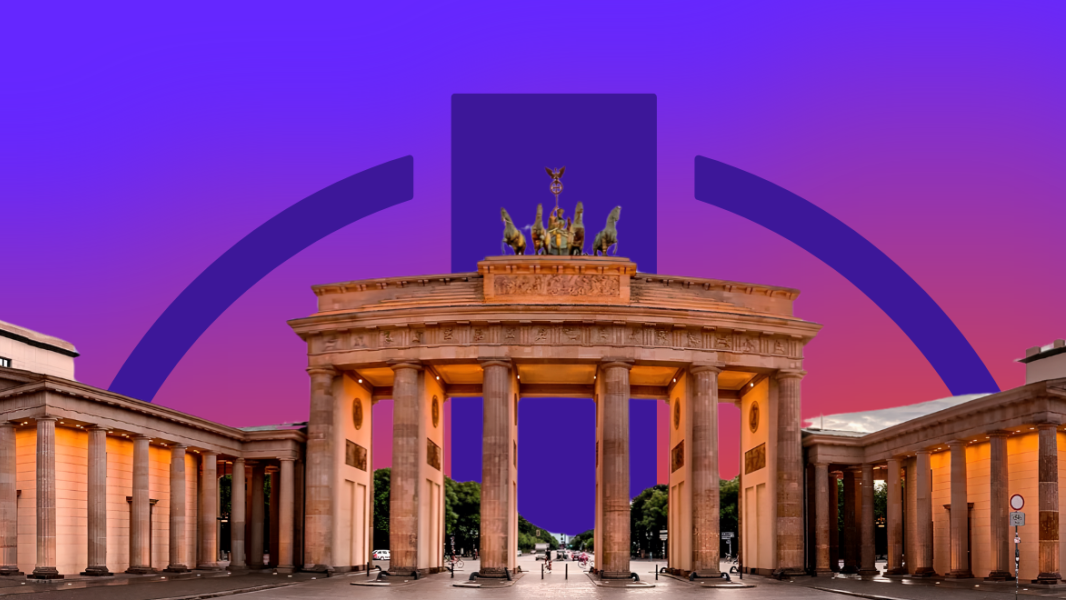
A high-level summit in Berlin has brought together policymakers, academics and industry leaders to examine how Europe can deepen ties with the Caucasus and Central Asia as shifting geopolitical realities reshape long-standing regional partnerships.
Focus on connectivity and investment
AnewZ is covering the event on the ground. The Berlin summit is the third in a wider series previously held in İstanbul and Tashkent. It focuses on connectivity, investment and innovation between European markets and emerging economies in Azerbaijan, the wider Caucasus and Central Asia.
Reporting from the venue, AnewZ's Katie Wilson said the central theme of the discussions was how the region can position itself as a stronger partner for Europe, particularly as traditional geopolitical alignments have shifted following Russia's invasion of Ukraine.
Wilson noted that while Russia had previously been Europe's principal partner in parts of the region, that dynamic has changed significantly, creating what she described as "big opportunities" for countries across the Caucasus and Central Asia to strengthen their economic and strategic ties with Europe. She also highlighted Berlin's historical position "at the intersection between East and West" as a fitting setting for the discussions.
Unlocking regional potential
Among those speaking at the summit, Professor Martin Gutmann of the Lucerne School of Business emphasised the region's untapped potential. He said it had, up to now, been "not discovered", despite its strong human capital and technological capability.
He highlighted relatively low costs, cultural compatibility and the ease of integrating teams across borders, arguing that the current moment presents an ideal opportunity to build lasting cooperation.
Human capability remains key
Another speaker, Tughra Musayeva, Head of Innovations at Pasha Financial Holding, focused on the importance of human capability in an increasingly technological age.
She said a key takeaway from the discussions was that, even in an era defined by artificial intelligence and efficiency, "truly knowing yourself as a human" and applying that understanding to how people relate to one another will remain essential in the years ahead.
The summit continues with further panel discussions focusing on innovation, economic cooperation and the evolving architecture of regional partnerships between Europe and its eastern neighbours.













What is your opinion on this topic?
Leave the first comment