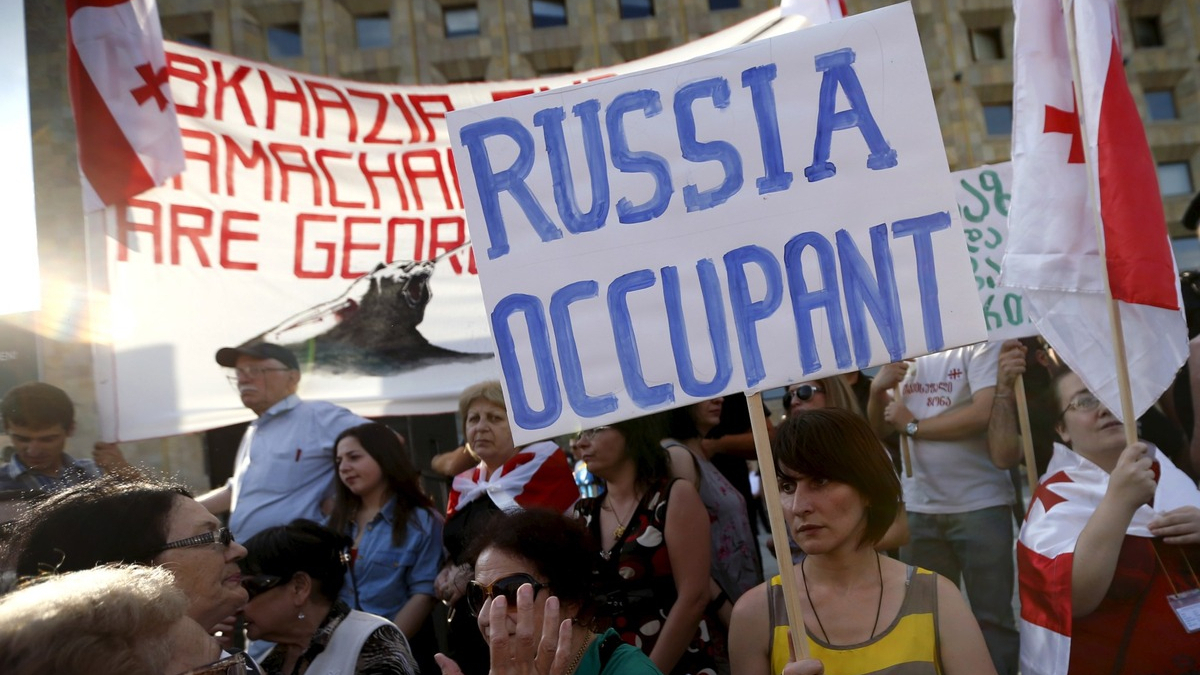
A coalition of Georgian former ministers, diplomats and security experts has issued an urgent warning to the international community: Russia is not merely occupying Georgia's breakaway regions - it is absorbing them, and the window for a meaningful response is rapidly closing.
A coordinated annexation campaign
On 27 June, an open letter addressed to the United Nations, the European Union, NATO and the OSCE set out what its signatories describe as a coordinated, multi-front annexation of Georgia's occupied territories of Tskhinvali and Abkhazia, carried out largely in plain sight.
The evidence they point to
The letter's centrepiece is the so-called "Agreement on Deepening Allied Cooperation", signed in Moscow on 9 May by Russian President Vladimir Putin and Tskhinvali's de facto leader, Alan Gagloev. The signatories describe it as a new phase of de facto annexation, granting Russia the right to appoint its own citizens to political positions in the occupied region, creating a legal basis for transferring property and resources to Russian nationals, and further integrating Tskhinvali's economy and infrastructure into Russia.
Shortly afterwards, Gagloev resigned and was appointed an adviser to Putin. A senior Russian official, Marat Kambolov, was installed as the region's so-called prime minister - a move the letter's authors describe not as a reshuffle of a puppet government, but as its effective abolition, replaced by direct Russian rule.
In Abkhazia, the picture is similarly alarming. Legislative harmonisation with Russia, the opening of the real estate market to Russian capital and, most strikingly, the transformation of the Ochamchire port into a military base for Russia's Black Sea Fleet are all cited as evidence of a parallel process of absorption. The letter names Kremlin official Sergei Kiriyenko as personally coordinating the operation from Moscow.
Why now, and why appeal to partners?
The timing of the letter is deliberate. Its authors argue that Russia is exploiting the backdrop of its war in Ukraine and its diminishing influence in the South Caucasus to consolidate control over Georgian territory before the international community fully recognises what is taking place.
Crucially, the appeal is directed not at Russia, from whom little is expected, but at Georgia's international partners. The signatories are calling for targeted sanctions against individuals directly involved in the annexation process, stronger and more vocal non-recognition policies, and urgent, coordinated action to raise the political and economic cost for Moscow.
They also highlight Moscow's demand that Georgia sign a so-called non-use-of-force agreement not with Russia, but with the occupied regions themselves, warning that this is intended to legitimise the authorities in the occupied territories and reinforce Russia's claim to a sphere of influence over Georgia.
The bigger picture
The letter comes at a particularly sensitive moment for Georgia. The ruling Georgian Dream party has faced sustained international criticism over democratic backsliding, while its cautious approach towards Russia — refusing to impose sanctions and avoiding direct confrontation - has drawn accusations of accommodation.
The civil society coalition behind the letter represents a sharply different voice, arguing that the annexation threat is immediate, real and demands an urgent international response that the current Georgian government has so far declined to pursue.
The appeal remains open to additional signatures from members of Georgian civil society and other interested parties.










What is your opinion on this topic?
Leave the first comment