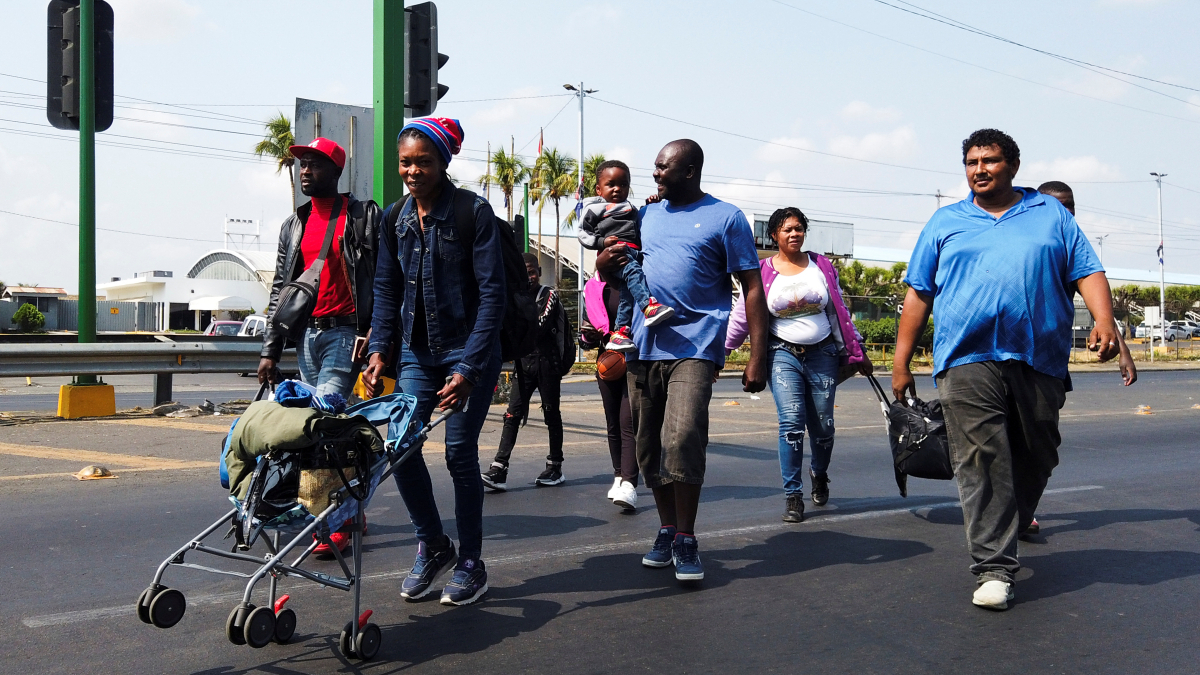
The United States government has urged migrants living under temporary protected status (TPS) to seek permanent residency or prepare to return to their home countries, signalling a tougher approach to immigration policy.
Homeland Security Secretary Markwayne Mullin said those affected should either regularise their status or accept assistance to leave the country.
“Either try to fill out the paperwork and be here underneath a permanent status or we’ll help you get back to your country,” he said in an interview with CNN.
Mullin added that authorities would offer support for voluntary departures, including a plane ticket and around $2,100 to help migrants resettle.
Supreme Court ruling affects hundreds of thousands
The remarks follow a split decision by the U.S. Supreme Court last week, allowing the Trump administration to end protections for large numbers of migrants, including Haitians and Syrians.
Temporary protected status allows individuals from countries affected by war, natural disasters or other crises to live and work legally in the United States. It does not, however, provide a pathway to permanent residency.
The policy has historically been extended repeatedly, allowing some recipients to remain in the country for years or even decades.
Safety concerns over returns
The move has raised concerns, as U.S. authorities currently advise against travel to both Haiti and Syria due to ongoing violence and instability.
TPS was first granted to Haitians after the 2010 earthquake, while Syrians were included after the outbreak of civil war in 2012.
Critics argue that returning migrants to such conditions could expose them to serious risks.
Political divisions and economic impact
The prospect of large-scale removals has drawn criticism from across the political spectrum, including some Republicans.
Ohio Governor Mike DeWine said it would be unsafe to return Haitians to their home country and warned that mass departures could harm local economies.
“It’s Haitians who many times are taking care of your mom or your dad who has Alzheimer’s, taking care of family members who might be in a nursing home,” he said. “And to say we’re going to pull all those out, it’s just not in our own self-interest.”
Haitian migrants have played a significant role in supporting sectors such as healthcare and contributing to economic recovery in some regions, particularly those that have experienced industrial decline.
Uncertain path ahead
While the Supreme Court ruling allows the administration to end protections, the legal and political debate over TPS is likely to continue.
For many migrants, the decision leaves them facing difficult choices between navigating complex immigration processes or returning to countries still affected by crisis.
The outcome will have far-reaching implications, not only for those directly affected but also for communities and industries that rely on their presence.



















What is your opinion on this topic?
Leave the first comment