Rescue teams raced on Sunday to find more survivors of the two powerful earthquakes that struck Venezuela this week, with signs of life bringing occasional relief to a grim quest to whittle down a list of tens of thousands missing.
The death toll from Wednesday's twin earthquakes neared 1,500 people as foreign rescue teams poured into La Guaira, the hardest-hit state of a country long mired in a deep political and economic crisis.
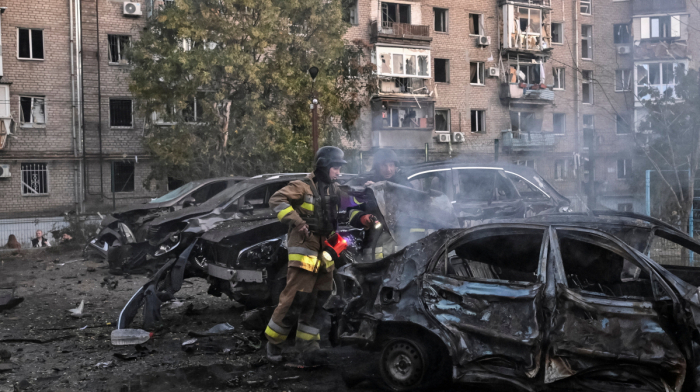
Dozens of buildings collapsed into piles of sand and rubble in the coastal state, about 40 km (25 miles) north of Caracas.
Venezuela’s interim President Delcy Rodríguez said in a televised address that 14,000 military and police personnel are deployed in La Guaira for security and sanitation, while 10 more countries are expected to join rescue efforts.
"In recent hours, Venezuela has received 17 flights carrying more than 1,600 members of rescue teams, and over the next 24 hours, the arrival of 25 additional flights is expected," said foreign ministry official Oliver Blanco.
Rescue efforts under pressure
Families and neighbours are still searching for missing relatives in the rubble, often digging by hand.
Jennifer Palacios, 25, said her six-year-old son and five other relatives were still trapped in La Guaira city’s eight-tower Hugo Chávez housing complex.
“It’s the community that has managed to get people out alive,” she said. “We need them to bring cranes to move the slabs. There are still people trapped.”
A UN report estimated direct damage from the two earthquakes, with magnitudes of 7.2 and 7.5, at about $6.7bn. The second quake was Venezuela’s strongest in more than a century.
Focus on La Guaira
Reuters witnesses travelling through the region saw cracked highways and buildings reduced to broken concrete and twisted metal.
Volunteers have been bringing supplies by motorcycle from Caracas and Valencia.
In the coastal town of Caraballeda, lawyer Ricardo Trias, 73, said he was trying to obtain official documents after his godson, Armando López, 54, was recovered from the rubble of his building on Thursday night.
Rodríguez held a phone call with U.S. President Donald Trump and Secretary of State Marco Rubio on Friday, following earlier meetings with U.S. Northern Command and disaster response experts.
The United States said it is mobilising $150 million in aid and easing sanctions, while also deploying two ships and supporting operations with helicopters and aircraft.
In the beachside neighbourhood of Los Corales, 50 members of an El Salvador rescue team are assessing the ruins of three 10-storey buildings using drones, heat scanners and search dogs. Salvadoran President Nayib Bukele shared a video on X showing the team preparing to enter one of the damaged structures.
A country already under strain
The earthquakes struck a country already weakened by years of economic crisis, political turmoil and fragile infrastructure.
While the government says hundreds are missing or trapped, opposition-linked sources report that more than 54,000 people remain unaccounted for on a publicly shared website.
The U.S. Geological Survey has estimated that more than 10,000 deaths are possible, which could make this one of the deadliest earthquakes in Latin America in decades.
Nearly seven million people could be affected, the UN’s migration agency said, as it supplied emergency shelter and other relief items.
Read more:









What is your opinion on this topic?
Leave the first comment