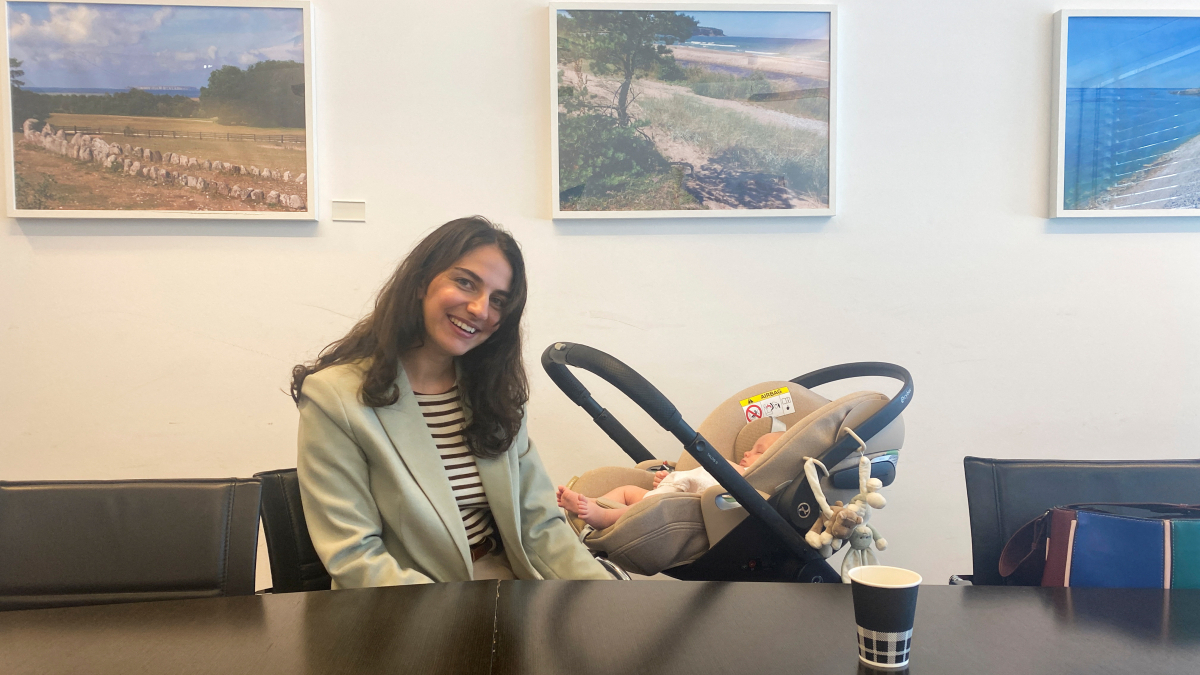
EU climate ministers were joined by an unexpected guest at a council meeting in Luxembourg: a three-month-old baby, brought by Swedish climate minister Romina Pourmokhtari to highlight parental leave policies.
The infant, Adam, accompanied Pourmokhtari, marking what an EU Council official said was, to their knowledge, the first time a baby has attended a meeting of EU ministers.
Pourmokhtari, 30, said the decision was intended to demonstrate how modern parental leave systems can enable parents to balance political responsibilities with family life.
“I wanted to showcase being an example of not having to make that choice,” she told Reuters.
A statement on parental leave
Pourmokhtari used her visit to Luxembourg to highlight Sweden's parental leave model and the importance of shared responsibility between parents.
She said supportive policies allow parents to avoid choosing between career and family, adding that her experience had been made easier by both the design of Sweden's parental leave system and her partner's support.
She also stressed the importance of supportive workplaces and partners, saying this had enabled her husband to take parental leave while she returned to work.
Sweden's parental leave system
Sweden is known for having one of the world's most generous parental leave systems, funded through taxation.
Parents are entitled to around 16 months of paid leave in total. Of this, 90 days are reserved for each parent individually and cannot be transferred.
These non-transferable periods, often referred to as "dad months", are designed to encourage fathers to take a more active role in early childcare.
Political and policy context
The design of Sweden's parental leave system has become a feature of domestic political debate, particularly during election campaigns, as it is linked to broader discussions about taxation and welfare spending.
Pourmokhtari credited the policy framework, alongside institutional flexibility, with making it easier for families in public office to manage childcare responsibilities.
She also called for further discussion on childcare affordability and greater flexibility in parental leave policies across Europe.
Reactions from ministers
Other ministers reacted positively to the unusual presence of a baby at the negotiating table.
Krzysztof Bolesta said it caused no disruption to proceedings.
“I think it’s great. It’s not a handicap, it’s just a part of life,” he told Reuters.
A symbolic moment in EU politics
The brief appearance of a baby at the EU climate meeting highlighted broader questions about work-life balance in politics, as governments across Europe continue to debate how best to support families while maintaining the demands of public office.












What is your opinion on this topic?
Leave the first comment