China has successfully launched an experimental satellite designed to monitor the space environment, marking another step in the rapid expansion of its national space programme.
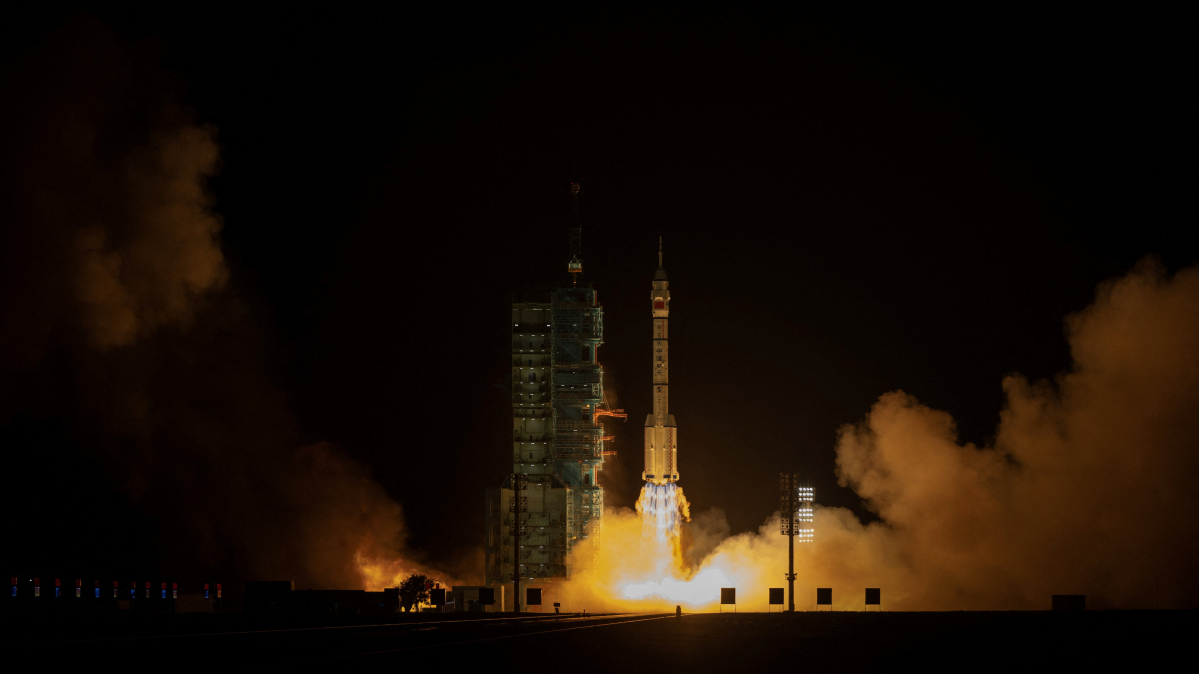
A Long March 3B carrier rocket lifted off at 17:45 Beijing Time (09:45 GMT) on 16 June from the Xichang Satellite Launch Centre in southwestern China. The Shijian-31 satellite was placed into orbit, according to the China Aerospace Science and Technology Corporation (CASC) and state media reports.
The satellite was developed by the Shanghai Academy of Spaceflight Technology, a subsidiary of CASC, China’s state-owned space and defence contractor that serves as the backbone of the country’s launch and spacecraft manufacturing system.
Shijian-31 is described as an experimental spacecraft used for space environment detection, a category of missions typically associated with testing sensors, monitoring orbital conditions, and supporting future satellite operations.
Such missions are part of China’s broader effort to strengthen capabilities in geostationary orbit, where communications, navigation, and strategic observation systems are concentrated.
The Long March 3B rocket used in the launch remains one of China’s most frequently deployed heavy-lift vehicles for high-orbit missions. It is operated by the China Academy of Launch Vehicle Technology (CALT), another key CASC subsidiary.
Long March 3B
The Long March 3B series is designed primarily for geostationary transfer orbit (GTO) missions and can carry payloads of approximately 5.5 tonnes to high orbit.
With decades of upgrades, it remains a critical pillar of China’s medium-heavy launch capability, despite newer rockets entering service under the Long March 5 and Long March 7 families.
The rocket family has also played a central role in China’s rise as a major global space power, supporting deployments of communications satellites, lunar probes, and deep-space missions.
China’s expanding space base
CASC, a state-owned conglomerate, oversees most of China’s launch activity through subsidiaries including CALT and the Shanghai Academy of Spaceflight Technology.
The organisation manages both civilian and dual-use space programmes, reflecting the increasingly strategic importance of space in communications, navigation, Earth observation, and national security planning.
China’s space sector has grown rapidly over the past decade, with frequent launches supporting satellite constellations, space station operations, and lunar exploration missions, including the Chang’e programme.
Read more:
A record year for launches
According to state-linked reporting, the mission marks:
The 651st launch of the Long March rocket family
One of more than 40 orbital missions carried out by China so far in 2026
The Long March programme has become one of the most active launch systems globally, reflecting China’s push for routine, high-cadence access to space.
China’s accelerated launch schedule comes amid intensifying global competition in orbit, particularly in geostationary and cislunar space, where communications and surveillance assets are increasingly concentrated.
Analysts note that satellites such as Shijian-31, while officially scientific or experimental, contribute to China’s broader development of resilient space infrastructure with both civilian and strategic applications.
As Western space agencies and private companies expand low Earth orbit constellations, China has continued to prioritise high-orbit capabilities and state-coordinated deployment strategies through CASC.



















What is your opinion on this topic?
Leave the first comment