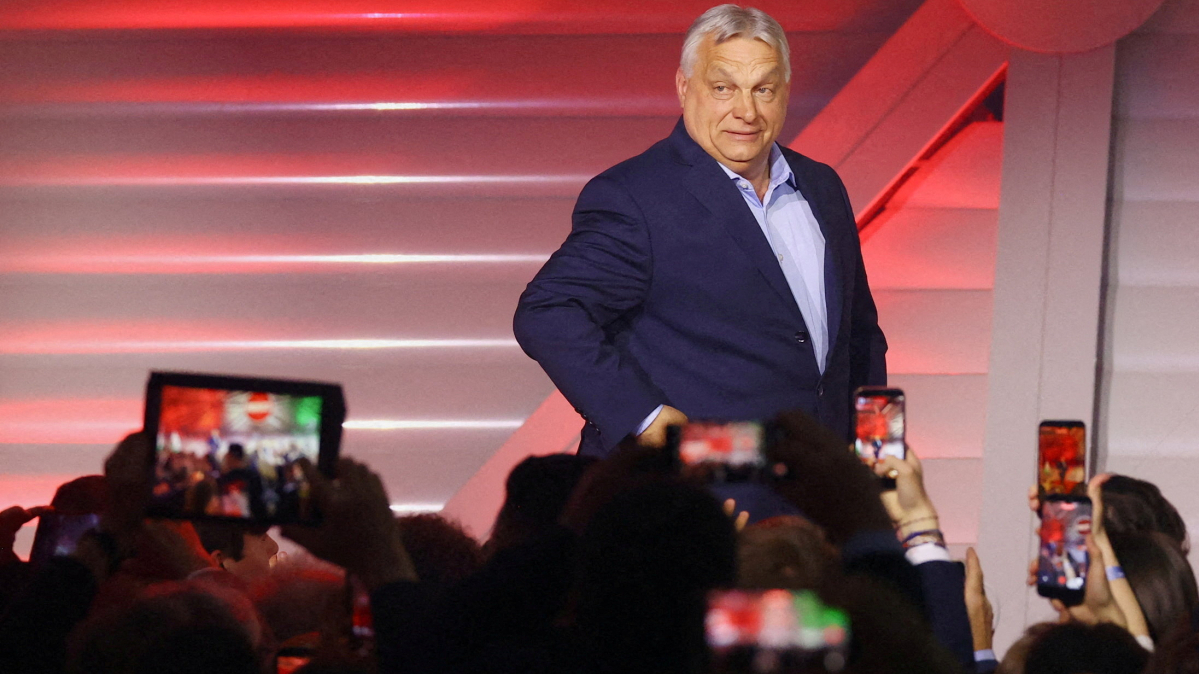
Hungary's parliament on Monday approved a constitutional amendment limiting prime ministers to a maximum of eight years in office, a move that effectively prevents former premier Viktor Orbán from returning to the country's top political post.
The amendment was passed by the government of Prime Minister Peter Magyar, whose party secured a two-thirds parliamentary majority after defeating Orbán in April's election, ending the former leader's 16-year rule.
The supermajority gives Magyar's government the power to amend or reverse legislation enacted by Orbán's Fidesz party, including changes to the constitution.
Under the amendment, anyone who has already served as prime minister for at least eight years cannot be elected to the position again.
The provision applies to all prime ministerial terms held since 2 May, 1990, meaning Orbán's previous time in office counts towards the limit.
Going forward, Hungarian prime ministers will be required to step down after serving a total of eight years, equivalent to two four-year terms.
Sovereignty Protection Office to be dissolved
The constitutional changes also pave the way for the dismantling of the Sovereignty Protection Office, an institution created under Orbán's government.
Critics accused the office of targeting opposition politicians, journalists and civil society groups by labelling them as agents of "foreign interests."
Its planned dissolution marks one of the most significant institutional reversals undertaken by Magyar's administration since taking office.
State regains control over public asset foundations
The amendment also returns founders' rights over so-called public-interest asset-management foundations to the Hungarian state.
During Orbán's tenure, the government transferred state assets worth hundreds of billions of forints to these foundations, a move critics argued entrenched the former ruling party's influence over universities, cultural institutions and public resources.
The latest constitutional changes represent a major effort by Hungary's new government to dismantle key elements of Orbán's political legacy and reshape the country's institutions following one of the most significant power shifts in Hungary since the end of communism.

















What is your opinion on this topic?
Leave the first comment