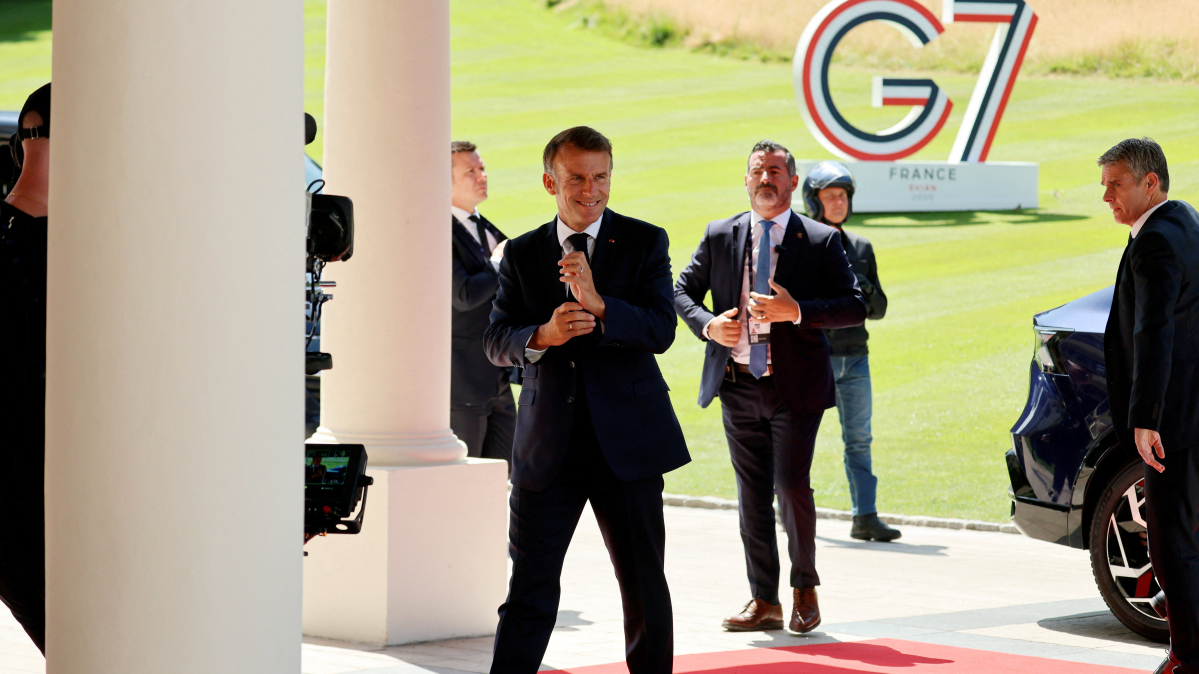
Leaders of the world's leading industrialised democracies are gathering in the French resort town of Evian-les-Bains for the latest Group of Seven (G7) summit on Monday, with the wars in Ukraine and Iran, economic tensions and artificial intelligence expected to dominate discussions.
What is the G7?
The G7 is an informal group of seven advanced economies: the U.S., Britain, Canada, France, Germany, Italy and Japan.
The European Union also takes part in G7 meetings, although it is not counted as one of the seven members.
Unlike organisations such as the United Nations or NATO, the G7 has no permanent headquarters, treaty or legal status. Its presidency rotates annually among member states. France currently holds the presidency after taking over from Canada.
Russia joined the group in 1997, creating the G8, but its membership was suspended in 2014 following the annexation of Crimea from Ukraine.
Why was it created?
The G7 was established in the mid-1970s following the global economic shock caused by the OPEC oil embargo.
Initially focused on economic issues, the group gradually expanded its agenda to include foreign policy, security, climate change, technology and development.
Today, G7 countries account for nearly half of global economic output, with a combined GDP of more than $50 trillion.
Over the years, the summit has increasingly invited leaders from outside the group. This year, India, South Korea, Kenya and Brazil are among the guest nations attending.
Ukraine remains a key focus
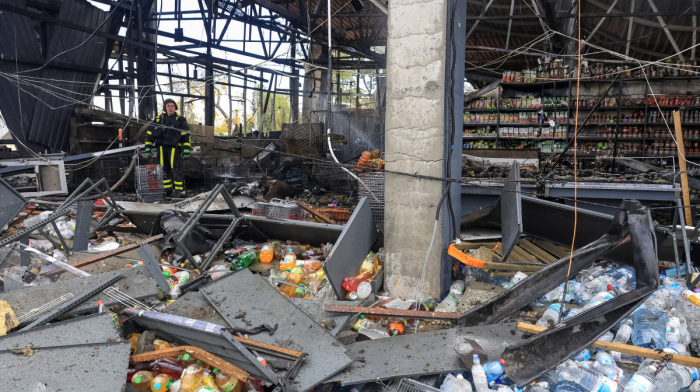
Support for Ukraine is expected to be one of the most important topics on the agenda.
The war with Russia is now in its fifth year, and Ukrainian President Volodymyr Zelenskyy will attend the summit to discuss next steps with G7 leaders.
Kyiv is seeking continued military, financial and political backing from its allies while pushing for renewed efforts to end the conflict. Zelenskyy has proposed direct talks with Russian President Vladimir Putin and wants European countries to play a larger role in any future negotiations.
European leaders are also expected to discuss how to maintain a united approach towards Moscow and ensure continued support for Ukraine.
Middle East stability high on the agenda
The summit is taking place just hours after the U.S. and Iran announced a framework agreement aimed at ending their conflict.
Although the accord is not expected to be formally signed until later this week, G7 leaders are likely to seek greater clarity on its details and implications for regional security.
Particular attention is expected to focus on the Strait of Hormuz, a vital shipping route for global energy supplies. Markets and governments alike are watching closely for signs that maritime traffic can return to normal.
France has also been pushing for broader discussions on Iran's nuclear and ballistic missile programmes, with the leaders of Egypt, Qatar and the United Arab Emirates set to take part in those talks.
Economic imbalances back in focus
Global economic tensions are another major concern.
French officials have framed the issue bluntly: China produces too much, the U.S. consumes too much and Europe invests too little.
Western governments have increasingly expressed concern over China's large trade surplus and industrial policies. Beijing rejects accusations that its manufacturers enjoy unfair advantages through state support.
While no major breakthroughs are expected, particularly with China absent from the summit, European leaders hope discussions can lay the groundwork for future action.
Artificial intelligence moves up the agenda
Artificial intelligence will feature prominently during the summit as governments seek to balance innovation with safety concerns.
French President Emmanuel Macron has invited leading technology executives, including OpenAI chief executive Sam Altman and Anthropic chief executive Dario Amodei, to join discussions.
Leaders will examine the opportunities presented by AI, as well as concerns surrounding online safety, digital infrastructure and the protection of children on the internet.
Debt concerns for developing nations
The debt burden facing many developing countries is also expected to be discussed.
Several low- and middle-income nations are struggling with rising borrowing costs and growing repayment obligations.
While leaders are likely to express support for efforts to ease those pressures, it remains unclear whether the summit will produce concrete measures.
Why does the summit matter now?
The G7 no longer dominates the global economy as it once did, and critics argue that its influence has diminished as emerging powers such as China and India have grown in importance.
Even so, the forum remains one of the few places where leaders of major Western democracies can coordinate responses to international crises.
With conflicts continuing in Europe and the Middle East, economic tensions rising and technological change accelerating, this year's summit is likely to be closely watched far beyond the shores of Lake Geneva.











What is your opinion on this topic?
Leave the first comment