Bulgaria's newly appointed Defence Minister Dimitar Stoyanov has said the country will not provide additional military assistance to Ukraine and has called on Moscow and Kyiv to pursue a negotiated end to the conflict.
Speaking on Tuesday while outlining his ministry's priorities, Stoyanov said Bulgaria did not plan to send any further weapons to the Ukrainian armed forces, according to the BTA news agency.
"It is not planned for the Bulgarian side to provide more weapons to the Ukrainian army," Stoyanov said.
He added that the conflict could not be resolved through military means alone and urged both sides to seek a peaceful settlement.
"We have already stated clearly that the war in Ukraine will not be resolved on the battlefield. It is time to seek a just peace that is determined by both sides," he said.
There was no immediate response from Ukrainian officials.
Shift follows years of military support
Bulgaria, a member of both NATO and the European Union, occupies a strategic position on the Black Sea and has provided military assistance to Ukraine in recent years.
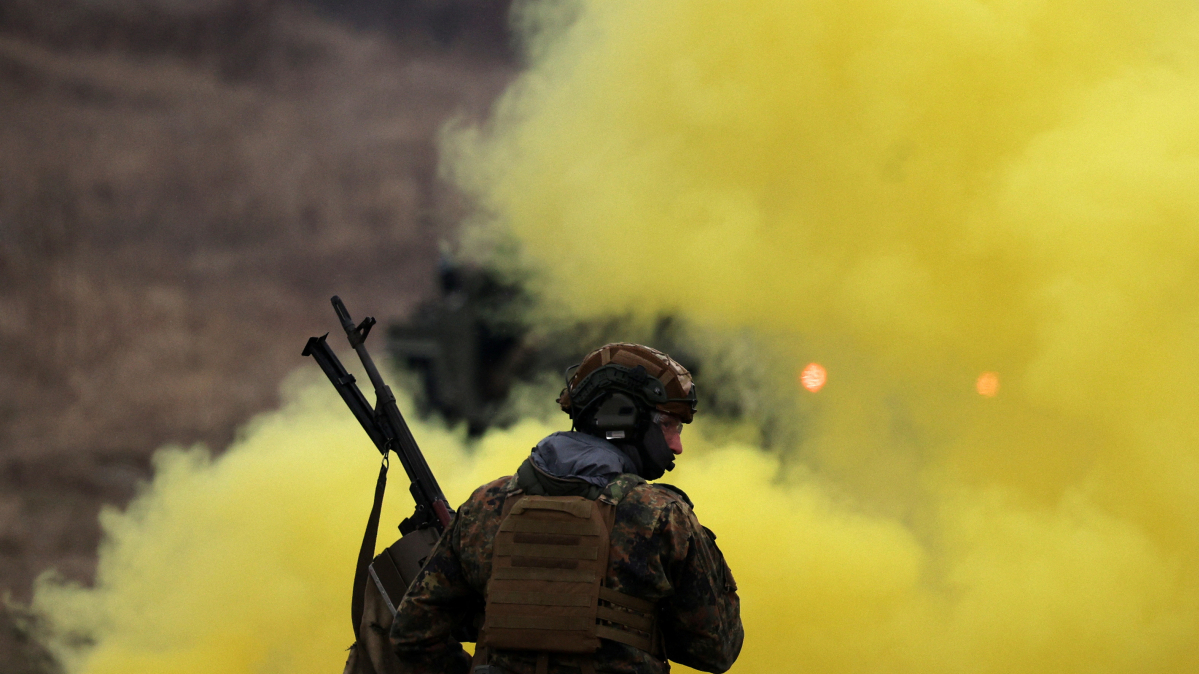
During 2024 and 2025, Sofia supplied anti-tank missiles, armoured vehicles, mortars, anti-aircraft guns, howitzers and infantry weapons following a policy shift in support of Kyiv.
In contrast, during 2022 and 2023, Bulgaria did not officially export weapons directly to Ukraine. Instead, arms and ammunition were sold to intermediaries, mainly in Europe, with Bulgarian officials maintaining they had no control over the final destination of those exports.
Security ties remain in place
Despite Stoyanov's comments, bilateral cooperation between Bulgaria and Ukraine remains significant.
In March, the two countries signed a 10-year security cooperation agreement covering joint defence production, intelligence sharing and the development of an energy corridor capable of delivering up to 10 billion cubic metres of gas annually to Ukraine.
The agreement was seen as a key step in strengthening long-term strategic ties between Sofia and Kyiv.
New government takes office
Bulgaria's new government was sworn in last month under the leadership of Rumen Radev.
Radev has previously been regarded as holding comparatively pro-Russian views. However, after taking office, he pledged that his administration would continue to pursue policies aligned with the European Union while maintaining Bulgaria's commitments to its international partners.












What is your opinion on this topic?
Leave the first comment