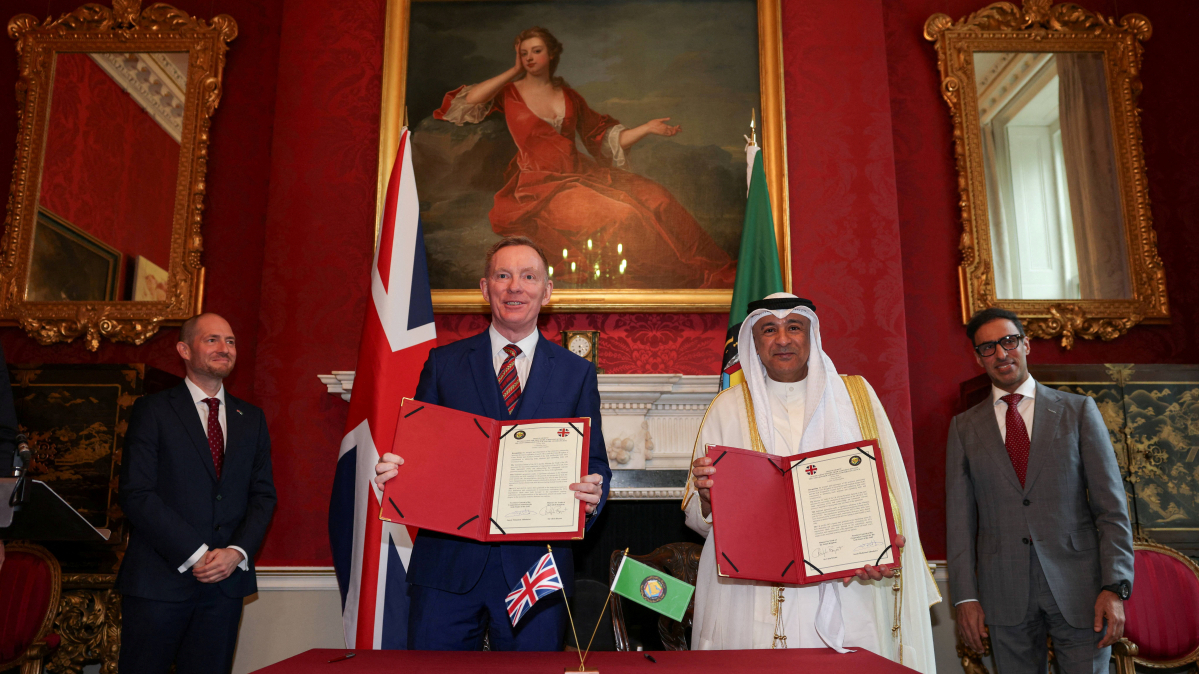
Britain has struck a major trade agreement with the Gulf Cooperation Council (GCC), expected to be worth around £3.7 billion ($4.96 billion) a year in the long run.
The deal strengthens economic ties with key allies in the Gulf at a time of heightened instability across the region.
The agreement comes as countries continue to deal with the fallout from the Iran war, which disrupted energy routes and added pressure on food supplies across the Middle East.
Deal framed by instability
Announcing the deal on Wednesday (21 May), Trade Minister Peter Kyle said the timing reflected the need for economic stability in uncertain times.
“At a time of increased instability, today’s announcement sends a clear signal of confidence - giving UK exporters the certainty they need to plan ahead,” he said.
The GCC brings together Bahrain, Kuwait, Oman, Qatar, Saudi Arabia and the United Arab Emirates.
Tariffs slashed on both sides
It will mean 93% of tariffs on British goods entering GCC markets will be removed over time. The UK government said this is equivalent to about £580 million in tariff reductions by the tenth year.
Two-thirds of those tariffs will disappear as soon as the agreement comes into force.
British exports set to benefit include cars, aerospace products, electronics, and food and drink. Everyday goods such as cereals, cheddar cheese, chocolate and butter will also become tariff-free in Gulf markets.
In return, the UK has reduced tariffs on imports from GCC countries. However, oil and gas - key Gulf exports - were already tariff-free.
Services and long-term access
Beyond goods, the deal also covers services. UK firms will retain current access to Gulf markets, allowing them to expand without facing new barriers.
At the same time, Gulf countries will be able to grow their own service sectors under the agreement, with provisions covering areas such as finance, telecoms and digital trade.
Gulf leaders welcome agreement
GCC Secretary-General Jasem Mohamed Albudaiwi said the deal was designed to deliver “tangible and measurable” benefits across all member states.
According to a GCC statement, the agreement spans trade in goods and services, financial services, digital trade, investment protection and telecommunications.
The UK government stressed that the deal does not weaken British environmental or data protection rules.
Rights concerns and investor protections
However, it contains no language on human rights - something that has drawn criticism from campaigners.
Tom Wills, Director of the Trade Justice Movement, warned the deal marked a step backwards.
“By failing to negotiate any enforceable human rights protections within the deal, the UK has taken a moral step backwards,” he said.
The agreement also includes an investor protection mechanism, extending coverage to GCC states not previously included in similar treaties. It also features Investor-State Dispute Settlement rules, which allow foreign investors to sue governments.
Critics argue this could open the door for legal challenges against UK policy decisions in the future.
Strategic but contested step
The deal marks one of Britain’s most significant post-Brexit trade agreements, deepening ties with a wealthy and strategically important region.
But while ministers highlight growth and opportunity, the agreement is already prompting debate over whether economic gains have come at the expense of wider political safeguards.















What is your opinion on this topic?
Leave the first comment