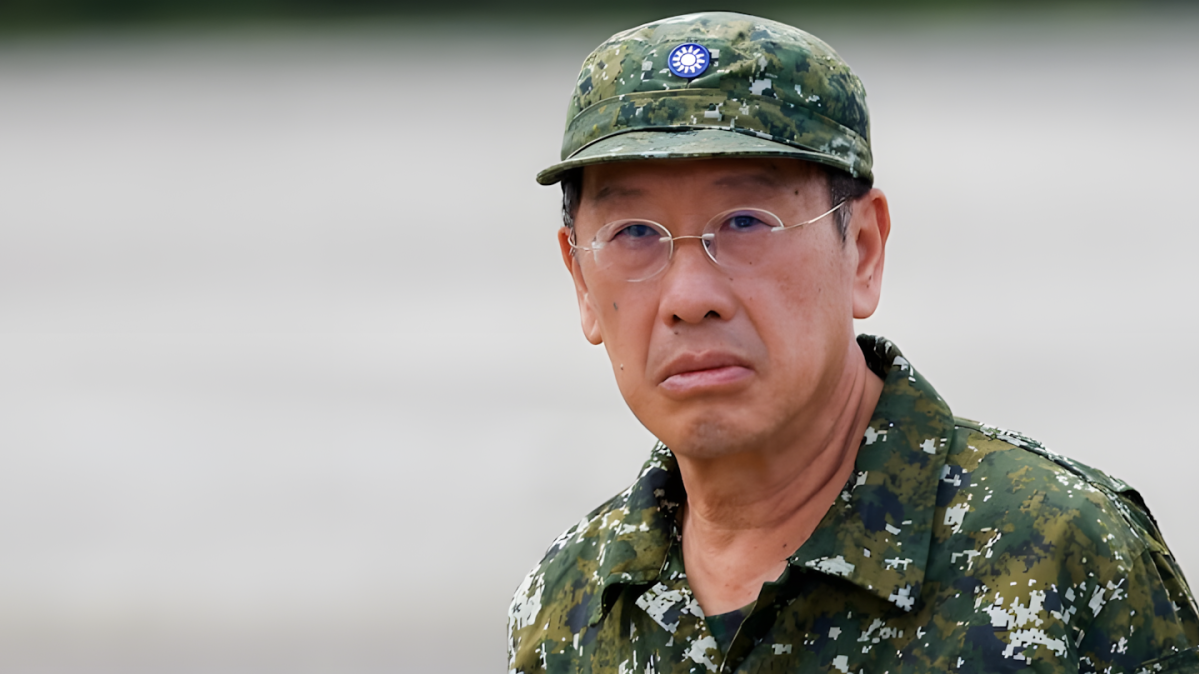
Taiwan’s defence minister has downplayed the impact of new Chinese sanctions on seven European firms, saying they will not disrupt the island’s access to weapons.
Speaking on Monday, Wellington Koo said Beijing’s measures would not affect Taipei’s ability to secure the arms needed to maintain its deterrence.
The dispute began on Friday when China’s Commerce Ministry banned exports of dual-use items to the companies, placing them on its export control list. The move is a rare example of Europe-focused sanctions linked to Taiwan, signalling Beijing’s growing intolerance of foreign support for Taipei’s military.
Diversified channels and European shifts
Taiwan, which China claims as its own territory and has vowed to take by force if necessary, relies heavily on the U.S. for advanced weaponry. Most Western European countries have also maintained long-standing embargoes on major arms sales to Taipei, wary of economic retaliation from Beijing.
However, supply routes are more complex than official policy suggests. Addressing lawmakers on Monday, Koo said China had previously used similar economic pressure.
"However, I think such an action, as I understand it, does not affect our ability to continue sourcing goods through relevant diversified channels," Koo stated.
He did not elaborate on these supply networks.
While many Western governments remain cautious, Taiwan has gained increasing support in Central and Eastern Europe. This shift has accelerated since Russia’s 2022 invasion of Ukraine, which heightened security concerns in the region. Four of the sanctioned companies are based in the Czech Republic, which has become more vocal in its backing of Taiwan.
Beijing’s primary focus remains the U.S. It has repeatedly sanctioned major U.S. arms manufacturers, including Lockheed Martin and Raytheon, over weapons sales to Taiwan. The latest measures followed a $11 billion U.S. arms package announced in December.
Japan policy shift raises new questions
Alongside the European sanctions, Taiwan’s parliament is also assessing a major shift in regional security policy. Last week, Japan eased its long-standing restrictions on overseas arms exports, marking a significant change in its post-war defence stance.
Asked whether Taiwan could buy Japanese weapons, Koo said current rules require a formal defence equipment agreement with Tokyo. Taiwan does not have such an arrangement due to the absence of formal diplomatic ties.
However, he did not rule out future cooperation. "In the future, no possibility can be ruled out. I think I can only say that at present, no transfer agreement exists," he said.
Japan’s policy change has drawn mixed reactions. Countries facing Chinese maritime pressure, including the Philippines, welcomed the move, while China expressed “deep concern” and warned of increased militarisation.
Tensions between Tokyo and Beijing remain high. Relations have been strained since November, when Japanese Prime Minister Sanae Takaichi said a Chinese attack on Taiwan would pose an existential threat to Japan, potentially prompting a direct military response.











What is your opinion on this topic?
Leave the first comment