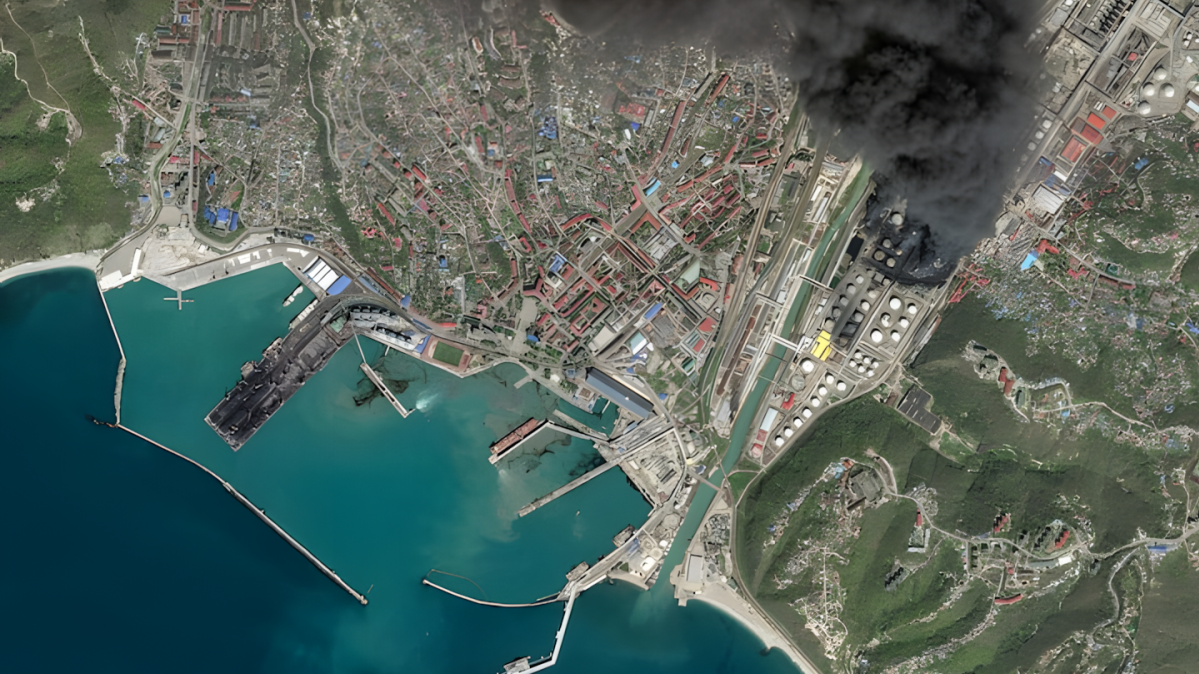
Russian emergency services have contained a major fire at the Tuapse oil refinery on the Black Sea coast, local officials said on Thursday, ending a four-day effort after a Ukrainian drone strike.
The strike on the facility in Russia’s southern Krasnodar region marks a significant hit to the country’s energy exports. The Tuapse refinery is a key part of Moscow’s hydrocarbon network, processing millions of tonnes of crude each year, with most products sold abroad. Two industry sources said earlier this week that operations were fully halted after the initial attack on 16 April, disrupting a major revenue stream.
"At the Tuapse sea terminal, the fire was brought under control and open flames were extinguished," the Krasnodar region’s general headquarters said on Telegram. However, authorities warned the situation was ongoing, adding that "work to completely extinguish the fire is continuing."
Large emergency response and environmental concerns
The scale of the response reflects the extent of the damage. Officials said 276 firefighters and 77 specialised vehicles remained at the site, working to extinguish remaining hotspots across the complex.
The prolonged burning of petroleum products has also raised environmental and public health concerns. On Wednesday, authorities warned that toxic by-products from the fire, combined with rainfall, had led to high levels of volatile organic compounds, including benzene and xylene, along with dense soot.
Residents near the Tuapse terminal were advised to stay indoors, keep windows closed and avoid physical exertion. No updated air quality assessment was released on Thursday, leaving uncertainty over ongoing risks.
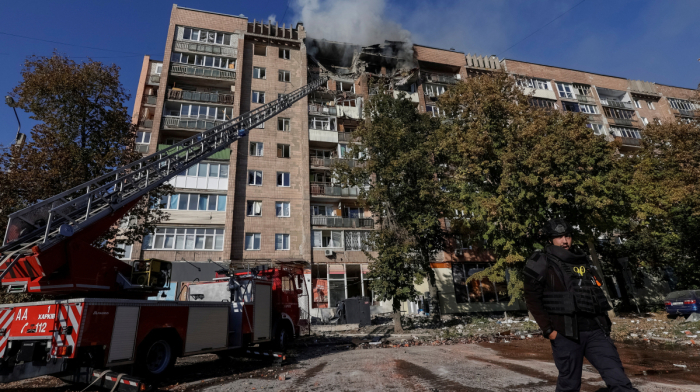
The Tuapse strike formed part of a wider wave of attacks. Russian officials said further drone strikes hit the city on 20 April, damaging port infrastructure and igniting additional storage tanks, complicating firefighting efforts.
Shift in Ukraine’s military strategy
The attack highlights a shift in Ukraine’s approach. Kyiv has increased long-range drone strikes on Russia’s energy infrastructure in recent months.
This comes as the U.S. refocuses its diplomatic efforts, with attention shifting from peace talks in Eastern Europe to the conflict involving Iran in the Middle East.
With reduced immediate diplomatic pressure, Ukraine appears to be targeting key economic assets. By striking refineries and export terminals, it aims to limit fuel supplies for Russian forces and reduce revenue used to fund the war.
This strategy extends beyond the Black Sea. Two industry sources reported a separate fire on Thursday at the Transneft Gorky oil-pumping station in the Nizhny Novgorod region, following a suspected drone attack.
The station is a critical link, supplying crude oil to Russia’s largest maritime export terminal at Primorsk in the Baltic Sea. The ability to hit infrastructure deep inside Russia suggests Ukraine’s drone capabilities are expanding, exposing vulnerabilities across the country’s energy network.
















What is your opinion on this topic?
Leave the first comment