A barrage of Russian drones targeted and damaged a critical power substation in Ukraine's southern Odesa region on Wednesday, Ukrainian officials confirmed.
The strike is the latest episode in a protracted, multi-year strategy by the Russian military to cripple Ukraine's national power grid, aiming to demoralise the civilian population and disrupt military logistics according to Ukrainian authorities.
Emergency services were immediately dispatched to the site of the substation, and no casualties or injuries had been recorded among the facility's staff, according to a statement posted on Telegram by Odesa regional Governor Oleh Kiper.
Vital port under 'round the clock' assault
DTEK, Ukraine’s largest private energy company, issued a statement confirming that one of its key high-voltage substations had been severely damaged in the drone swarm. The company noted that its engineering crews were standing by, waiting for official clearance from the military that the airspace was safe before they could begin the perilous task of executing emergency repairs.
DTEK noted that the Odesa region had been subjected to Russian aerial attacks "almost round the clock" in recent days.
The historic Black Sea port city is not only a cultural hub but the absolute lifeline for many of Ukraine's vital agricultural and industrial exports. Because it serves as the primary conduit for the shipment of grain to international markets, the city and its surrounding regions have been frequent and heavily prioritised targets.
Glide bombs and artillery pound the East
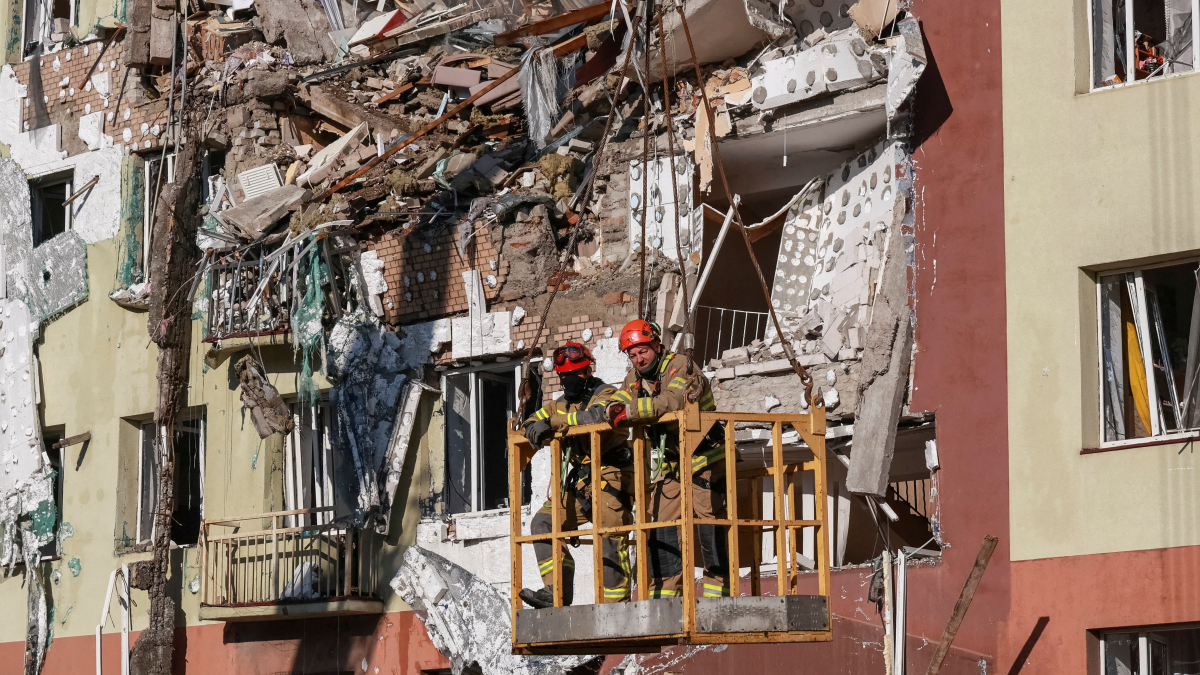
Meanwhile, an overnight strike utilising Russian glide bombs - heavy, retrofitted munitions that can be launched from aircraft far beyond the reach of Ukrainian air defences - struck a village just outside the southeastern town of Zaporizhzhia. The governor of the region, Ivan Fedorov, confirmed that the massive explosion killed at least one man and caused significant structural damage to surrounding residential properties.
In the adjacent Dnipropetrovsk region, Governor Oleksandr Ganzha reported that Russian drones and heavy artillery bombarded a string of frontline towns nearly 40 times throughout the course of a single day.
Furthermore, regional officials reported a wider pattern of coordinated drone attacks stretching across the breadth of the country. Ukrainian officials said that swarms were detected and engaged by Ukrainian air defences in Sloviansk, located near the heavily contested front line in the eastern Donetsk region, as well as in the southern Kherson region and the northern Sumy region, which directly borders the Russian Federation.
Across the border
The conflict, however, is not confined solely to Ukrainian territory. As Kyiv develops longer-range strike capabilities, the war has increasingly spilled over the border into Russia.
In southern Russia's Krasnodar region, local authorities reported a fatality.
According to Governor Venyamin Kondratiev, a resident was killed instantly when falling debris from an intercepted drone struck the balcony of an apartment building. The incident occurred in a residential area northeast of the major Russian Black Sea port of Novorossiysk, a vital hub for the Russian Navy's Black Sea Fleet.
Reuters was unable to independently verify the battlefield accounts or casualty figures provided by either side.





















What is your opinion on this topic?
Leave the first comment