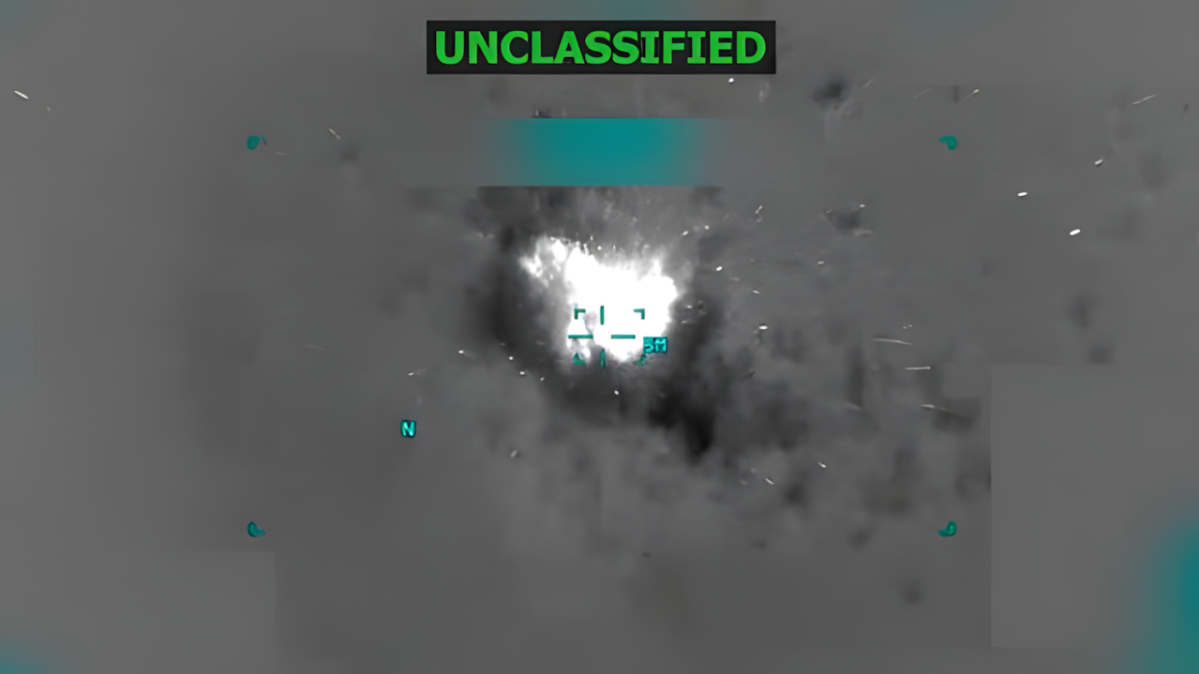
The U.S. military said it carried out a lethal strike on a vessel in the eastern Pacific on Wednesday, killing three people.
The operation is the latest in an intensifying anti-narcotics campaign ordered by the Trump administration, which is drawing growing criticism from international legal experts and human rights advocates.
In a statement, U.S. Southern Command (SOUTHCOM) said the vessel was operated by “Designated Terrorist Organisations,” but did not identify the specific groups involved.
It confirmed no U.S. personnel were injured and described the dead as “male narco-terrorists”, without providing further details or evidence of their affiliations.
“Intelligence confirmed the vessel was transiting along known narco-trafficking routes in the Eastern Pacific and was engaged in narco-trafficking operations,” the U.S. Southern Command said in a post on the social media platform X.
Escalation in maritime strikes
Wednesday’s strike forms part of a continuing series of military operations off the coasts of Central and South America.
It came a day after the U.S. military reported a similar strike in the eastern Pacific that killed four people. That followed another operation on Monday in the same region, which left two dead.
The Trump administration has increasingly deployed naval and air assets to target vessels suspected of transporting drugs.
Compiled reports indicate that U.S. military strikes on suspected smuggling vessels have killed more than 170 people since the policy was expanded in September last year.
Human Rights organisations outraged
The use of lethal military force against suspected smugglers in international waters has prompted strong criticism from legal experts and human rights groups in the U.S. and internationally.
At the centre of the dispute is how targets are classified. By designating cartels as “terrorist organisations” and labelling smugglers as “narco-terrorists,” the administration argues it has legal authority under the laws of armed conflict to use lethal force. However, human rights organisations say this approach bypasses due process and the presumption of innocence under international maritime law.
Human Rights Watch (HRW) has issued reports condemning the campaign, stating that the strikes amount to “unlawful extrajudicial killings.”
HRW argues that U.S. military personnel firing on suspected smuggling vessels represents a serious breach of international human rights law.
In the U.S., the American Civil Liberties Union (ACLU) has also challenged the policy, describing the administration’s justification as “unsubstantiated, fear-mongering claims.”
Legal scholars aligned with the ACLU argue the military is effectively acting as judge, jury and executioner based on classified intelligence that is not subject to independent judicial review. They say the U.S. military rarely provides detailed evidence of the narcotics allegedly destroyed or independent verification that those killed were armed combatants rather than low-level couriers.
However, the Trump administration maintains that the strikes are lawful acts of self-defence in what it describes as an ongoing, though undeclared, “armed conflict” with drug-trafficking organisations designated as terrorist groups by the U.S.











What is your opinion on this topic?
Leave the first comment