France is set to vote on a controversial law targeting what it calls “new forms” of antisemitism, sparking sharp divisions and raising concerns over free speech, criticism of Israel and the protection of Jewish communities.
At the heart of the debate is a simple but highly contested idea: that hostility towards Israel is now inseparable from hostility towards Jewish people.
A response to rising antisemitism
The draft law, introduced by French MP Caroline Yadan, comes at a time of heightened tension. Since the Hamas attacks of October 2023 and the war in Gaza, France - home to Europe’s largest Jewish population - has seen a sharp rise in antisemitic incidents.
Official figures show that more than half of reported anti-religious acts in 2025 targeted Jewish people. For the government, this surge demands a stronger legal response.
Prime Minister Sébastien Lecornu has argued that modern antisemitism often hides behind political rhetoric. In his view, anti-Zionism has become a cover for older forms of hatred.
What the law would do
If passed, the so-called “Yadan law” would significantly expand existing offences linked to terrorism and hate speech.
Key measures include:
- Making it a crime to implicitly justify or downplay acts labelled as terrorism, not just explicitly support them
- Criminalising calls for the destruction of any state recognised by France
- Broadening laws on glorifying terrorism, including praise for perpetrators
- Extending rules around denial or trivialisation of crimes against humanity
The bill would notably widen the scope of current terrorism laws. At present, only direct incitement to terrorism is punishable, carrying penalties of up to five years in prison and a €75,000 fine.
Under the proposed changes, this would be extended to cover “implicit” incitement - a move critics say could be open to broad interpretation. It would also make it a criminal offence to praise not only terrorist acts but those who carry them out.
Perhaps most controversial is a new offence targeting anyone who publicly calls for the destruction of a state recognised by France, punishable by up to five years in prison and a €45,000 fine.
Defending the measure, Caroline Yadan argued that such calls should, in themselves, be treated as criminal.
While the law does not name Israel directly, its wording and political context leave little doubt about its primary focus.
Why critics are alarmed
Critics argue that the language is too vague and risks criminalising legitimate political views.
Lawyers, activists and left-wing politicians warn that terms such as “implicit justification” could be interpreted very broadly. In practice, they say, this might punish people for expressing opinions rather than inciting violence.
Human rights groups have also raised a more fundamental concern: that linking Jewish identity so closely with the Israeli state could backfire.
According to campaigners, equating the two risks reinforcing the very stereotypes that fuel antisemitism, by suggesting all Jewish people are tied to the actions of a foreign government.
Nathalie Tehio, president of France’s Human Rights League - a staunch opponent of the proposed law - warned that legally tying the protection of France’s Jewish community to protection of the State of Israel could fuel antisemitism rather than fight it.
“In reality, it equates French Jews with Israel - which is dangerous in and of itself, as this very equation fuels anti-Semitism,” she added.
“But it also gives the impression that there is a double standard, because it is a law that targets the issue of anti-Semitism while also serving as a defence of Israel - so there is a double risk of reinforcing anti-Semitism.”
Free speech versus protection
The most heated part of the debate focuses on freedom of expression.
Supporters of the bill insist it does not ban criticism of Israel. They argue there is a clear line between legitimate political critique and rhetoric that denies a country’s right to exist or excuses violence.
However, opponents are not convinced. Slogans such as “From the river to the sea”, widely used at pro-Palestinian protests, could potentially fall foul of the new law, depending on interpretation.
Some also fear that describing Israel’s actions in Gaza as genocide - a claim debated internationally - could be treated as offensive or even unlawful under the broader framing of the bill.
Is anti-Zionism the same as anti-Semitism?
At the core of the controversy lies a difficult and highly sensitive question: where does political criticism end, and prejudice begin?
A recent report by France’s human rights watchdog found no clear statistical link between criticism of Zionism - the political ideology underpinning the creation of Israel - and antisemitic attitudes.
In other words, holding negative views about Zionism does not automatically translate into hostility towards Jewish people.
For critics of the bill, this finding challenges one of its key assumptions. They argue that equating anti-Zionism with antisemitism risks silencing legitimate political debate and conflating a state’s policies with a people’s identity.
Divisions across politics and the public
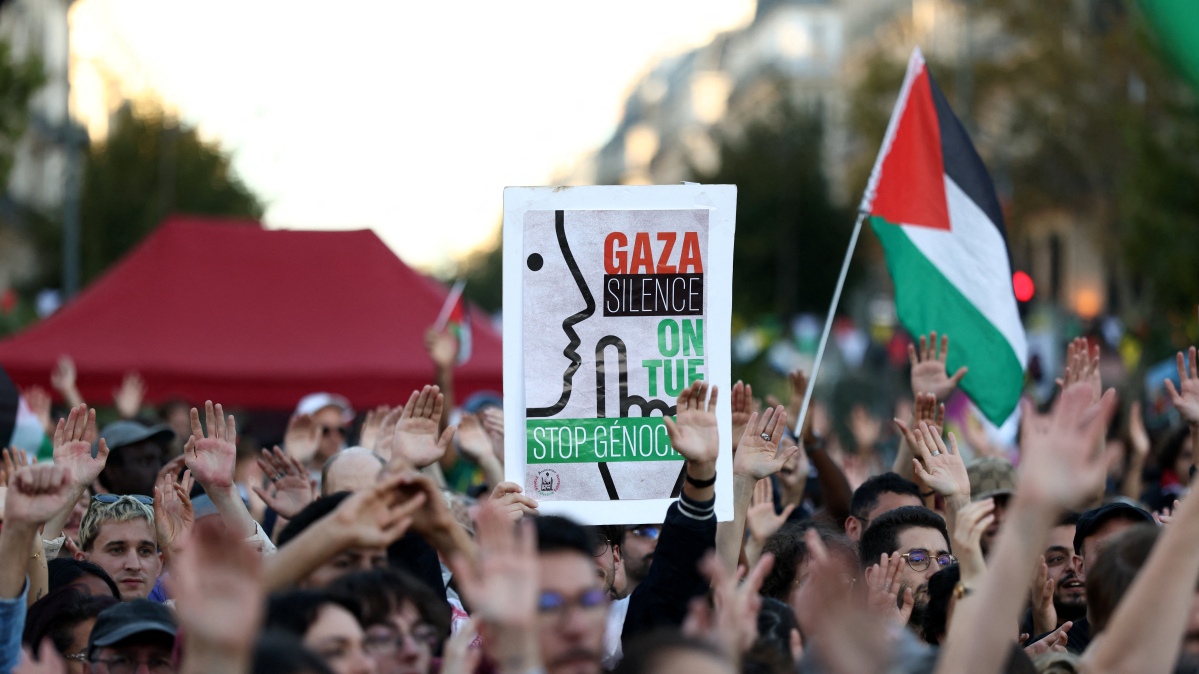
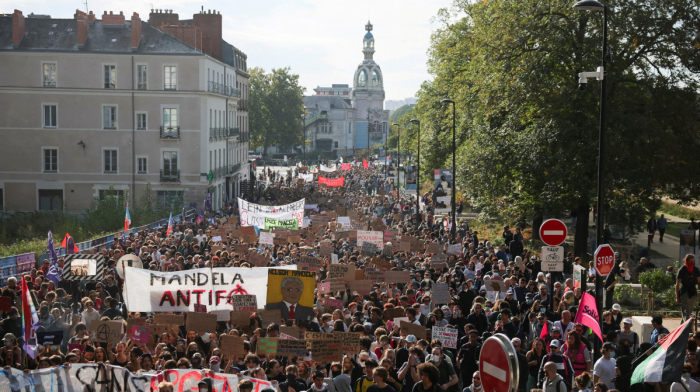
Public reaction has been equally intense. Hundreds of thousands of people have signed petitions against the proposal, and protests have taken place in several cities.
Alexandre Basse, who launched one of the largest petitions with more than 690,000 signatures, said: “If this bill were to be passed, pacifist slogans like ‘equality and freedom for all from the sea to the Jordan’ could be subject to legal action.”
The bill is now entering its final stage of debate this week, after the French parliament’s law committee approved its latest version in January by 18 votes to 14.



















What is your opinion on this topic?
Leave the first comment