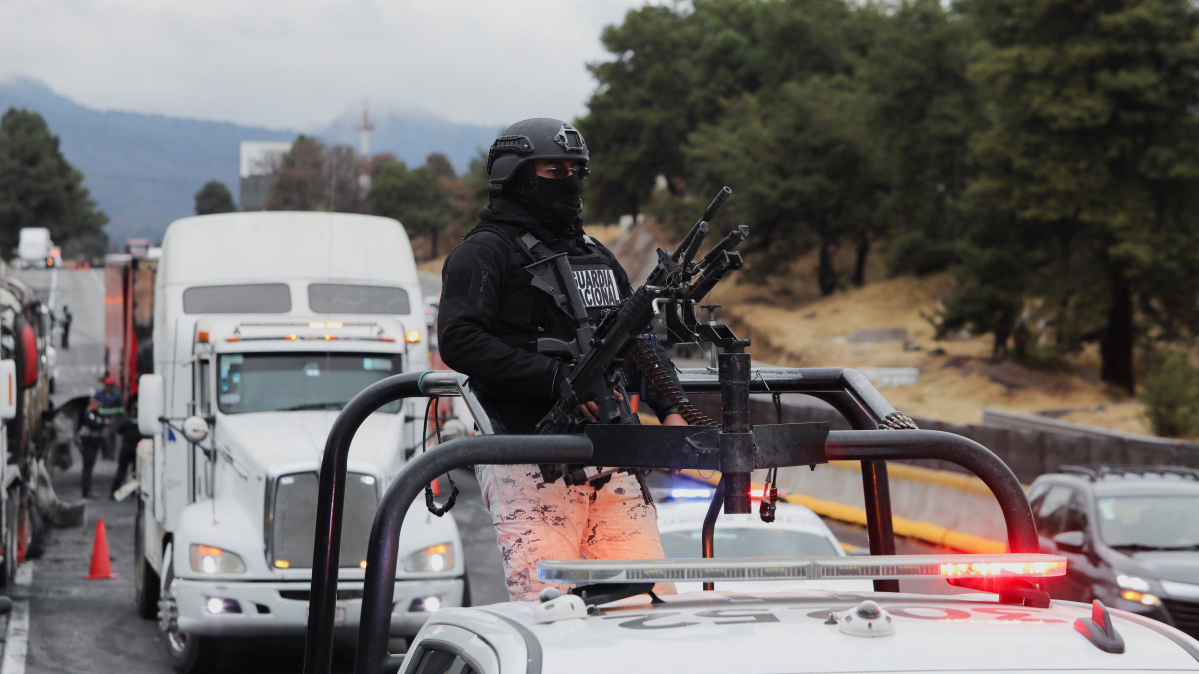
At least 62 people have been killed in Mexico after a pre-dawn military raid targeting one of the country’s most wanted cartel leaders, triggered coordinated violence across more than a dozen states. Troops have been deployed and flights disrupted as security forces sought to regain control.
The operation targeted Nemesio Oseguera Cervantes, widely known as "El Mencho", leader of the Jalisco New Generation Cartel (CJNG). Officials said he was seriously wounded in a firefight at a hideout in the mountain town of Tapalpa and died while being airlifted to Mexico City.
Among the 62 dead were 25 members of Mexico’s National Guard and 34 suspected gang members. Dozens more people were injured as cartel loyalists set up around 85 roadblocks in more than a dozen states, torching vehicles and blocking major highways.
The government has deployed an additional 2,000 troops to Jalisco, the cartel’s stronghold, to reinforce security operations.
The crackdown comes amid renewed pressure from U.S. President Donald Trump on Mexico to intensify efforts against drug trafficking ahead of a review of the United States-Mexico-Canada (USMCA) trade pact.
Mexican President Claudia Sheinbaum stressed that the mission was conducted solely by Mexican forces.
“There is no U.S. participation in the operation,” she said.
“What there is, as we have said here several times, is a great deal of information sharing. The understanding with the United States is based primarily on the exchange of intelligence information,” Sheinbaum concluded.
Officials said a tip linked to Oseguera’s romantic relationships led security forces to his location.
Nationwide Violence
Following confirmation of Cervantes' death, violence erupted in several regions where the cartel operates.
Security Secretary Omar García Harfuch said a prison guard, a member of the state prosecutor’s office and 30 suspected cartel members were killed in the unrest.
Authorities deployed 2,500 soldiers to western Mexico to reinforce security.
Road blockades were reported in multiple states. Vehicles were hijacked and set alight, and businesses were forced to close. In Guadalajara, streets remained unusually quiet, with public transport running below normal levels.
“Yes, I’m afraid, but I also need to work,” said taxi driver Oscar Lozano.
Tourism has also been affected, with flights to Puerto Vallarta and Guadalajara suspended over the weekend.
“It’s not possible to get out right now,” said Natalie Belluccia, a 28-year-old visitor from New York.
“We’re locked down in the resort… the whole city is under lockdown because everyone is scared of getting stopped by the cartel,” Belluccia explained.
Officials said flights were expected to resume on Monday or Tuesday as the situation stabilises.










What is your opinion on this topic?
Leave the first comment