Azerbaijan tells Russia to stop linking Armenia ties to Baku
Moscow should stop linking Russia-Armenia relations to Azerbaijan, Baku's Foreign Ministry spokesperson Aykhan Hajizada has said, after Russia again r...
Mexico pledges to resolve U.S. tariff threats, highlighting trade resilience, crackdown on contraband, and efforts to expand partnerships, including UAE investments in semiconductors and renewable energy.
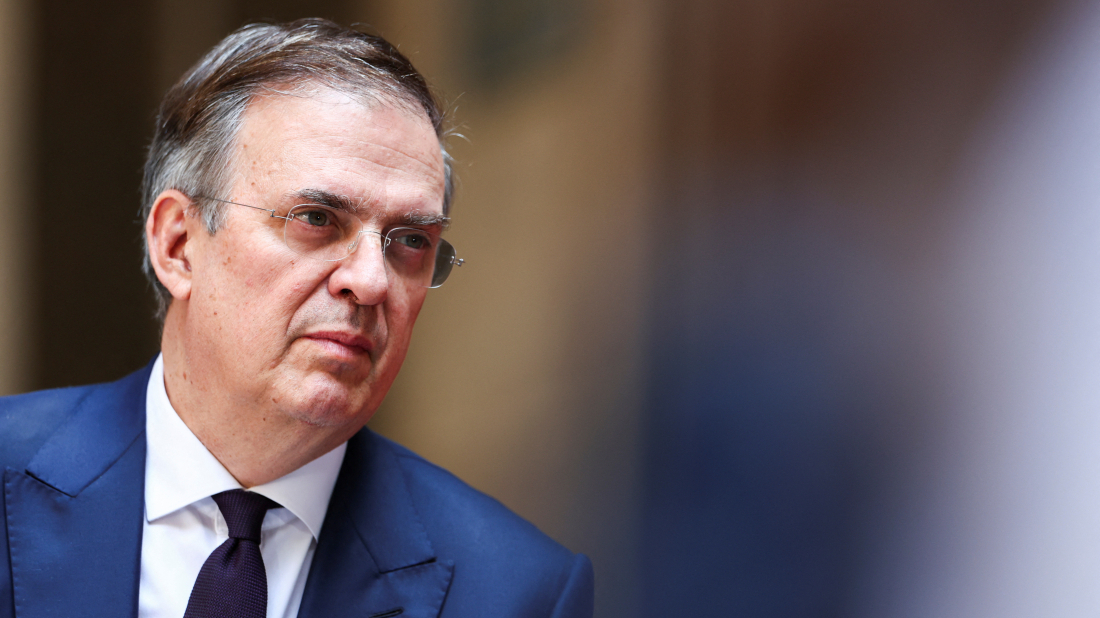
Mexico is going to find a solution to avoid the imposing of tariffs by the United States, Economy Minister Marcelo Ebrard said on Friday, following threats from U.S. President-elect Donald Trump to do so.
Trump has promised sweeping tariffs on Mexico if it does not crack down on migrant arrivals at the shared border and the entry of drugs, particularly fentanyl, into the U.S.
Ebrard, speaking at a conference in Mexico City, compared the current trade tensions with previous negotiations during Trump's first term, when Ebrard was Mexico's foreign minister.
Then, Trump made big tariff threats around migration that did not come to pass.
"In the end, there were no tariffs or treaties, because we found a way out," Ebrard said, adding that this time, "I guarantee you we're going to find (a way out)."
Ebrard reiterated that Trump's tariff threats seemed unrealistic because of the heavy impact they would have on the U.S. economy.
"You can't have low inflation and sustained economic growth in the U.S. if, at the same time, you're rolling out strong protectionist policies against Mexico and China," he said. "That's a key advantage for Mexico."
Trump has also accused Mexico of being a backdoor for Chinese goods to reach the U.S., something Mexico denies.
Mexico has, however, launched a crackdown on contraband products imported from Asia called "Operation Clean-Up." It also imposed tariffs on textile imports, which Ebrard said were in response to the flooding of the local market with cheap goods.
Mexico is also looking to broaden its trade relationship with other countries beyond the U.S., Ebrard said, adding that the United Arab Emirates' sovereign wealth fund was studying investments in Mexico's semiconductor and renewable energy sectors.

U.S. President Donald Trump said on Monday that there is a good chance” of reaching a deal with Iran, but warned that Washington would resume military operation if negotiations fail.
Iran will halt its own attacks as long as the United States maintains its pause on strikes, but Tehran remains sceptical of U.S. intentions, a senior Iranian source told on Sunday.
The Russia-Ukraine war is increasingly reshaping the Caspian region. From threats to energy infrastructure to renewed diplomatic efforts, countries across the region are adapting to the wider consequences of a conflict that continues to disrupt trade, transport and security.
A New York school district has put plans to introduce a humanoid robot into classrooms on hold after fierce criticism from teachers, Indigenous community members and state education officials over the use of artificial intelligence in schools.
Russian President Vladimir Putin has signed laws introducing stricter financial requirements for foreign workers, as Moscow continues to tighten migration controls affecting millions of labour migrants, particularly from Central Asia.
Meteorologists in China have used a swarm of drones to observe Typhoon Noul as it passed through Guangdong province, aiming to improve weather monitoring and forecasting during extreme storms.
Tehran has stressed that its commercial vessel hit by a Ukrainian drone in the Caspian Sea on Saturday was carrying only civilian cargo and vowed to respond appropriately while holding Kyiv responsible for the attack.
Since 1946, nine people have served as UN Secretary-General, the closest thing the world has to a chief diplomat. The role carries no army and little hard power, yet its occupants have shaped how nations respond to war, famine and global crises. Here are five who left the deepest mark.
Two shallow earthquakes hit a remote area of China's Qinghai province on Tuesday, with authorities reporting no casualties or collapsed buildings so far.
Australia is considering building its first new oil refinery in more than six decades as conflict in the Middle East exposes the country's heavy reliance on imported fuel.
You can download the AnewZ application from Play Store and the App Store.
What is your opinion on this topic?
Leave the first comment