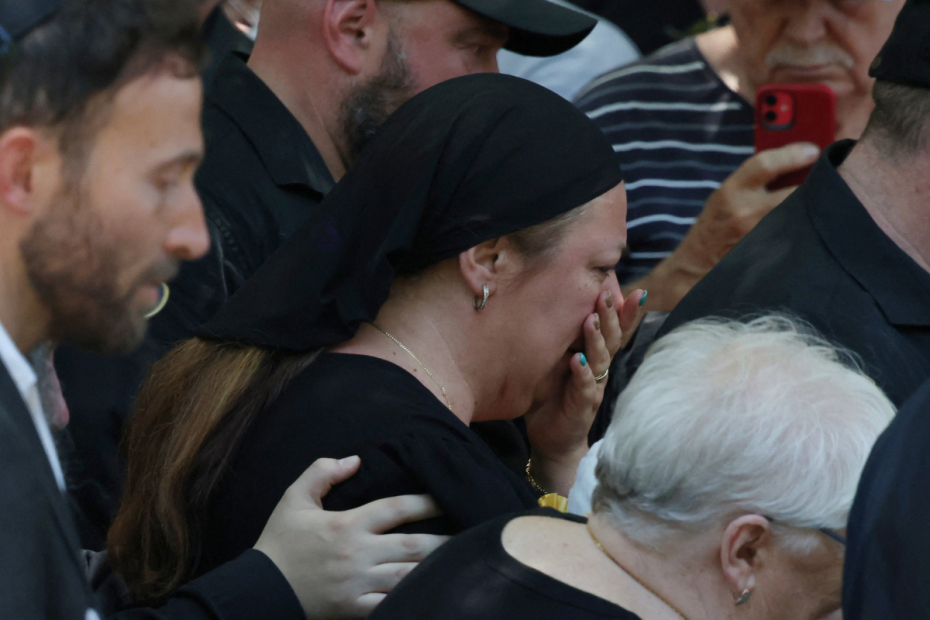
Australia has been plunged into mourning following the deadly shooting at a Jewish holiday gathering on Sydney’s Bondi Beach, with the funeral of 10-year-old Matilda marking a deeply emotional moment for the nation.
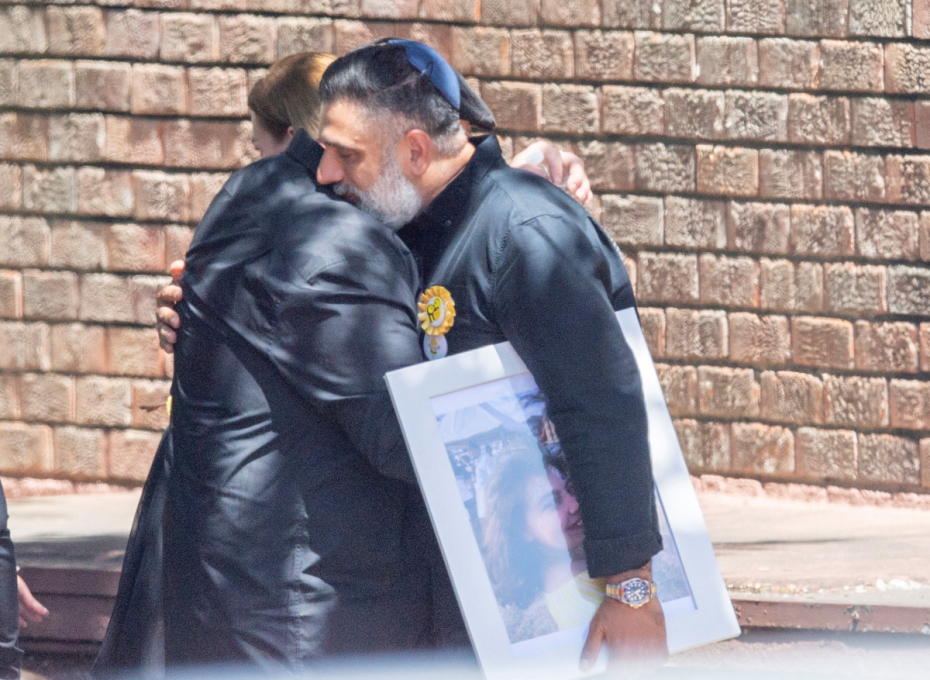
Matilda, the youngest of 15 people killed in the attack on Sunday, was remembered by family, friends and community members as a joyful and compassionate child who loved animals, dancing and the outdoors. Her coffin was adorned with yellow toy bees — a tribute to her middle name, Bee — while mourners wore yellow clothing, bee stickers and carried balloons and toys in her memory.
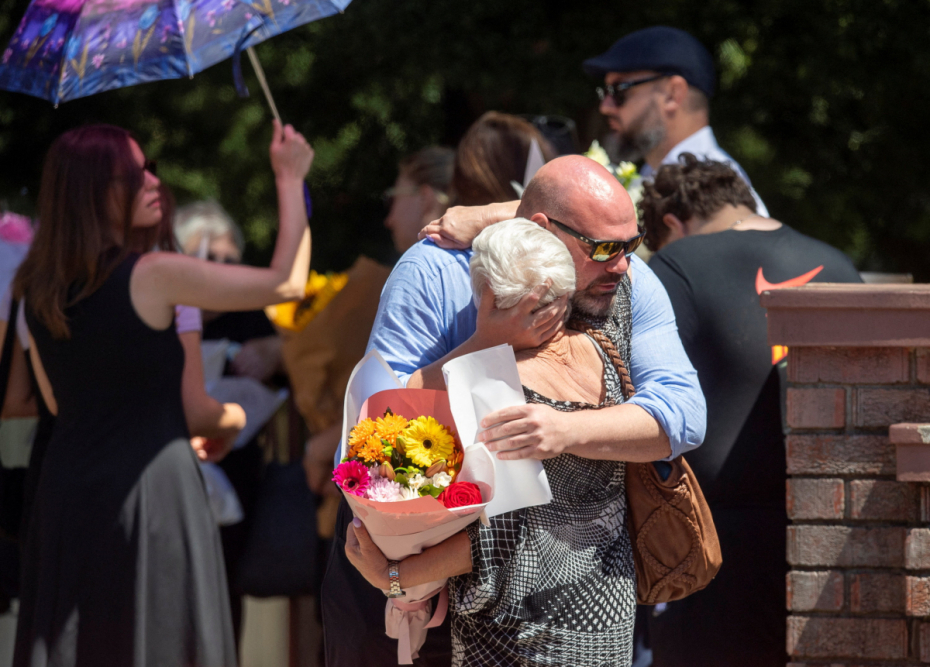
Hundreds of people gathered at the funeral hall in Sydney’s eastern suburbs, with many more lining the streets or watching the service on outdoor screens due to limited space inside. Emotions ran high as members of the Jewish community, local residents and supporters came together to honour Matilda’s life and share in collective grief.
Rabbi Yehoram Ulman described her killing as an unimaginable tragedy that resonated with parents across the country, saying it felt “as if our own daughter was taken from us”.
The shooting, which occurred during Hanukkah celebrations attended by hundreds, has shocked Australia and intensified concerns about rising antisemitism.
Witnesses described scenes of panic and horror as gunfire erupted on the iconic beach. For many mourners, the sense of loss was compounded by anger and disbelief that such violence could take place in a public, family-oriented setting. Several attendees spoke of a growing fear within Jewish communities and a feeling that warning signs of hatred had gone unaddressed for too long.
Government to strengthen laws against hate speech and violence
Prime Minister Anthony Albanese has pledged a significant crackdown on hate speech and extremist behaviour. Speaking at a news conference, Albanese said Australians were “shocked and angry” and acknowledged that stronger measures were needed to confront what he described as a “scourge” of hatred.
"Australians are shocked and angry. I am angry. It is clear we need to do more to combat this evil scourge much more," Albanese told a news conference announcing the reforms on Wednesday.
The proposed reforms include making it easier for authorities to charge individuals who promote hate or violence, increasing penalties, and expanding powers to cancel or refuse visas linked to extremist conduct.
The government also plans to develop new mechanisms to target organisations whose leaders engage in hate speech, reflecting growing concern about coordinated extremist influence.
Albanese said the reforms were aimed at ensuring that words inciting violence or discrimination are treated with the seriousness they deserve, particularly when they lead to real-world harm.
While the government has repeatedly stated it has condemned antisemitism over recent years, critics argue that existing measures have failed to stem a steady rise in incidents.
Just days after the Bondi Beach attack, a 19-year-old man was charged after allegedly making antisemitic threats towards a Jewish passenger on a flight from Bali to Sydney. Australian Federal Police said the man used threatening language and gestures, underscoring fears that hateful rhetoric is becoming more open and frequent.
The Albanese government has pointed to previous actions, including the criminalisation of hate speech and the expulsion of Iran’s ambassador over alleged involvement in antisemitic attacks, but pressure is mounting for a more comprehensive response.
Terrorism links investigated as security and gun laws tightened
Authorities are continuing to investigate possible extremist links connected to the Bondi Beach shooting, including alleged ties to Islamic State networks. Police say the attack was carried out by Sajid Akram, 50, and his 24-year-old son Naveed. Sajid was shot dead by police at the scene, while Naveed has been charged with 59 offences, including murder and terrorism-related charges, after waking from a coma.
Investigators believe the attack was inspired by Islamic State ideology, though inquiries into the extent of any organisational support are ongoing.
Attention has also turned to the Philippines, where Islamic State-linked groups are known to operate. Philippine authorities confirmed that the accused had spent time in the country shortly before the attack but said there was no evidence they received military training.
Australian police are examining whether local extremist networks provided ideological or logistical support, as concerns grow about radicalisation occurring within Australia’s borders.
Politically, the shootings have prompted swift action at both state and federal levels. While the federal government has ruled out a Royal Commission for now, the New South Wales premier has announced plans to recall the state parliament to push through urgent reforms to gun laws. These measures are expected to focus on access to firearms, monitoring of extremist individuals and faster intervention by authorities.
The tragedy has sparked a national reckoning over hate, security and the balance between civil liberties and public safety, with many Australians calling for decisive action to prevent such violence from happening again.











What is your opinion on this topic?
Leave the first comment