Nearly half of Uzbekistan’s energy share is green
Uzbekistan’s use of green energy sources has accounted for more than 45 per cent of its electricity generation as of on 24 June, marking a significa...
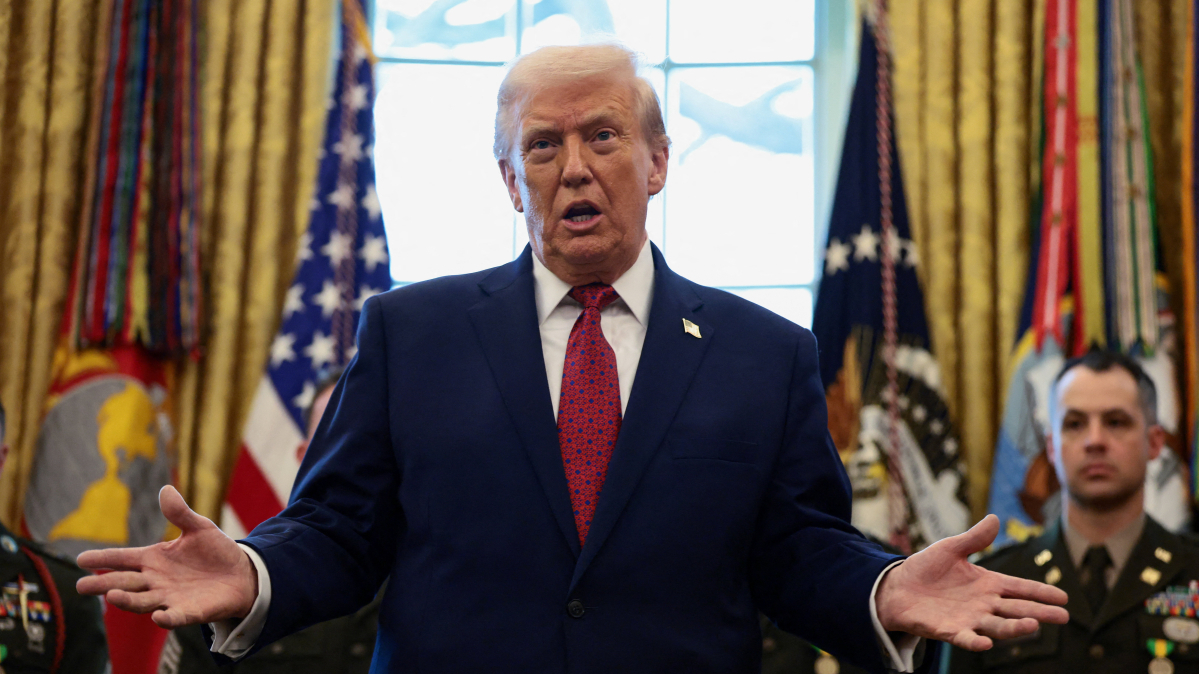
U.S. President Donald Trump announced on Monday that he will sign an executive order classifying fentanyl as a “weapon of mass destruction” as part of his ongoing campaign against drug smuggling.
Speaking at the White House on Monday during a ceremony presenting medals to U.S. troops who have patrolled the Mexico–U.S. border, Trump said, “With this historic executive order I will sign today, we are formally classifying fentanyl as a weapon of mass destruction, which is what it is.”
Fentanyl, a synthetic opioid, is highly potent and can be lethal in extremely small doses. While it has legitimate medical uses for pain management, illicit fentanyl has been a major driver of the U.S. overdose crisis, claiming nearly 330,000 American lives over the five years ending in April 2025.
The classification could lead to stiffer criminal charges for those involved in trafficking fentanyl, though Trump did not specify immediate legal changes.
Earlier in October, Trump met with Chinese President Xi Jinping, who agreed to take steps to limit the illegal export of fentanyl from China, which is the primary source of illicit fentanyl entering the U.S. This followed similar commitments made during Trump’s first term and by the previous president, Joe Biden.
The move reflects growing concern in the U.S. about fentanyl’s impact on public health and national security, framing the crisis as both a law enforcement and a strategic threat.

Russia has called for clarification on whether U.S. President Donald Trump has changed his position on the war in Ukraine following remarks made at the recent G7 summit in Evian-les-Bains.
As Western Europe battles a deadly heatwave that has shattered temperature records, disrupted transport and power supplies, and forced the closure of schools and cultural landmarks, attention is turning to whether El Niño is playing a role in the extreme conditions.
An earthquake of magnitude 6.9 struck Japan's northeast coast on Thursday, but no tsunami warning was issued, no injuries were immediately reported and no irregularities were found at nuclear facilities, the authorities said.
Israel's defence minister said on Wednesday Israeli troops will not withdraw from southern Lebanon, highlighting a hurdle to Iran-U.S. peace talks, as the top U.S. diplomat tours the Middle East to win over allies sceptical about a proposed deal.
The U.S. Senate rejected a resolution on Wednesday that would have directed President Donald Trump to remove U.S. forces from hostilities against Iran unless Congress formally authorised military action.
At least 235 people have been confirmed dead one day after two powerful earthquakes struck Venezuela. Hundreds of people are believed to be trapped under rubble and tens of thousands are unaccounted for, as emergency crews and international rescue teams race to respond.
Start your day informed with the AnewZ Morning Brief. Here are the top stories for 26 June, covering the latest developments you need to know.
Power was fully or partly cut across the Russian-held part of Ukraine’s Kherson region early on Friday (26 June), according to the Moscow-installed governor Vladimir Saldo.
Belarusian President Alexander Lukashenko has warned Ukraine not to try to draw his country into the war, saying any such move would change the conflict "instantly".
The administration of U.S. President Donald Trump has formally notified Congress of its intention to sell more than $700 million worth of jet engines to Türkiye. The move drew objections from lawmakers over Ankara’s continued possession of Russian-made S-400 air defence systems.
You can download the AnewZ application from Play Store and the App Store.
What is your opinion on this topic?
Leave the first comment