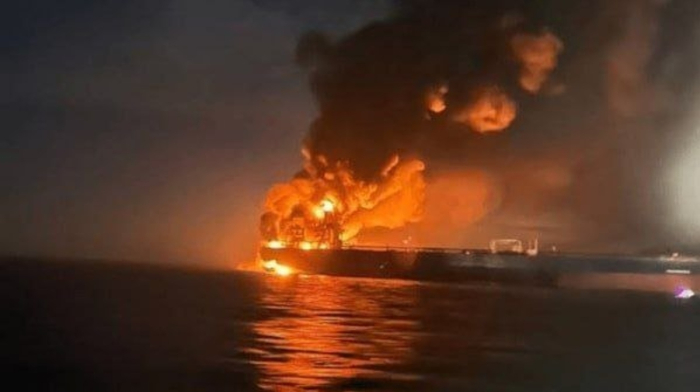
Venezuela’s National Assembly has announced the formation of a special commission to investigate a series of deadly U.S. military strikes targeting suspected drug trafficking boats off the Venezuelan coast and in the eastern Pacific Ocean.
The inquiry follows a report by The Washington Post alleging that U.S. Defense Secretary Pete Hegseth ordered all passengers aboard one vessel to be killed during a September operation, with a second strike carried out to eliminate two survivors.
Speaking on state television on Sunday, National Assembly President Jorge Rodríguez said the investigation would be “rigorous and deep,” involving both the legislature and the country’s prosecutor’s office.
“We are going to carry out a rigorous and deep investigation,” Rodríguez told reporters, calling the alleged actions “a violation of international law and human rights.”
The Venezuelan government condemned the reported strikes as acts of aggression and accused Washington of pursuing regime change under the guise of anti-narcotics operations.
“The U.S. government has long sought to destabilise Venezuela for control of its oil resources,” Rodríguez said.
For months, the U.S. military has waged what it describes as a targeted campaign against drug trafficking networks operating in the Caribbean and eastern Pacific. U.S. officials have claimed the operations aim to disrupt routes used by transnational criminal organisations to transport narcotics.
However, Caracas maintains that the campaign amounts to a direct threat against Venezuelan sovereignty.
President Nicolás Maduro’s government has repeatedly denied any involvement in organised crime, insisting that Washington’s actions are politically motivated.
The controversy deepened after U.S. President Donald Trump said on Saturday that “the airspace above and surrounding Venezuela should be considered closed in its entirety,” a statement the Venezuelan foreign ministry denounced as a “colonialist threat.”
Venezuela’s Attorney General’s Office is expected to work alongside the parliamentary commission to determine whether the U.S. strikes violated international maritime and humanitarian law.
Analysts say the episode could heighten already fraught relations between Caracas and Washington, just months after limited backchannel talks over sanctions relief appeared to offer a potential thaw.
“This investigation will test whether Venezuela can leverage international forums to challenge U.S. unilateral actions,” said political analyst María Fernanda Quiroz in Caracas.
“It also reflects a renewed effort by Maduro’s government to portray itself as a defender of national sovereignty amid mounting foreign pressure,” Quiroz said.
The commission is expected to submit its findings to the National Assembly in early 2026.











What is your opinion on this topic?
Leave the first comment