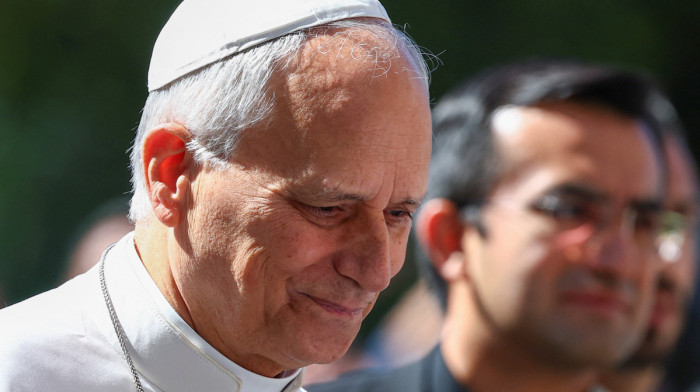
Pope Leo XIV arrived in Beirut on Sunday, marking the second stop of his first overseas trip since becoming pontiff in May. The visit, coming directly from Türkiye, is being hailed as a moment of spiritual encouragement for a nation struggling with deep political and economic crises.
The pope was received with full state honours at Rafik Hariri International Airport by Lebanese President Joseph Aoun, Prime Minister Nawaf Salam, Parliament Speaker Nabih Berri, and Maronite Patriarch Cardinal Bechara Boutros al-Rahi. Crowds lined the road from the airport to the presidential palace in Baabda, waving Vatican and Lebanese flags as the papal motorcade made its way through the capital.
Lebanese Information Minister Paul Morcos said on social media platform X that Lebanon “warmly welcomes” the pontiff at a critical moment for the country, noting that more than 1,000 journalists are covering the visit.
“The visit brings great hope to a people struggling with crises,” he wrote.
Pope Leo’s three-day visit to Lebanon — his first as head of the Catholic Church — will include meetings with top political and religious leaders, as well as interfaith gatherings and public ceremonies aimed at promoting dialogue and peace in the region.
After a welcoming ceremony at the presidential palace in Baabda, the pope will meet the country’s leadership, followed by sessions with civil society representatives and diplomats before retiring to the apostolic nunciature in Harissa, north of Beirut.
On Monday (1 December), Pope Leo will travel to the mountain town of Annaya to pray at the Shrine of Saint Charbel, a revered Maronite monk known for his miracles. Later in the day, he will meet bishops, priests, and pastoral workers at the Shrine of Our Lady of Lebanon in Harissa, and hold a private meeting with Catholic patriarchs at the nunciature.
The pontiff will also join an interfaith and ecumenical gathering at Martyrs’ Square in central Beirut, bringing together representatives of Lebanon’s diverse religious communities. The day will conclude with an encounter with young people at the Maronite patriarchal complex in Bkerke, underscoring his call for hope and renewal among Lebanon’s youth.
On Tuesday (2 December), Pope Leo is scheduled to visit medical staff and patients at the Sisters of the Cross Hospital in Jal el-Dib and lead a silent prayer at the site of the 2020 Beirut port explosion, which devastated parts of the capital.
The historic visit will conclude with an open-air Mass on Beirut’s waterfront, expected to draw tens of thousands of worshippers, followed by an official farewell ceremony at the airport.
The pope’s arrival — his first to an Arab country since assuming the papacy — is seen as a strong gesture of solidarity with Lebanon’s Christian community and a broader call for peace and coexistence in a region still grappling with the aftershocks of conflict.








What is your opinion on this topic?
Leave the first comment