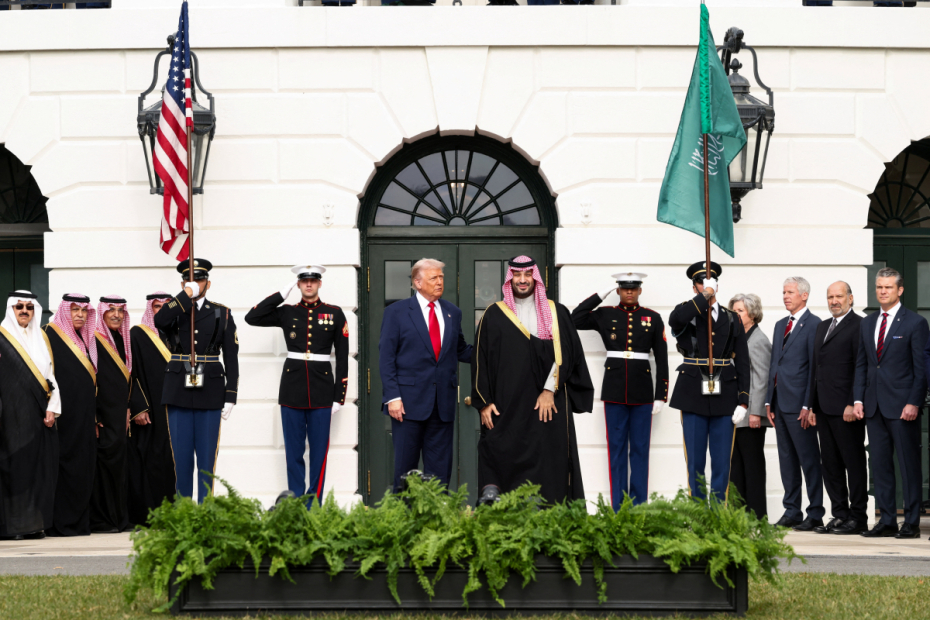
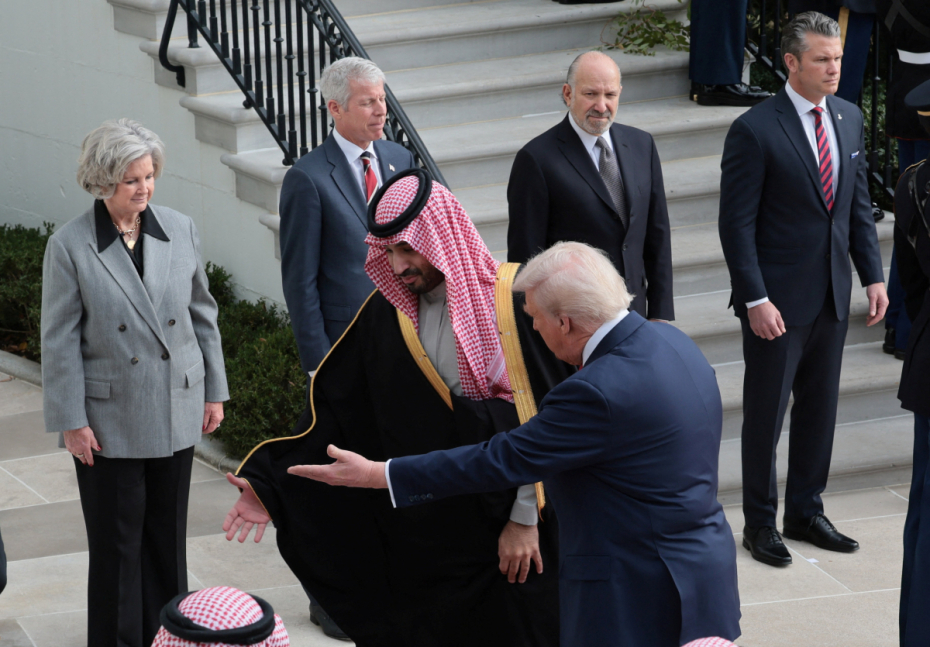
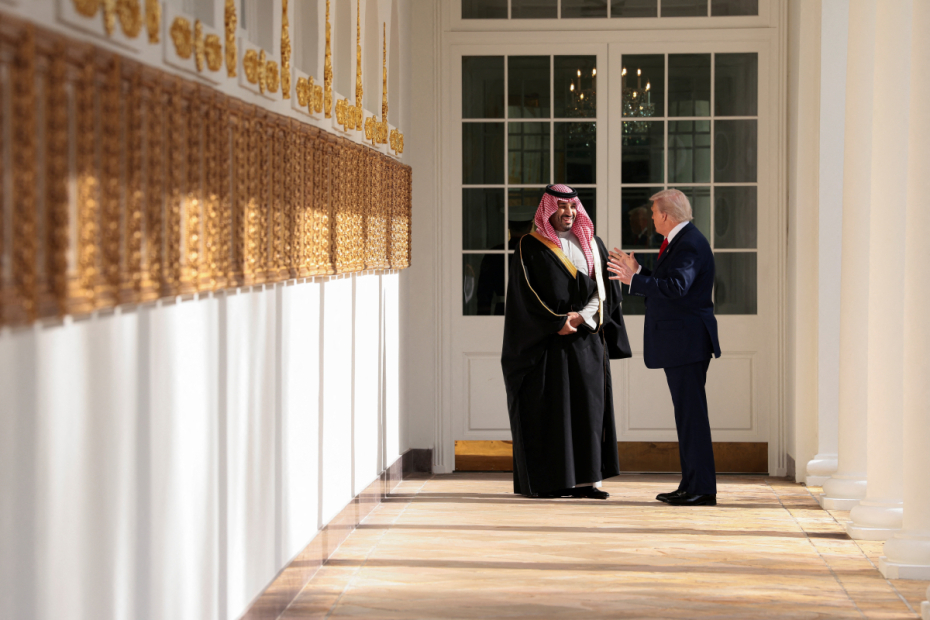
U.S. President Donald Trump hosted Saudi Crown Prince Mohammed bin Salman at the White House on Tuesday, focusing on arms deals, nuclear cooperation, while downplaying questions about the 2018 killing of journalist Jamal Khashoggi.
The controversy over the killing of Jamal Khashoggi, a Washington Post columnist and U.S.-based critic of the Saudi leadership, flared again in the Oval Office in front of cameras.
The kingdom's de facto ruler was making his first White House visit in more than seven years, seeking to further rehabilitate his global image tarnished by the incident.
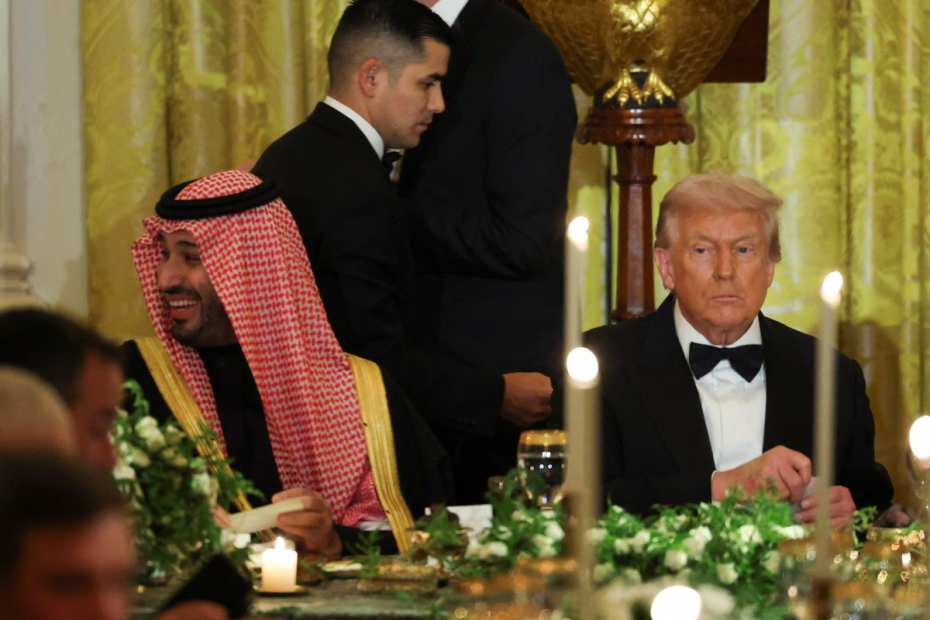
"A lot of people didn't like that gentleman that you're talking about, whether you like him or didn't like him," Trump told reporters, with bin Salman sitting beside him. "Things happened, but he knew nothing about it, and we can leave it at that."
Bin Salman said it had been "painful" to hear about Khashoggi's death but that his government "did all the right steps of investigation."
"We've improved our system to be sure that nothing happened like that. And it's painful and it's a huge mistake," he told reporters.
Arms sales, civil nuclear agreement
Trump said he received a "positive response" about the prospects for Saudi Arabia normalising ties with Israel.
But the crown prince made clear that while he wanted to join the Abraham Accords, he was sticking to his condition that Israel must provide a path to Palestinian statehood, which it has refused to do.
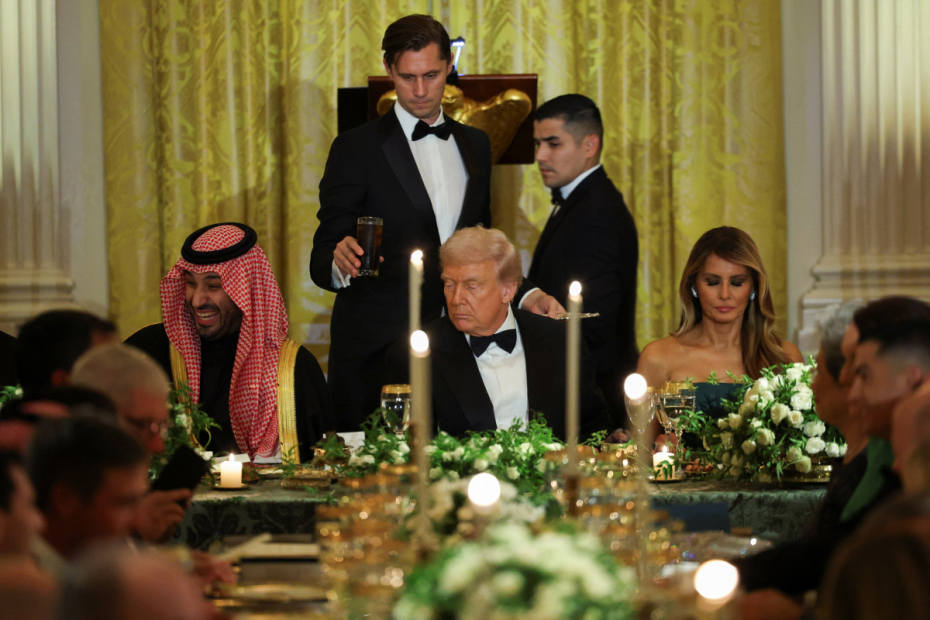
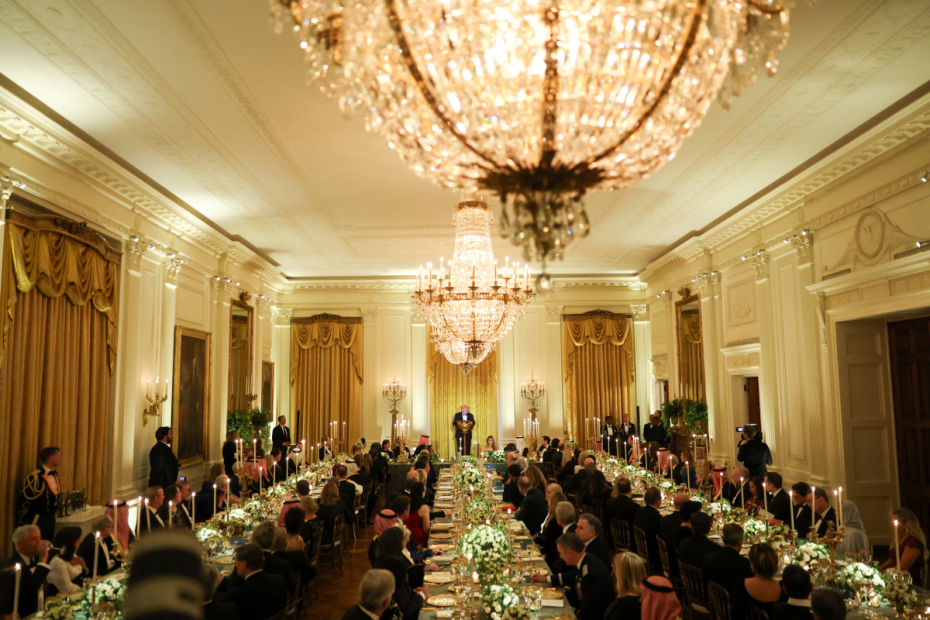
During a dinner at the White House later on Tuesday, Trump said he was "taking our military cooperation to even greater heights" by designating Saudi Arabia a major non-NATO Ally, a status that provides a U.S. partner with military and economic privileges but does not entail security commitments.
A White House fact sheet said the two sides signed a Strategic Defence Agreement, which "fortifies deterrence across the Middle East," makes it easier for U.S. defence firms to operate in the country.
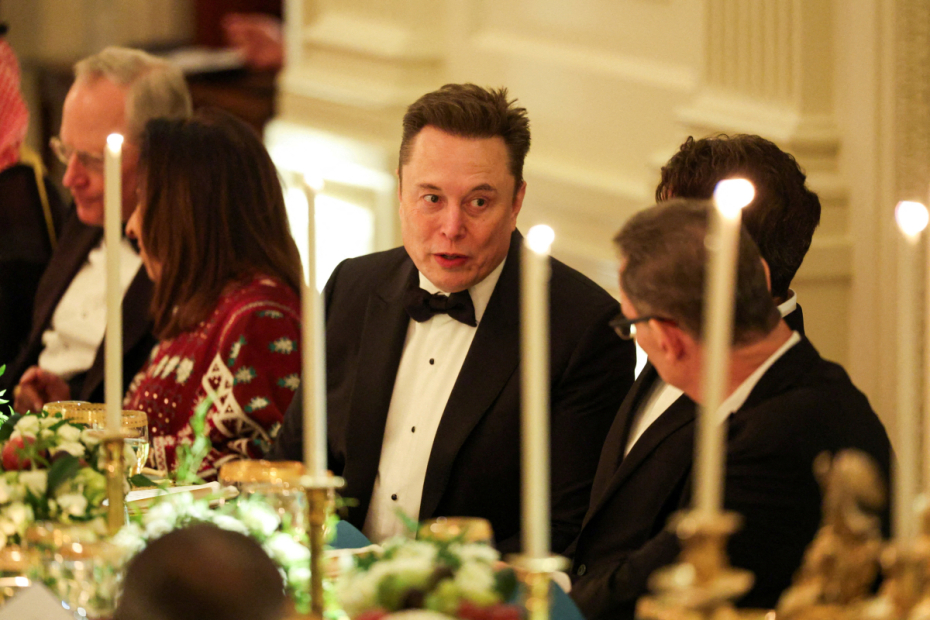
The dinner also included Tesla CEO Elon Musk, Portugal’s soccer star Cristiano Ronaldo, and Nvidia CEO Jensen Huang.
The White House announced Trump had approved future deliveries of F-35 fighter jets and the Saudis had agreed to purchase 300 American tanks.
The two countries also signed a joint declaration on the completion of negotiations on civil nuclear energy cooperation, which the White House said would build the legal foundation for a long-term nuclear energy partnership.
Crown Prince boosts investment pledge
Sitting next to Trump, bin Salman promised to increase his country's U.S. investment to $1 trillion from a $600 billion pledge he made when Trump visited Saudi Arabia in May. But he offered no details or timetable.
The two sides also signed a memorandum of understanding on artificial intelligence and a framework for collaboration on critical minerals, the White House said.
A $1 trillion investment in the U.S. would be difficult for Saudi Arabia to pull together given its heavy spending on an already-ambitious series of massive projects at home, including futuristic megacities that have gone over budget, according to experts.










What is your opinion on this topic?
Leave the first comment