French President Macron admits his decision for early elections in June led to political instability, taking full responsibility for the consequences and calling for greater European independence.
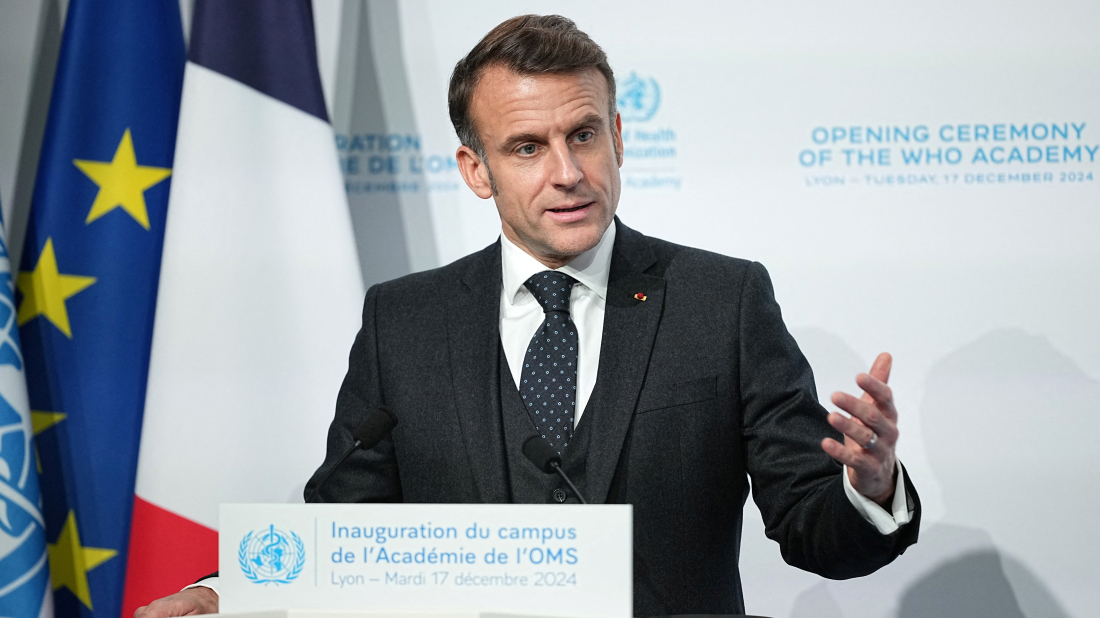
French President Emmanuel Macron acknowledged that his decision to call early parliamentary elections in June had created more political instability in France.
The speech concluded a turbulent 2024 for Macron, who shocked the country by calling for early elections midway through the year. This move backfired when the elections resulted in a hung parliament, with a substantial increase in far-right lawmakers, which weakened Macron’s influence.
"Lucidity and humility force (me) to recognize that at this stage, this decision has produced more instability than peace, and I fully own up to that," Macron said in a televised address ahead of the New Year celebrations.
"The dissolution caused more divisions in the Assembly than solutions for the French people," he added, marking his most direct acknowledgment of the consequences of the elections.
Macron had justified the early elections by pointing to a poor result in the European elections, arguing that they were necessary to "clarify" the political landscape. However, this gamble resulted in the loss of his parliamentary majority, and it took him two months to appoint a minority government, which collapsed in December—the first such collapse in France since 1962.
This failure led to France not passing the 2025 budget by the year-end deadline, and Macron had to appoint his fourth prime minister of the year, centrist veteran Francois Bayrou, in December.
Macron also hinted at the possibility of holding referendums in the coming year, though he did not explicitly mention them. He stated he would ask the French people to decide on "decisive" issues, but did not specify which ones.
The French constitution allows the president to initiate referendums.
Macron also referenced "citizen conventions," gatherings of randomly chosen citizens that lack binding power, which he has previously used to address issues like the yellow vest protests.
Finally, Macron called for greater European independence, emphasizing that the European Union could no longer depend on other powers for its security and defense, and must reject external trade laws.











What is your opinion on this topic?
Leave the first comment