A Colombian court has overturned former President Álvaro Uribe’s convictions for fraud and bribery, halting a years-long legal saga that had made him the country’s first ex-leader to face criminal sentencing.
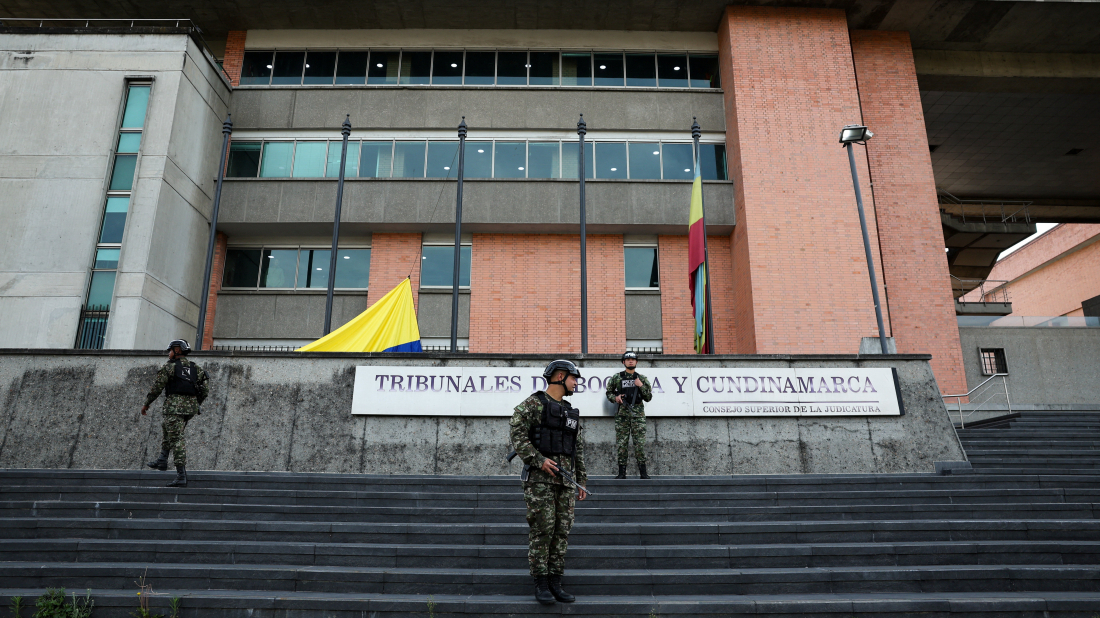
A Colombian court on Tuesday overturned former President Álvaro Uribe’s convictions for fraud and bribery, ending a protracted legal battle over alleged witness tampering that could have seen him serve up to 12 years under house arrest. However, a senator involved in the case announced plans to appeal, potentially taking the matter to the Supreme Court.
Uribe, who governed Colombia from 2002 to 2010, had been sentenced in early August, becoming the country’s first former president to face a criminal conviction.
In a ruling delivered by Magistrate Manuel Antonio Merchan, a three-judge panel found that the evidence used to convict Uribe was neither sufficiently robust nor legally sound to justify the verdict.
“Bogotá’s Supreme Tribunal is repeating history, contradicting the Supreme Court of Justice and affirming that a judicial wiretap authorised by a Supreme Court magistrate against a criminal, where Uribe’s voice was heard—is private,” current President Gustavo Petro wrote on X. “That is how the history of paramilitary rule in Colombia is concealed,” added Petro, who rose to prominence as a senator by exposing links between paramilitary groups and politicians.
Uribe has consistently denied the allegations, describing the proceedings as politically motivated. The tribunal had previously suspended enforcement of his house arrest pending the outcome of this appeal.
The case centres on accusations that Uribe instructed a lawyer to bribe imprisoned paramilitaries to undermine testimony linking him to their organisations.
These paramilitary groups—funded by ranchers, landowners, and merchants seeking protection from leftist guerrillas—were found by a truth commission to have been responsible for nearly half of the more than 450,000 deaths in Colombia’s conflict between 1985 and 2018.
‘We will persevere’
In 2012, Uribe accused left-wing Senator Iván Cepeda of manipulating jailed paramilitaries to tie him to their networks. However, the Supreme Court cleared Cepeda of wrongdoing and instead determined that Uribe himself had attempted to influence witnesses.
Following Tuesday’s decision, Cepeda vowed to appeal, meaning the already 13-year-long legal saga could reach Colombia’s highest court.
In a video posted online, Cepeda criticised the ruling, saying most of the judges had chosen to disregard clear and compelling evidence.
“We will continue striving for the truth to come out in this case and in others where Álvaro Uribe bears responsibility for serious crimes,” he said. “We will persevere.”
U.S. Secretary of State Marco Rubio, who had previously claimed Uribe was the target of judicial “weaponisation,” welcomed the ruling. “Colombia’s justice has prevailed as former President Uribe is acquitted after years of political persecution against him and his family,” Rubio wrote on X.
Petro, meanwhile, condemned Rubio’s earlier remarks as interference and defended Colombia’s judicial independence.
Relations between Petro and the Trump administration have been strained, with Washington threatening tariffs over alleged Colombian links to drug trafficking. Earlier this year, U.S. President Donald Trump imposed tariffs on Brazil following the conviction of his ally Jair Bolsonaro for plotting a coup.
The United States remains Colombia’s largest export market.
As Colombia approaches presidential and legislative elections next year, several of Uribe’s allies are preparing to run to succeed Petro, who is constitutionally barred from seeking another term. Cepeda, known for championing victims of state violence, is among those considering a presidential bid for the ruling leftist coalition.
















What is your opinion on this topic?
Leave the first comment