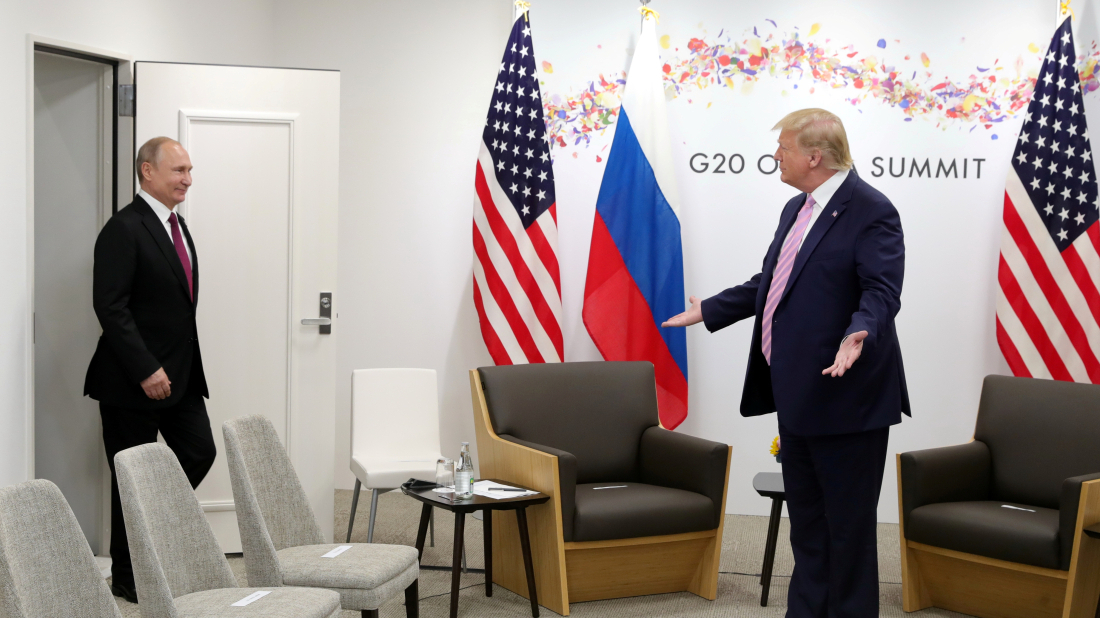
A planned summit between President Donald Trump and Russian President Vladimir Putin was paused on Tuesday after Moscow rebuffed calls for an immediate ceasefire in Ukraine, casting fresh doubt over hopes that another high-profile meeting might restart stalled peace efforts.
A senior White House official told reporters there are “no plans for President Trump to meet with President Putin in the immediate future.”
The decision follows a telephone exchange described as productive between U.S. Secretary of State Marco Rubio and Russian Foreign Minister Sergei Lavrov, but both sides agreed not to press ahead with an in-person meeting for now.
No date, no deal — substance over scheduling
Trump had announced last week that he and Putin would meet soon in Budapest to try to bring an end to the war in Ukraine.
But Kremlin officials, and Lavrov in particular, signalled that Moscow’s preconditions, including demands that would require Kyiv to cede territory, remain unchanged.
The Kremlin stressed that serious preparation is needed before any summit, and that neither president has given exact dates.
Kremlin spokesman Dmitry Peskov said, “We have an understanding of the presidents, but we cannot postpone what has not been finalised.”
Two senior European diplomats interpreting the hiccup said the postponed Rubio–Lavrov meeting, expected in Budapest this week, suggested U.S. negotiators were not willing to proceed unless Moscow showed flexibility.
“I guess the Russians wanted too much and it became evident for the Americans that there will be no deal for Trump in Budapest,” one diplomat said.
European leaders press for immediate ceasefire
European capitals, alarmed by the prospect of a summit that could produce little in the way of concessions, urged Washington to stand firm.
Leaders from Britain, France, Germany and the EU released a joint statement backing President Trump’s recent position: fighting should stop immediately and current battle lines should form the basis for negotiations.
That stance mirrors Kyiv’s long-held demand that a ceasefire begin from the present line of contact.
President Trump last week spoke separately to both Putin and Ukrainian President Volodymyr Zelenskyy — and publicly stated his support for a ceasefire that starts from current positions.
Reports from the closed-door meeting between Mr. Trump and Mr. Zelenskyy described tense exchanges, including accounts of sharp language and pressure from the U.S. president to accept certain Russian terms.
Kyiv, however, framed the encounter as a success because it ended with Washington backing the Ukrainian position.
Budapest’s role and political sensitivities
The choice of Budapest as a potential venue has also proved controversial. Hungary’s Prime Minister Viktor Orban is one of the EU’s most Russia-friendly leaders, and the optics of hosting Putin have unsettled several European governments.
Any trip to Budapest by Putin would involve transiting neighboring airspace, a sensitive issue: Poland warned it could detain Putin if he flew over its territory on the basis of an international warrant, while Bulgaria indicated it could permit overflight.
Hungary’s foreign minister Peter Szijjarto, who was in Washington Tuesday, posted on social media that “we have some serious days ahead,” reflecting the delicate diplomatic choreography now underway.
What’s next?
Neither side has fully abandoned the idea of a Trump–Putin summit, but officials on both sides say more groundwork is required — and European allies are watching closely to ensure any U.S.–Russia engagement does not undercut Ukraine’s negotiating position.
For now, the stalled meeting underscores a familiar fact: high-level summits can advance peace only if the parties are willing to compromise on the hard issues on the table.
Moscow’s unwillingness to agree to an immediate ceasefire has, at least for the moment, put those hopes on hold.












What is your opinion on this topic?
Leave the first comment