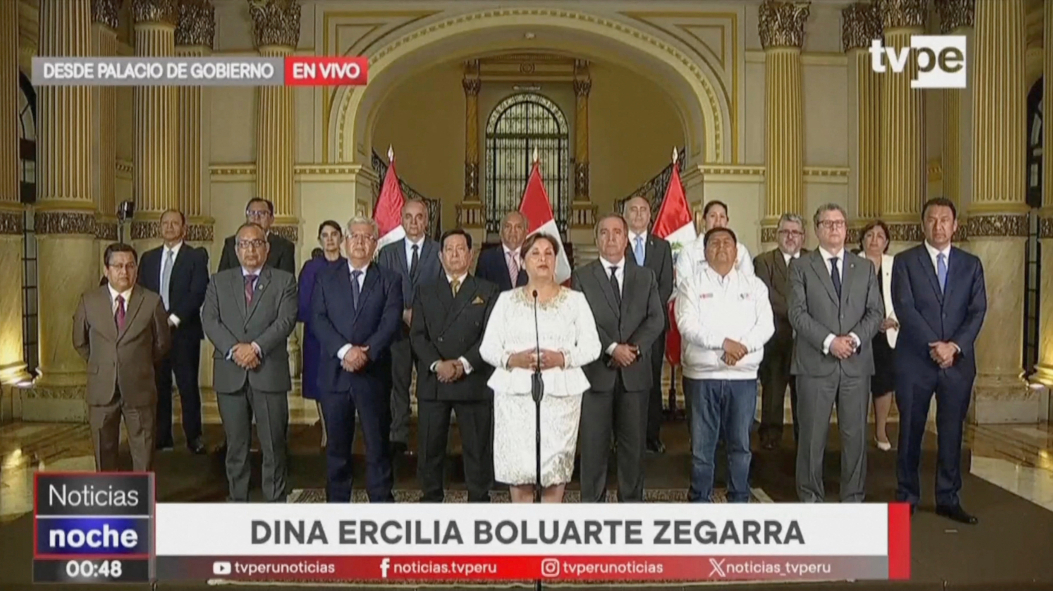
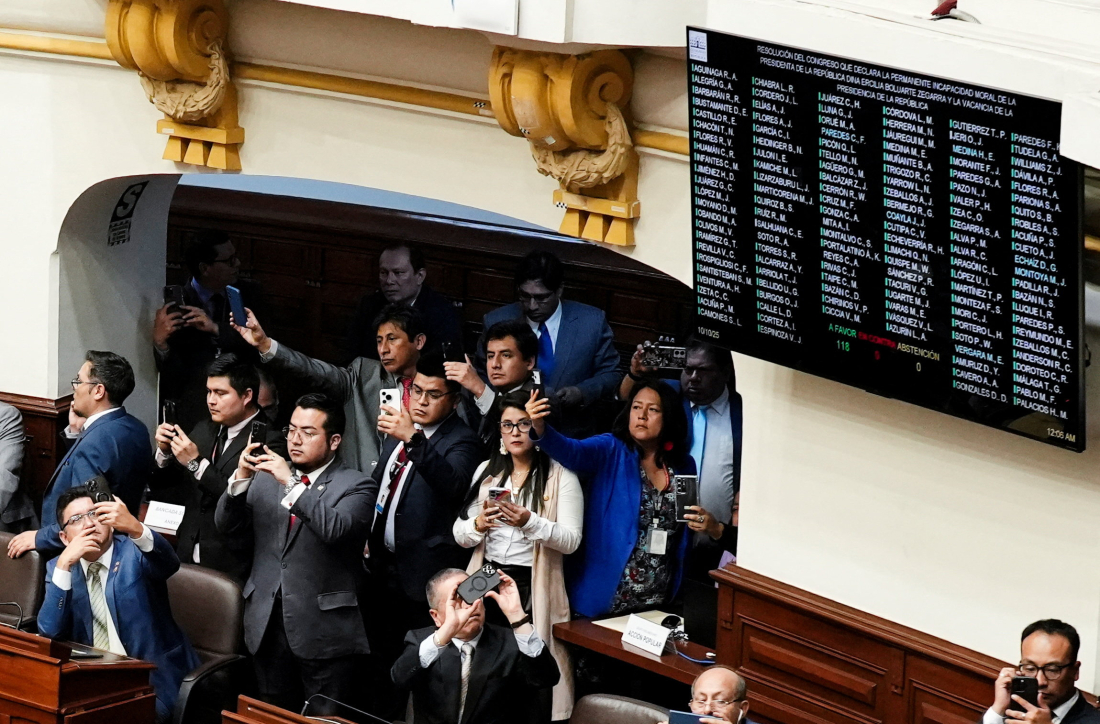
Peru's Congress voted unanimously on Friday to remove President Dina Boluarte from office in a late-night session held hours after political blocs from across the spectrum called for her ouster.
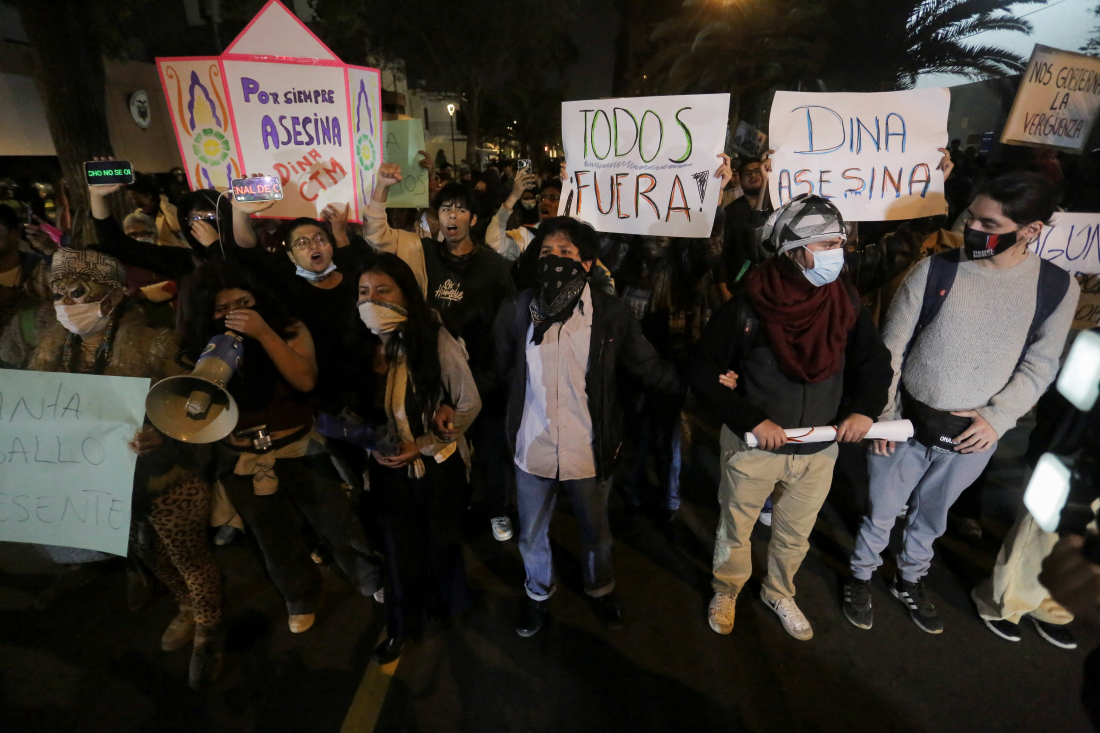
A crowd of mostly young people gathered outside the Congress building, many waving the Peruvian flag, as the vote to remove Boluarte was held.
Lawmakers from across the political spectrum had an hour earlier voted to impeach her on grounds of "moral incapacity" and summoned her to defend herself before Congress that same night.
She never arrived, and lawmakers had sufficient votes to proceed with a rapid impeachment process.
Boluarte, 63, is deeply disliked, with approval ratings between 2% and 4%, following accusations she has illicitly profited from her office and is responsible for lethal crackdowns on protests in favour of her predecessor.
She denies any wrongdoing.
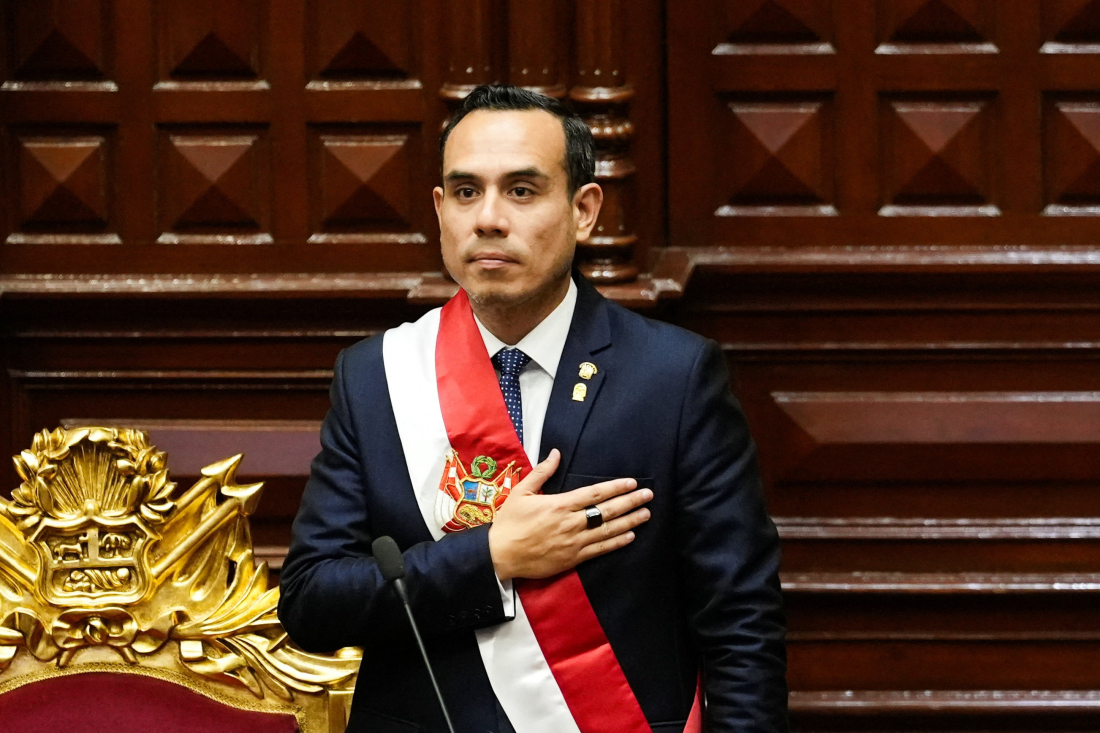
President Jose Jeri has been sworn in as the new president.
Her removal continues a revolving door of leaders in the Andean nation, which has had six presidents since 2018. Three ex-leaders are currently behind bars.
A crowd also gathered outside the Ecuador embassy, many dancing and celebrating, as people anticipated that the president would seek asylum in the neighbouring country.
Earlier Thursday night, votes on four motions presented to remove Boluarte gathered between 108 and 115 votes in favor - more than double the 52 votes that were required to advance with the debate. At least 87 votes are needed to impeach her.
Lawmakers then voted to summon the president to defend herself before Congress an hour later at 11.30 p.m. (0430 GMT), but she never appeared and shortly after midnight they voted to oust her.
The support for Boluarte's removal marks an about-turn after lawmakers rejected a series of prior motions for removal, none of which made it to the debate stage.
The latest push was marked by the participation of right-wing parties that have historically supported her, including Rafael Lopez's Popular Renewal and Keiko Fujimori's Popular Force. Both political heavyweights are expected to stand for president in the presidential election April 2026.
"We cannot leave for tomorrow what we can do today," congressman Victor Cutipa told fellow lawmakers. "We must make a decision now."
Boluarte came to power in December 2022 as her predecessor President Pedro Castillo, under whom she had herself served as vice president, was ousted and arrested after he attempted to dissolve Congress.
Castillo's removal was met with months of widespread, deadly protests particularly in rural Andean and Indigenous communities, and rights groups have accused Boluarte's government of using excessive force to repress the protests.
She also became embroiled in allegations of illicit enrichment involving undeclared assets and Rolex watches. In July, she decided to double her salary.

















What is your opinion on this topic?
Leave the first comment